-
We detected your language preference as English. Would you like to switch to the English version for a better experience?
Switch to English
Stay here

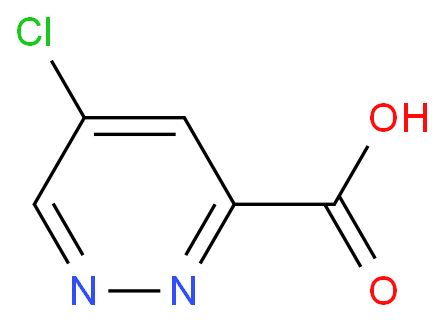
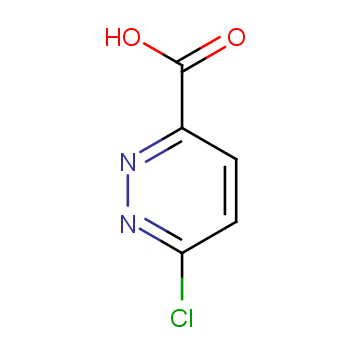
6-Chloropyridazine-3-carboxylic acid (C5H3ClN2O2) is an organic and halogenated compound, specifically a chlorinated derivative of pyridazine carboxylic acid. At room temperature, it exists as a white to off-white crystalline solid with minimal odor. The compound exhibits low volatility under standard atmospheric conditions and demonstrates moderate solubility in polar organic solvents such as dimethylformamide and methanol, while being only sparingly soluble in water.
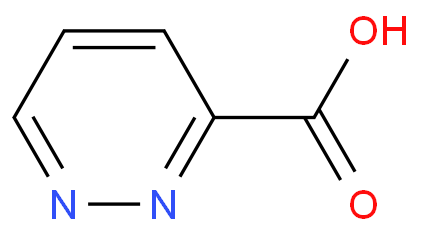
6-Chloropyridazine-3-carboxylic acid was first synthesized in the context of heterocyclic compound development for pharmaceutical and agrochemical applications during the late 20th century. Although no single individual or definitive year of discovery is widely documented, its synthesis typically involves chlorination of pyridazine-3-carboxylic acid using reagents such as sulfuryl chloride or phosphorus pentachloride under controlled thermal and catalytic conditions. This compound serves as an important intermediate in the production of bioactive molecules, particularly in the pharmaceutical industry where it functions as a scaffold for antihypertensive, anti-inflammatory, and antimicrobial agents. It also finds use in agricultural chemistry for the synthesis of selective herbicides and plant growth regulators. No natural sources of this compound are known, as it is exclusively prepared through synthetic routes. Industrially, its preparation often employs pyridazine derivatives and chlorine-containing reagents under reflux conditions, followed by purification via recrystallization or column chromatography.
Information regarding the toxicity and carcinogenicity of 6-Chloropyridazine-3-carboxylic acid remains limited; however, as with many chlorinated aromatic compounds, prolonged exposure may pose moderate health risks. Acute exposure may cause irritation of the eyes, skin, and respiratory tract, potentially leading to coughing, shortness of breath, and dermatitis. Ingestion could result in gastrointestinal discomfort, nausea, and vomiting. There is currently no conclusive evidence linking this specific compound to carcinogenic effects, and it has not been formally classified as a carcinogen by agencies such as the International Agency for Research on Cancer (IARC) or the Environmental Protection Agency (EPA). For safe handling and storage, it should be kept in a tightly sealed container in a cool, dry, and well-ventilated environment. It is incompatible with strong oxidizing agents and reducing agents, and should be protected from moisture and direct sunlight to prevent degradation.
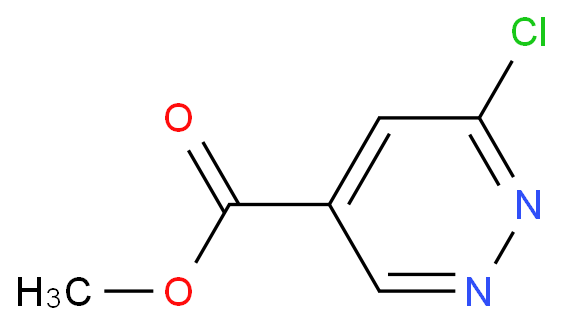
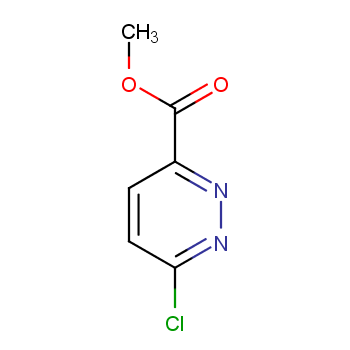
View more+3-Carboxy-6-chloropyridazine3-Carboxy-6-chloropyridazine, 3-Carboxy-6-chloro-1,2-diazine3-Chloropyridazine-6-carb...3-chloropyridazine-6-carboxylic acid3-pyridazinecarboxylic acid, 6-chloro-6-CHLORO-3-CARBOXY-PYRIDAZINE6-Chloro-3-pyridazinecarboxylic acid6-Chloropyridazine-3-caSNoxylic acid6-Chloropyridazine-3-formic acidCML-036REF DUPL: 3-Chloropyridazine-6-carboxylic acid
Hazard Codes of 6-Chloropyridazine-3-carboxylic acid (CAS NO.5096-73-1):  Xi
Xi
Hazard Note: Irritant
6-Chloropyridazine-3-carboxylic acid , its cas register number is 5096-73-1. It also can be called 3-Pyridazinecarboxylic acid, 6-chloro- ; 6-Chloro-3-pyridazinecarboxylic acid ; and Acide 6-chloropyridazine-3-carboxylique .
Acute toxicity - Oral, Category 4
Acute toxicity - Dermal, Category 4
Skin irritation, Category 2
Eye irritation, Category 2
Acute toxicity - Inhalation, Category 4
Specific target organ toxicity \u2013 single exposure, Category 3
| Pictogram(s) | 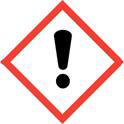 |
|---|---|
| Signal word | Warning |
| Hazard statement(s) | H302 Harmful if swallowed H312 Harmful in contact with skin H315 Causes skin irritation H319 Causes serious eye irritation H332 Harmful if inhaled H335 May cause respiratory irritation |
| Precautionary statement(s) | |
| Prevention | P264 Wash ... thoroughly after handling. P270 Do not eat, drink or smoke when using this product. P280 Wear protective gloves/protective clothing/eye protection/face protection. P261 Avoid breathing dust/fume/gas/mist/vapours/spray. P271 Use only outdoors or in a well-ventilated area. |
| Response | P301+P312 IF SWALLOWED: Call a POISON CENTER/doctor/\u2026if you feel unwell. P330 Rinse mouth. P302+P352 IF ON SKIN: Wash with plenty of water/... P312 Call a POISON CENTER/doctor/\u2026if you feel unwell. P321 Specific treatment (see ... on this label). P362+P364 Take off contaminated clothing and wash it before reuse. P332+P313 If skin irritation occurs: Get medical advice/attention. P305+P351+P338 IF IN EYES: Rinse cautiously with water for several minutes. Remove contact lenses, if present and easy to do. Continue rinsing. P337+P313 If eye irritation persists: Get medical advice/attention. P304+P340 IF INHALED: Remove person to fresh air and keep comfortable for breathing. |
| Storage | P403+P233 Store in a well-ventilated place. Keep container tightly closed. P405 Store locked up. |
| Disposal | P501 Dispose of contents/container to ... |
none
 |
|
|
 |
 |
 |
 |
 |
 |
 |
Dictionary Language Options: English Deutsch Français Español 日本語 한국어 Português Pусский язык عربي 中文
About Us | Service | Contact Guidechem | Feedback | CAS Index | Chemical Index | Dictionary | New Products | FAQ | Mobile Site Follow Us:Service Tel: +86-571-87759611, Marketing Tel: +86-571-89739798  Whatsapp
Copyright©2010-2026 Guidechem

 EN
EN






 14YRS
14YRS


