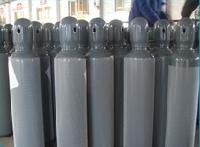
Ethane is a colorless, odorless, and flammable hydrocarbon gas, representing the second simplest alkane after methane. The etymological origin of the term "ethane" is traced back to the Greek word "aithein," meaning to burn, initially applied to the compound ether (CH3CH2OCH2CH3). Ether, a highly flammable compound, was first derived from the two-carbon alcohol ethanol (C2H5OH), while ethane itself is a two-carbon alkane. Ethane constitutes the second most abundant component of natural gas, typically ranging from 1% to 5% by volume, although certain sources may contain up to 30% ethane.
Michael Faraday synthesized ethane in 1834 through the electrolysis of acetate solutions, initially misidentifying it as methane. Adolph Wilhelm Hermann Kolbe later, incorrectly identified ethane as the methyl radical in his research, and Edward Frankland prepared ethane by treating ethyl iodine (C2H5I) with metals.
Ethane synthesis occurs through the Kolbe synthesis process, where acetic acid (CH3COOH) undergoes electrolysis to oxidize acetate ions at the anode, yielding acetate radicals. These radicals combine to form ethane and carbon dioxide. Alkanes like ethane exhibit relative unreactivity, requiring high-energy atoms or free radicals for reactions. The primary reactions involving alkanes are combustion, halogenation, and pyrolysis.
Combustion, a significant source of heat in human civilizations, involves the reaction of ethane with oxygen to produce carbon dioxide and water. Ethane can also undergo halogenation, with chlorine or bromine replacing hydrogen. Pyrolysis of ethane, a heat-induced decomposition process, yields various compounds crucial in the petrochemical industry, such as ethene and ethyne.
Ethane's primary industrial use lies in its role as a source of ethylene, a highly reactive compound due to its double bond. Ethylene is produced from ethane through steam cracking, where ethane is mixed with steam and heated to high temperatures, converting it into ethylene. Steam cracking may yield various products besides ethylene, depending on specific procedures and catalysts employed to optimize ethylene production.
Richard L. Myers (2009). The 100 Most Important Chemical Compounds: A Reference Guide. Greenwood Publishing Group. October 1, 2009. https://doi.org/10.1021/ed086p1182
 |
 |
 |