
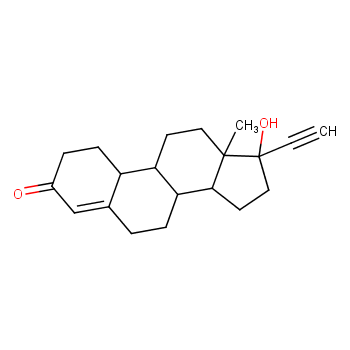
Norethindrone is an organic compound with the chemical formula C20H26O2, classified as a progestin. Its progestational activity is five times that of norethisterone, and it has slight androgenic and estrogenic activities.

Norethindrone works by inhibiting the secretion of luteinizing hormone-releasing hormone from the hypothalamus and affecting the pituitary gland, reducing its responsiveness to luteinizing hormone-releasing hormone. This effectively blocks the release of gonadotropins and inhibits ovulation. Therefore, norethindrone is often used in combination with ethinyl estradiol as a short-term oral contraceptive. Additionally, norethindrone is used to treat various gynecological issues, such as dysfunctional uterine bleeding, infertility, dysmenorrhea, amenorrhea, endometriosis, and endometrial hyperplasia.
Side effects of norethindrone include menstrual irregularities, headaches, nausea, breast tenderness, mood changes, acne, and increased hair growth. Norethindrone is a progestin or synthetic progestin and is therefore an agonist of the progesterone receptor, which is the biological target of progestins such as progesterone. It has weak androgenic and estrogenic activity, mostly at high doses, and no other significant hormonal activity.
Norethindrone is a progestin, and combined oral contraceptives and progestin-only contraceptives generally do not cause weight gain (except for long-acting medroxyprogesterone acetate). However, patients often perceive weight changes as an adverse reaction. Research on the potential effects of these contraceptives on mood and sexual function is limited and inconsistent.
Common side effects of combined oral contraceptives (COCs) include minor symptoms such as breast tenderness, nausea, headaches, bloating, and irregular bleeding, but most users' symptoms usually resolve on their own. Other adverse effects include an increased risk of venous and arterial thromboembolism (deep vein thrombosis, pulmonary embolism, myocardial infarction, stroke), a slight increase in blood pressure, and a potentially increased risk of breast and cervical cancers. COCs have also been shown to cause seemingly adverse changes in lipid and carbohydrate metabolism (increased triglycerides, decreased high-density lipoprotein cholesterol, increased low-density lipoprotein cholesterol, elevated insulin and glucose levels, decreased insulin sensitivity). However, unless the patient is a specific subgroup, such as those with polycystic ovary syndrome, these changes are generally negligible. Additionally, these changes are usually associated with older formulations with higher estradiol levels.
Common side effects of progestin-only contraceptives (POPs) include irregular bleeding and changes in menstrual cycles. Other potential adverse effects include acne, hirsutism, and an increased incidence of follicular ovarian cysts. For patients at risk of hyperkalemia (due to conditions such as adrenal insufficiency or medications like angiotensin-converting enzyme inhibitors, angiotensin II receptor antagonists, or potassium-sparing diuretics), caution is advised when using drospirenone due to its anti-mineralocorticoid effects similar to spironolactone.
Norethindrone may cause side effects. If these symptoms are severe or persist, please inform your doctor:
Some side effects may be serious. Although not common, if you experience any of the following symptoms, contact your doctor immediately:
Norethindrone may cause other side effects. If you experience any unusual problems while taking this medication, contact your doctor.
Interactions with rifampin, chloramphenicol, ampicillin, phenobarbital, phenytoin, primidone, chlorothiazide, acetaminophen, and others may lead to liver microsomal enzyme effects, accelerating the metabolism of norethindrone in the body, resulting in contraceptive failure and increased breakthrough bleeding. Attention is required.
Before taking norethindrone, inform your doctor or pharmacist if you are allergic to it, or if you have any other allergies. This product may contain inactive ingredients that could cause allergic reactions or other problems. Consult your pharmacist for more details.
Before starting this medication, provide your doctor or pharmacist with a complete medical history, especially of the following conditions: unexplained vaginal bleeding, cerebral hemorrhage, retained products of conception after miscarriage, family history (particularly of breast lumps or cancer, thrombosis), obesity, heart disease (such as coronary artery disease, heart failure), hypertension, cancer (especially endometrial or breast cancer), thrombosis, systemic lupus erythematosus, epilepsy, migraine, asthma, liver disease, kidney issues, high cholesterol or hyperlipidemia, depression, diabetes, stroke, and smoking habits.
Norethindrone may cause various side effects, including but not limited to nausea, headaches, and weight changes. As individual responses may vary, consult your doctor before using this medication to receive professional advice and guidance for a safe and effective treatment plan. The information provided is for introduction purposes only, and medication use should be conducted under medical supervision at a reputable hospital.
[1]https://www.ncbi.nlm.nih.gov/books/NBK563211/
[2]https://www.webmd.com/drugs/2/drug-6024/norethindrone-acetate-oral/details
[3]https://baike.baidu.com/item/%E7%82%94%E8%AF%BA%E9%85%AE
[4]https://en.wikipedia.org/wiki/Norethisterone
[5]https://medlineplus.gov/spanish/druginfo/meds/a604034-es.html
[6]https://go.drugbank.com/drugs/DB00717
 |
 |
 |



 2YRS
2YRS

