-
We detected your language preference as English. Would you like to switch to the English version for a better experience?
Switch to English
Stay here


Tripolyphosphate de sodium, a widely used chemical product, is a white powder that is easily soluble in water. It serves primarily as an additive in synthetic detergents, soap boosters, and to prevent grease deposition. Tripolyphosphate de sodium comes in two forms: high-temperature and low-temperature, with production methods including wet and thermal processes. While stable at room temperature, it slowly hydrolyzes in humid air. Mainly composed of anhydrous and hexahydrate forms, it acts as a chelating agent and dispersant, utilized in synthetic detergents, ceramic deflocculants, soap boosters, lubricants, and emulsifiers for fats. The production process involves phosphoric acid preparation, neutralization, drying, condensation, and tail gas recovery steps, while wet-process phosphoric acid production requires purification steps like defluorination and desulfurization before neutralization, concentration, and polymerization steps.
Tripolyphosphate de sodium, with its unique molecular structure and solubility, plays a crucial role in chemical production and daily life.
Tripolyphosphate de sodium is an inorganic compound composed of one sodium ion and three phosphate ions, with the chemical formula Na3PO4. Its structural formula consists of three Na+ ions and one PO43- ion, forming a trigonal pyramid-shaped molecule. This molecular structure gives it a high ionic charge, resulting in excellent water solubility. With a melting point of 622°C, it exhibits high thermal stability.
Tripolyphosphate de sodium is highly soluble in water, with its solubility increasing with temperature. At 50°C, solubility can reach 51g/100ml, rising to 81g/100ml at 100°C. In acidic conditions, its water solubility increases, while it decreases in alkaline environments. Therefore, in chemical production, tripolyphosphate de sodium is often used to adjust the pH of aqueous solutions to maintain product quality and stability.
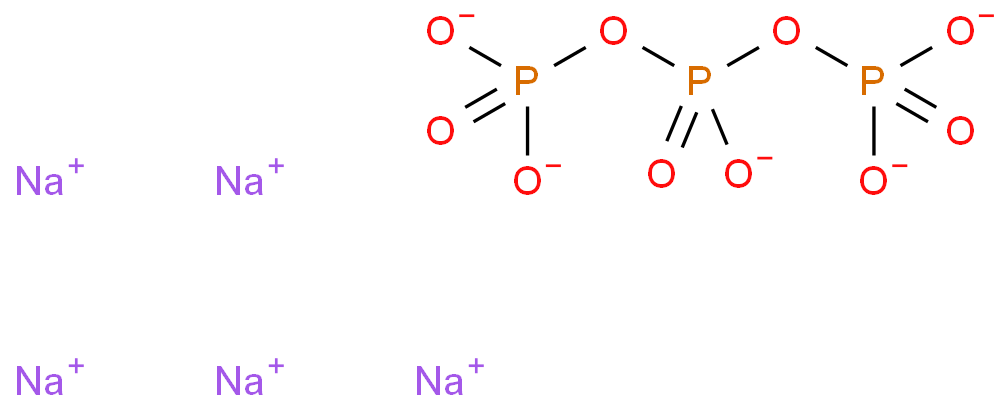
Tripolyphosphate de sodium, as a typical industrial surfactant, plays a significant role in detergents and cleaners. It exhibits powerful dirt removal capabilities, especially against oils and tars, due to its strong chelating of metal ions and its properties enhancing solubility, emulsification, and dispersion, effectively removing contaminants. In practical applications, such as industrial cleaning agents and daily detergents, tripolyphosphate de sodium demonstrates excellent performance.
Additionally, tripolyphosphate de sodium plays a crucial role in water treatment processes. It serves not only as a water softener, removing hardness ions such as calcium and magnesium, but also as a strong alkali buffer for pH adjustment in water treatment. These functions make tripolyphosphate de sodium widely applicable in industrial water treatment.
Tripolyphosphate de sodium is an important food additive used to improve the texture and taste of food products. In the food industry, it is primarily used in dough and noodles production. Tripolyphosphate de sodium promotes the binding of gluten proteins with starch, increasing internal osmotic pressure, thus improving the water absorption capacity of starch granules and the strength of gluten proteins. When added at 0.3% to 0.5%, it enhances the elasticity of dough or noodles, improves their color, flavor, and texture, and enhances surface gloss.
Tripolyphosphate de sodium is also used as a softener, thickener, and quality improver in various foods such as baked goods, dairy products, beverage products, and meat and canned products. As a food additive, tripolyphosphate de sodium must be listed in the ingredient list, allowing consumers to understand its usage regulations and principles, providing better insight into the role of food additives. In food storage and texture improvement, tripolyphosphate de sodium also plays a significant role. For example, in meat processing, especially in Western-style sausages, hams, and meatballs, tripolyphosphate de sodium extracts salt-soluble proteins to make the meat filling elastic and sticky, thereby improving the crispness, elasticity, and firmness of the products. However, excessive use may have adverse health effects and should adhere to safety principles.
The use of tripolyphosphate de sodium poses inherent risks and dangers, particularly concerning human health and environmental sustainability. Tripolyphosphate de sodium's high penetrability can easily enter human tissues, affecting the immune system and posing risks to health. High concentrations of STPP exposure pose potential health risks. Inhaling or ingesting STPP dust or aerosols may cause respiratory irritation, while direct skin or eye contact can cause irritation and dermatitis. Prolonged exposure or ingestion of STPP may lead to more severe health complications, including gastrointestinal discomfort and disturbances. Although there is no definitive evidence, concerns about the potential carcinogenic effects of STPP exist.
In addition to human health considerations, the widespread use of STPP also brings significant environmental risks and safety concerns. Improper use or disposal of tripolyphosphate de sodium also poses a significant threat to the environment. STPP's strong solubility leads to its absorption and utilization by organisms such as algae when discarded into river water, resulting in eutrophication. The appearance of eutrophic water not only damages aquatic ecosystems but also affects the living environment of marine organisms, potentially leading to disasters such as marine red tides. STPP's chelating properties may promote the migration of heavy metals in water, further exacerbating environmental pollution.
Tripolyphosphate de sodium undergoes thermal decomposition, producing irritating and toxic gases. Accidental contact with the human body may cause irritation and inflammation, with prolonged exposure and ingestion potentially harmful to health. Ensuring the safe use of tripolyphosphate de sodium (STPP) is essential to reduce potential risks and hazards associated with its handling and application. Precautions must be taken when using STPP to minimize the risk of contact and adverse health effects. This includes wearing appropriate personal protective equipment (PPE) such as gloves, goggles, and respirators to prevent direct contact with the compound and inhalation of airborne particles. Additionally, STPP should be handled in well-ventilated areas to reduce dust and aerosol concentrations in the air. Proper storage of STPP is essential to prevent leaks and contamination; the compound should be stored in tightly sealed containers, away from incompatible substances.
When using STPP, compliance with safety standards and regulatory guidelines is necessary to ensure responsible use and protect human health and the environment. Regulatory agencies such as the Occupational Safety and Health Administration (OSHA) and the Environmental Protection Agency (EPA) provide comprehensive guidance and regulations for handling, storage, and disposal of STPP in industrial and commercial environments. Adhering to these standards helps reduce potential risks associated with STPP use and ensures the implementation of best practices for safety and environmental protection. Regular monitoring and auditing of STPP use and storage facilities further strengthen safety protocols and minimize the likelihood of accidents or incidents.
Tripolyphosphate de sodium is commonly used as a surfactant, primarily as an additive in synthetic detergents, soap boosters, and to prevent grease deposition and frosting. Additionally, it is used as an auxiliary agent in industries such as petroleum, metallurgy, and mining, as well as a water softener in industrial water.
The use of tripolyphosphate de sodium requires attention to safety issues, as its thermal decomposition produces irritating and toxic gases. Contact with the eyes and skin should be avoided during use, and inhalation of dust should be prevented. Excessive inhalation of dust may cause respiratory symptoms, while prolonged exposure may lead to skin allergies. Furthermore, due to its highly soluble and effective phosphorus content, tripolyphosphate de sodium poses a high risk of eutrophication to water bodies, especially in rural areas, where phosphate-containing laundry detergents are still in circulation. Therefore, Pan Bi-Ling proposed at the National People's Congress to ban the sale of phosphate-containing laundry products in provinces and cities in the Yangtze River basin.
Tripolyphosphate de sodium, as a valuable compound, finds applications in various industries, including detergent manufacturing, water treatment, food processing, and agricultural practices. Its multifunctional properties, including water softening, enhanced cleaning efficacy, and food preservation, highlight its importance in modern applications.
However, the use of STPP also entails inherent risks, such as potential health hazards associated with contact and environmental issues related to water pollution. To mitigate these risks, strict preventive measures must be taken, including proper handling, storage, and disposal measures, as well as compliance with safety standards and regulatory guidelines.
[1] https://fr.wikipedia.org/wiki/Triphosphate_de_sodium
[2] Song, X. (2007). Exploration of the Development Direction of tripolyphosphate de sodium in China. Guizhou Chemical Industry, (04), 23-27.
[3] Han, N. (2005). Research on the New Technology of Wet-Process Phosphoric Acid Production of tripolyphosphate de sodium. Sichuan University.
[4] Zheng, W., Qu, Y., & Zhang, Y. (2018). Study on the Production Technology of Low-Density tripolyphosphate de sodium. Chemical Technology & Development, 47(07), 45-46+4.
[5] Gong, Q., & Yu, Y. (2008). Titration Method for Determining the Solubility of tripolyphosphate de sodium. Inorganic Salts Industry, (11), 51-53.
 |
 |
 |
 |
 |
 |
 EN
EN
 Agricultural News
 Food News
 Industrial News
 Cosmetic News
 Pharmaceutical News
 Science News

 1YR
1YR


