-
We detected your language preference as English. Would you like to switch to the English version for a better experience?
Switch to English
Stay here


A study by Zhu, Zheng, Lu and Liu explores delignified wood as a bio-based scaffold for phase-change materials (PCMs), using its naturally hierarchical pore structure to accommodate a thermally active medium while retaining a wood-derived structural framework. The work, published in the Journal of Coatings Technology and Research in 2026, investigates how both the substrate composition and surface treatment affect the resulting composite's thermal-storage performance. The study is identified by DOI 10.1007/s11998-026-01290-0.
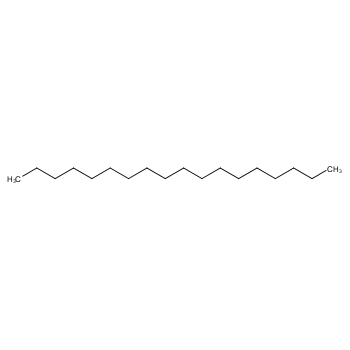
The researchers used vacuum impregnation to introduce n-octadecane into two wood-derived matrices: delignified wood (DLW) and delignified-hemicellulose wood (DHLW). The approach is designed to exploit the pore network of wood as a host structure for the PCM, allowing the material to store and release latent heat as the n-octadecane undergoes phase transitions.
According to the reported results, the n-octadecane/DLW composite achieved a phase-change enthalpy of 165 J/g, with a phase-transition range of 25–30 °C. This temperature window is close to conditions relevant to indoor human thermal comfort, making the material particularly relevant to passive temperature-regulation concepts.
The comparison between the wood matrices also highlights a structural trade-off. Removing hemicellulose from the wood framework compromised the integrity of the scaffold and was associated with a 19% reduction in latent heat. The result suggests that chemical modification of a naturally porous biomass cannot be evaluated solely on the basis of increased porosity or altered composition; the resulting structural stability and ability to retain PCM are also critical to thermal performance.
The study identifies a synergistic relationship among the wood substrate, the phase-change component and the interfacial treatment, rather than treating PCM loading as an isolated materials parameter.
One of the study's most consequential findings concerns the surface coating. Wood wax oil increased the phase-change enthalpy by 20%, taking the reported value from 165 J/g to 197.2 J/g. The authors associate this improvement with a hydrophobic sealing effect that helps limit PCM leakage and retain the phase-change material within the wood's pore network.
Polyurethane produced the opposite effect. The coating was associated with a 39% reduction in enthalpy, which the authors attribute to spatial hindrance created by the polymer layer. The contrast demonstrates that adding a protective surface layer is not automatically beneficial: the chemistry, morphology and interaction between the coating and porous PCM-containing substrate can materially alter energy-storage performance.
Reported thermal-performance comparison
Thermal stability testing reported decomposition temperatures exceeding 220 °C, substantially above the 25–30 °C phase-transition range identified for the composite. The result provides a useful indication of thermal robustness under the study's test conditions, although it does not by itself establish long-term field durability, cycling performance or commercial building performance.
The research therefore places particular emphasis on interface engineering. Rather than viewing the wood scaffold, PCM and coating as independent components, the study treats their interaction as a design variable. This perspective is relevant to the development of wood-based products intended to provide passive thermal buffering while retaining the material and processing advantages associated with bio-based substrates.
GuideView analysts observe that the significance of this research extends beyond the reported enthalpy values. The study illustrates a broader materials-engineering trend in which renewable structural materials are being redesigned as multifunctional platforms rather than used solely as passive construction components.
The coating results are particularly instructive for the coatings and building-materials industries. A surface treatment can simultaneously serve protective and functional purposes, but its effect on an underlying energy-storage system must be considered as part of the complete material architecture. The 20% increase associated with wood wax oil and the 39% reduction associated with polyurethane demonstrate how strongly interface design can influence the usable thermal-storage capacity of a composite.
For future development, GuideView considers long-duration thermal cycling, PCM retention, coating durability, moisture resistance, mechanical performance and manufacturing scalability to be important areas for validation. The reported results establish a promising laboratory-level materials concept, while broader application claims will require evidence under repeated heating-and-cooling cycles and realistic building-service conditions.
The study consequently provides a useful design reference for the convergence of bio-based materials, functional coatings and passive thermal management. Its central message is that sustainable thermal materials may depend as much on controlling interfaces and pore structures as on selecting the phase-change medium itself.
Zhu, Xiaodong; Zheng, Yangweizhe; Lu, Jintao; Liu, Yu. Interfacial engineering of delignified wood phase-change composites: synergy between vacuum impregnation and surface coating for intelligent thermal management. Journal of Coatings Technology and Research, 2026. DOI: 10.1007/s11998-026-01290-0. The article is listed as a 2026 publication and reports the experimental findings summarized above.
 |
 |
|
 EN
EN
 Agricultural News
 Food News
 Industrial News
 Cosmetic News
 Pharmaceutical News
 Science News

 1YR
1YR

