-
We detected your language preference as English. Would you like to switch to the English version for a better experience?
Switch to English
Stay here


Chemical Naming & Substance Identity
Where each spelling is used, what it actually refers to, and how to write the order so the right material ships — for Sodium Lauryl Sulfate.

Yes. Both halves repeat the same abbreviation. SLS stands for sodium lauryl sulfate; the adjacent abbreviation SLES (sodium laureth sulfate) is a genuinely different, ethoxylated surfactant — that is the confusion the query is usually probing.
Both names map to CAS 151-21-3 (C12H25NaO4S, 288.38 g/mol). The query repeats one name, so the useful content is what the term actually designates in trade.
| Attribute | SLS | SLS |
|---|---|---|
| Refers to | Sodium Lauryl Sulfate | Sodium Lauryl Sulfate |
| CAS Registry Number | 151-21-3 | 151-21-3 |
| Molecular formula | C12H25NaO4S | C12H25NaO4S |
| Molar mass | 288.38 g/mol | 288.38 g/mol |
| Typical name domain | Repeated term — class/brand/formulation context decides | Repeated term — class/brand/formulation context decides |
| Chemically different substance? | No | No |
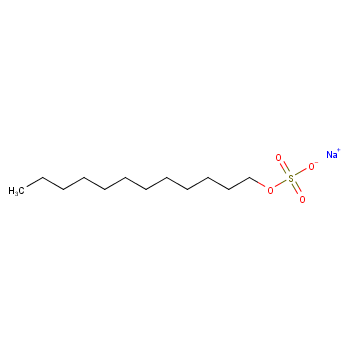
| Lewis structure guide | SLS Lewis structure | SLS Lewis structure |
Identical CAS, formula and molar mass on both sides is the proof of identity: the difference is purely in how the name is written.
The query repeats one name, so the useful content is what the term actually designates in trade.
Both halves repeat the same abbreviation. SLS stands for sodium lauryl sulfate; the adjacent abbreviation SLES (sodium laureth sulfate) is a genuinely different, ethoxylated surfactant — that is the confusion the query is usually probing.
When a query repeats one name, the substance itself is settled; what remains ambiguous is the physical or commercial form intended. The table in section 3 maps the possible meanings to the exact wording that should appear on a specification.
| Context | Term Used | What Must Be Verified |
|---|---|---|
| Sodium dodecyl sulfate (SDS) | SLS = SDS = 151-21-3 | One molecule, three names across cosmetics and biochemistry. |
| Ethoxylated variant | SLES / sodium laureth sulfate | CAS 68585-34-2; milder, different tariff line — not a drop-in. |
| Cosmetic / lab documents | State both name and CAS | The abbreviation alone invites substitution errors. |
SLS and SLES are distinct products with different irritation profiles and customs codes; verify CAS 151-21-3 on the label and the COA before accepting any SLS shipment.
Because the substance is identical either way, grade and documentation do the real separating: pharmacopoeial vs food vs technical grade, assay basis, impurity limits (heavy metals, residual solvents, water), container size and, for stereochemical names, an optical-purity clause.
Yes. Both halves repeat the same abbreviation.
Both map to CAS 151-21-3.Both are accepted, but in different domains: The query repeats one name, so the useful content is what the term actually designates in trade.
Controlled documents should use the qualified form and always add the CAS.Name plus CAS plus grade plus quantity. For Sodium Lauryl Sulfate the CAS alone removes every ambiguity created by spelling, shorthand or stereochemistry prefixes.
SLS and SLES are distinct products with different irritation profiles and customs codes; verify CAS 151-21-3 on the label and the COA before accepting any SLS shipment.
Editorial note
This article clarifies naming equivalence for procurement and documentation use. It is not legal or regulatory advice; the controlled source for any label is the current monograph, CAS index entry and applicable market regulations.
 |
 |
 |
 EN
 Agricultural News
 Food News
 Industrial News
 Cosmetic News
 Pharmaceutical News
 Science News


 1YR


