 |
NICKEL(II) BROMIDE ETHYLENE GLYCOL DIMETHYL ETHER COMPLEX is the earliest synthetic chemical. , due to its broad antibacterial spectrum, low price, stable chemical properties, and ease of use, it can be used for both injection and oral administration of birds and animals [1]. Especially since the synthesis of highly efficient, long-acting, broad-spectrum NICKEL(II) BROMIDE ETHYLENE GLYCOL DIMETHYL ETHER COMPLEX and synergists, the application of NICKEL(II) BROMIDE ETHYLENE GLYCOL DIMETHYL ETHER COMPLEX in veterinary clinical applications is second only to antibiotics. However, it also has disadvantages such as large dosage, many adverse reactions, and bacteria are prone to develop drug resistance. Many problems can occur if used improperly.
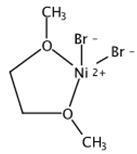
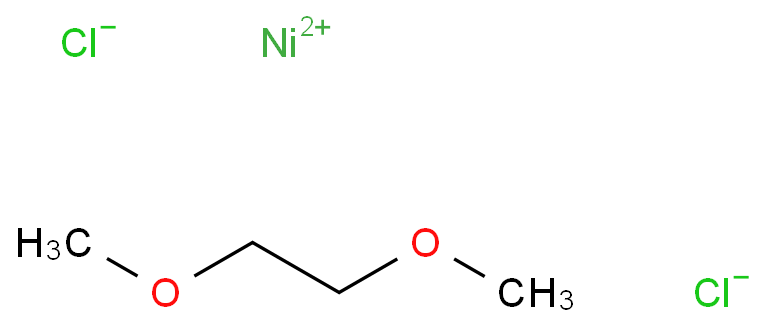
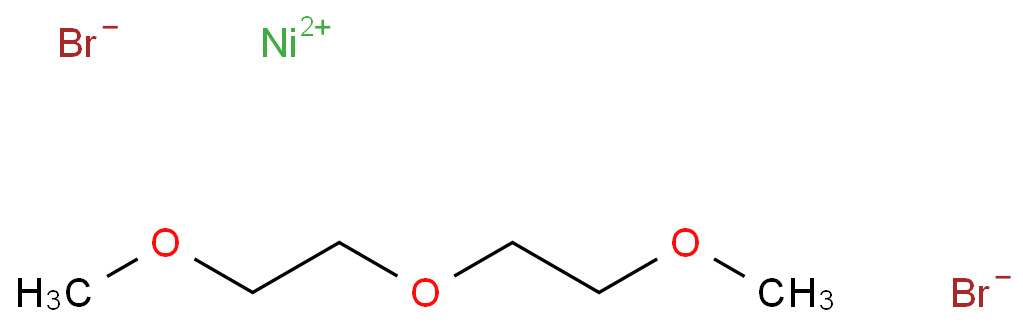
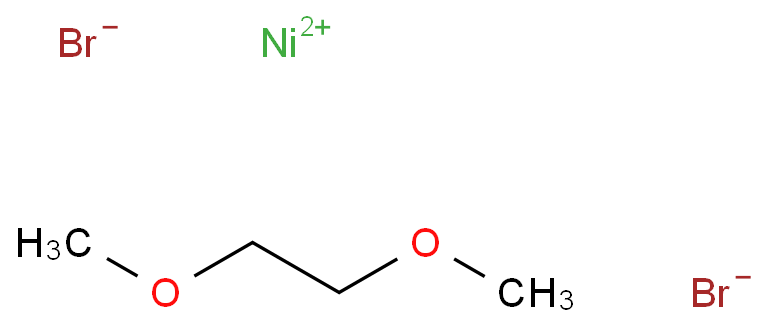
Figure 1 NICKEL(II) BROMIDE ETHYLENE GLYCOL Structural formula of DIMETHYL ETHER COMPLEX.
![Figure 2 Synthetic route of NICKEL(II) BROMIDE ETHYLENE GLYCOL DIMETHYL ETHER COMPLEX [2-3].](https://imgen3.guidechem.com/img/answer/2023/10/18/1697639292088999.jpg "Figure 2 Synthetic route of NICKEL(II) BROMIDE ETHYLENE GLYCOL DIMETHYL ETHER COMPLEX [2-3].")
Figure 2 NICKEL(II) BROMIDE ETHYLENE GLYCOL Synthetic route of DIMETHYL ETHER COMPLEX[2-3].
Method 1: NiCl2 (100 g, 771.6 mmol) is dissolved in a mixture of 300 ml methanol and 50 ml trimethyl orthoformate, and refluxed Stir overnight. After the reaction, unreacted NiCl2 was removed by filtration, and 80% of the solution was removed under reduced pressure to obtain a green gel. Dissolve this in minimal methanol and add 300 mL DME. The solution was stirred at reflux overnight. A yellow powder of [NiCl2(DME)] precipitated and was isolated by catheter filtration. The powder was washed with pentane and dried under a stream of nitrogen. Obtained orange powder NICKEL(II) BROMIDE ETHYLENE GLYCOL DIMETHYL ETHER COMPLEX, yield: 135.0 g, 80%. The synthesis route is shown in Figure 2.
Method 2: In a degassed 500 mL round-bottomed flask, prepare NiBr2·3H2O (26.2 g, 96.13 mmol) in non-distilled absolute ethanol (60 mL) solution. Heat the mixture at 60°C. The mixture was stirred for 1 hour and 15 minutes, resulting in a green solution. At the same temperature, add undistilled DME (250 mL) to the previous solution. The mixture was stirred at 70°C overnight. The volatiles are first removed under vacuum, leaving a viscous green gum that further dries to an orange solid. Add DME (300 mL) to the solid. Heat the mixture to 85°C. The initial solid begins to dissolve and a precipitate of salmon-colored solid forms. The mixture was stirred for an additional 1 hour and 30 minutes at 85°C. Cool the solution to -80°C in a cold ethanol/liquid nitrogen bath. Filter the solution. The remaining solid was washed three times with distilled Et2O at room temperature. Dry the remaining solid under vacuum. The solid was stored in a Schlenk tube under nitrogen atmosphere to obtain the product NICKEL(II) BROMIDE ETHYLENE GLYCOL DIMETHYL ETHER COMPLEX, Yield: 87.0 g, 56%. The synthesis route is shown in Figure 2.
NICKEL(II) BROMIDE ETHYLENE GLYCOL DIMETHYL ETHER COMPLEX has a wide antibacterial range and is effective against It has inhibitory effects on most Gram-positive and Gram-negative bacteria. Pathogens that are highly sensitive to NICKEL(II) BROMIDE ETHYLENE GLYCOL DIMETHYL ETHER COMPLEX include: Streptococcus, Pneumococcus, Salmonella, Corynebacterium pyogenes, Escherichia coli, etc.; sub-sensitive bacteria include: Staphylococcus, Proteus, Pasteurella, and gastroenteritis. Clostridium capsulatum, Shigella dysenteriae, etc. NICKEL(II) BROMIDE ETHYLENE GLYCOL DIMETHYL ETHER COMPLEX also has good effects on certain actinomycetes, chlamydia and certain protozoa such as coccidia, amoeba and Toxoplasma gondii [4-5]. NICKEL(II) BROMIDE ETHYLENE GLYCOL DIMETHYL ETHER COMPLEX is completely ineffective against spirochetes, Mycobacterium tuberculosis, Rickettsia, etc. The bacteriostatic activity of NICKEL(II) BROMIDE ETHYLENE GLYCOL DIMETHYL ETHER COMPLEX is consistent in vitro and in vivo (with a few exceptions). Of course, the final cure of the infection also depends on the body's defense function. Under certain properties, NICKEL(II) BROMIDE ETHYLENE GLYCOL DIMETHYL ETHER COMPLEX does have a bactericidal effect [6]. Mainly inhibits the growth and reproduction of bacteria by preventing their folic acid metabolism.
General NICKEL(II) BROMIDE ETHYLENE GLYCOL DIMETHYL ETHER COMPLEX on fish The reactions are all weak, and the safe concentrations for fish soaked for 24 hours are all around 10 g/m3. The safe concentrations for silver carp, grass carp, and carp to NICKEL(II) BROMIDE ETHYLENE GLYCOL DIMETHYL ETHER COMPLEX are 250 g/m3 and 250 g/m3 respectively. At 250 g/m3 and 400 g/m3, the safe concentrations for silver carp and grass carp are greater than 1%. If the safe concentration is exceeded, wild swimming, side swimming and collision will occur [7]. The adverse effects of continuous excessive use of NICKEL(II) BROMIDE ETHYLENE GLYCOL DIMETHYL ETHER COMPLEX on fish are mainly manifested in overloading the liver and kidneys, leading to agranulocyte deficiency, acute and subacute hemolytic anemia, and aplastic anemia. [8]. NICKEL(II) BROMIDE ETHYLENE GLYCOL DIMETHYL ETHER COMPLEX After being absorbed into the blood, toxic metabolites are produced through the action of hexanoyl coenzyme in the liver. The solubility is reduced, and crystal precipitation is easily formed in the kidneys, ureters, etc., causing irritation and obstruction. After carp were exposed to NICKEL(II) BROMIDE ETHYLENE GLYCOL DIMETHYL ETHER COMPLEX for 65 days, the liver fat content was nearly 50% lower than the normal value, and they swam slowly, became darker in body color, had dark red gill flaps, and the liver turned brown and was easily broken, etc. Symptoms[9].
[1] H. Qi, D. Chi, S. Chen , Pd-Catalyzed C-H Functionalization of Indole-Containing Alkene-Tethered Aryl Halides with Alkynes To Construct Indole Alkaloid Scaffolds, Org. Lett. 24(15) (2022) 2910-2914.
[2] Y. Shirase, A. Matsumoto, K.L. Lim, D.A. Tryk, K. Miyatake, J. Inukai, Properties and Morphologies of Anion-Exchange Membranes with Different Lengths of Fluorinated Hydrophobic Chains, ACS Omega 7( 16) (2022) 13577-13587.
[3] J. McCartney, S. Abraham, C.D. Anderson, V. Arumugam, J. Chau, T. Cleveland, T.A. Dwight, B.A. Frieman, P. Grootenhuis, S.S. Hadida Ruah, Y. Ishihara, M.T. Miller, A. Silina, J. Zhou, Sulfonamides as modulators of cystic fibrosis transmembrane conductance regulator and their preparation, Vertex Pharmaceuticals Incorporated, USA. 2022, p. 182pp.
[4] S. Stokes, S. Bedford, I.J. Chen, J.E.P. Davidson, N. Davies, C.J. Graham, S.M. McKenna, J.W.G. Meissner, J. Murray, R.J. Parsons, S. Ray, E. Sanders, C.L. Walmsley, P.A. Brough, A. Kotschy, A. Proszenyak, A. Sinai, B. Balint, M. Csekei, M. Zwillinger, R. Garamvoelgyi, S. Sipos, V. Kun, Z. Szabo, M. Chanrion, F. Rocchetti, F. Colland, A.L. Maragno, L. Bresson, Preparation of spirocyclohexane derivatives, pharmaceutical compositions containing them and their uses as anti-apoptotic inhibitors , Les Laboratoires Servier, Fr.; Vernalis R&D Limited . 2022, p. 1253pp.
[5] M. Jadidi Nejad, M. Shariatipour, A. Heydari , A Combination of Biocompatible Room Temperature Ionic Liquid and Supported Palladium Nanoparticles Catalyst for Aminocarbonylation and Alkoxycarbonylation, Catal. Lett. (2022) Ahead of Print.
[ 6] D. Kim, H. Pak, E. Jeong, S. Han, M. Kim, S. Jo, Light-emitting device including amine-based compound, electronic apparatus including the light-emitting device, and the amine-based compound, Samsung Display Co., Ltd., S. Korea . 2022, p. 132pp.
[7] N. Yue, Z. Hua, Y. Kim, Y. Li, Organic compound, organic electroluminescent device using same, and electronic apparatus, Shaanxi Lighte Optoelectronics Material Co., Ltd., Peop. Rep. China . 2022, p. 91pp.; Chemical Indexing Equivalent to 181:30049 ( CN).
[8] E. Zamaratski, D. Antonov, V.R. Konda, S. Lindstroem, G. Olanders, A. Karlen, T.A. Jones, S.L. Mowbray, D. Hughes, P. Brandt, E. Loza, O. Bobileva, M. Ikaunieks, Preparation of N-substituted 2-[methyl(methylsulfonyl)amino]benzamides as Lpxh inhibitors useful as anti-infective agents, Swed. . 2022, p. 209pp.
[9] N. Yue, Z. Hua, Y. Kim, Y. Li, Organic compound, organic electroluminescent device using same , and electronic apparatus, Shaanxi LTMS Optoelectronics Material Co., Ltd., Peop. Rep. China . 2022, p. 87pp.; Chemical Indexing Equivalent to 180:332259 (WO).
 |
 1YR
1YR
 Contact
Dictionary Language Options: English Deutsch Français Español 日本語 한국어 Português Pусский язык عربي 中文
About Us | Service | Contact Guidechem | Feedback | CAS Index | Chemical Index | Dictionary | New Products | FAQ | Mobile Site Follow Us:Service Tel: +86-571-87759611, Marketing Tel: +86-571-89739798  Whatsapp
Copyright©2010-2026 Guidechem



 CN
CN