 |
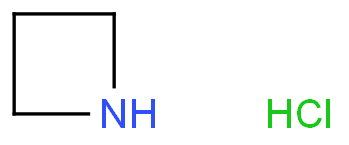
Azetidine hydrochloride, also known as Azetidine hydrochloride, is a white to grayish-white solid at room temperature and pressure, with good solubility in water. Azetidine hydrochloride is the hydrochloride salt form of azetidine, a nitrogen-containing heterocyclic compound. Converting azetidine into its hydrochloride salt form improves the chemical stability and facilitates transportation of the compound. As Azetidine hydrochloride is essentially a hydrochloride salt, it often needs to be neutralized with a base in specific chemical transformations to release the corresponding azetidine compound.
Azetidine hydrochloride contains a nitrogen-containing azetidine unit with significant ring strain, making it prone to ring-opening decomposition reactions under strong bases or transition metals. Additionally, the compound has some hygroscopicity, and storing it at room temperature can lead to moisture absorption and deterioration. Therefore, it is generally recommended to keep it in an inert gas environment and preferably store it at low temperatures.
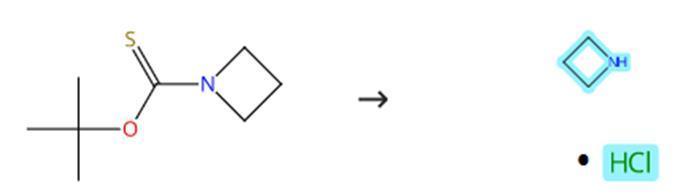
Figure 1: Synthesis route of Azetidine hydrochloride
In a dry 10 mL reaction flask, O-tert-butyl azetidine-1-thiocarboxylate (50 mg, 0.29 mmol) is added to HCl (2M in Et2O, 577 μL, 1.15 mmol) at room temperature. The resulting reaction mixture is vigorously stirred at room temperature for 1 hour. After the reaction, the reaction mixture is directly concentrated under reduced pressure, yielding the solid target product molecule, Azetidine hydrochloride. [1]
Azetidine hydrochloride serves as an intermediate in organic synthesis and participates in various organic reactions. It can be used in catalytic additions, nucleophilic substitutions, reductions, and other reactions to introduce the azetidine structure. It finds applications in pharmaceutical research and development and fundamental organic chemistry research. The azetidine structure plays an important role in many active pharmaceutical ingredients. By using Azetidine hydrochloride as an intermediate, biologically active compounds such as antibiotics, anticancer drugs, antiviral drugs, etc., can be synthesized. Additionally, the compound can be used for the synthesis of ligands, catalysts, and important building blocks related to drug synthesis. It also has significant applications in fundamental organic chemistry research. Scientists can utilize Azetidine hydrochloride to synthesize compounds with specific structures and functions, exploring new reaction methods and synthetic strategies.
[1] Hodgson, David M.; et al Organic Letters (2015), 17(2), 330-333.
 |
 |
 |
 |
![3-[3-(Trifluoromethyl)phenoxy]azetidine hydrochloride](https://structimg.guidechem.com/8/32/420751.png) |
 |
 |
 13YRS
13YRS
 15YRS
Contact
4YRS
Contact
6YRS
15YRS
Contact
4YRS
Contact
6YRS
Dictionary Language Options: English Deutsch Français Español 日本語 한국어 Português Pусский язык عربي 中文
About Us | Service | Contact Guidechem | Feedback | CAS Index | Chemical Index | Dictionary | New Products | FAQ | Mobile Site Follow Us:Service Tel: +86-571-87759611, Marketing Tel: +86-571-89739798  Whatsapp
Copyright©2010-2026 Guidechem



 CN
CN