-
We detected your language preference as English. Would you like to switch to the English version for a better experience?
Switch to English
Stay here

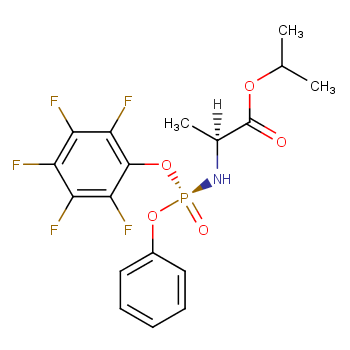
N-[(S)-(2,3,4,5,6-pentafluorophenoxy)phenoxyphosphinyl]-L-alanine 1-Methylethyl ester (C₁₈H₁₇F₅NO₅P) is an organophosphorus compound and a halogenated carboxylic acid derivative. This synthetic molecule appears as a white to off-white solid at room temperature, typically odorless or with a faint organic odor. It is stable under dry conditions but may hydrolyze in the presence of moisture due to the reactivity of the phosphinyl functional group.
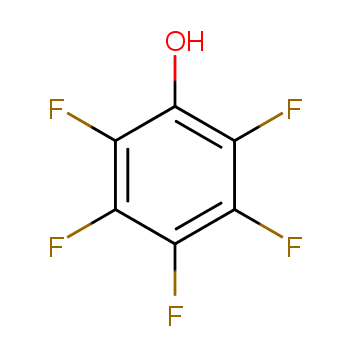
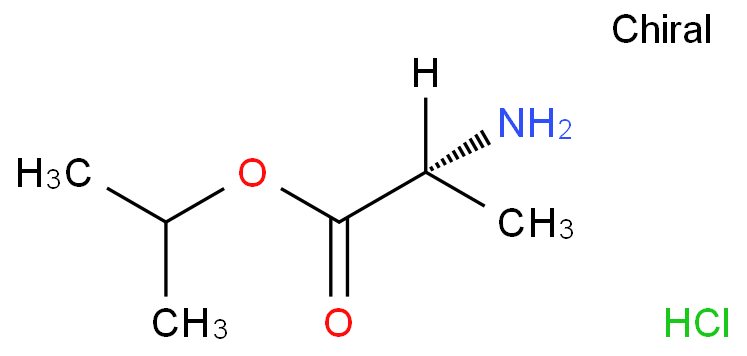
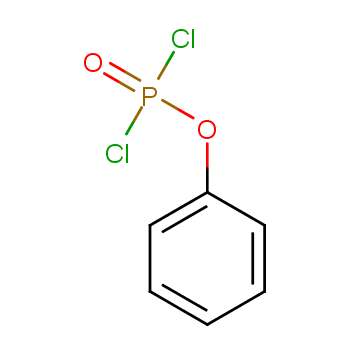
This compound was developed in the early 21st century as part of research into fluorinated organophosphorus derivatives with potential bioactive properties, though its exact discovery date and discoverer remain undocumented in widely accessible literature. It is synthesized through a multi-step process involving the reaction of pentafluorophenol with a phosphoryl chloride intermediate, followed by coupling with N-protected L-alanine isopropyl ester under basic conditions and subsequent deprotection or direct condensation, typically carried out in anhydrous aprotic solvents such as dichloromethane or acetonitrile at low temperatures. Due to its structural complexity and chiral center derived from L-alanine, asymmetric synthesis techniques are employed to maintain stereochemical integrity. Its primary applications are currently confined to research settings, particularly in agrochemical and pharmaceutical development, where fluorinated organophosphorus compounds are explored for their enzyme-inhibiting capabilities, including potential use as inhibitors of serine hydrolases or other metabolic targets. It does not occur naturally and has no known biological sources in plants, animals, or microorganisms. Industrially, if scaled, its preparation would require stringent control of temperature, moisture, and oxygen levels, using high-purity starting materials such as pentafluorophenol, phenylphosphinyl dichloride analogs, and L-alanine-derived esters.
The compound exhibits moderate to high toxicity typical of organophosphorus agents, particularly due to the potential for metabolic conversion into reactive species capable of interacting with esterase enzymes. Acute exposure may result in symptoms such as eye and skin irritation, respiratory discomfort if inhaled as dust, and gastrointestinal effects if ingested. There is currently no definitive classification of this specific compound as a carcinogen by the International Agency for Research on Cancer (IARC) or the U.S. Environmental Protection Agency (EPA), owing to limited long-term toxicological data. However, structurally related organophosphorus compounds have been associated with neurotoxic effects, necessitating caution. Chronic exposure could potentially lead to neurological or hepatic complications, although such outcomes remain speculative without extensive in vivo studies.
For safe handling, this compound should be stored in a cool, dry, and well-ventilated environment, preferably below 25°C in tightly sealed, light-resistant containers under inert atmosphere to prevent hydrolysis. It is incompatible with strong oxidizing agents, bases, nucleophiles, and moisture, all of which can promote decomposition. Personal protective equipment, including gloves, goggles, and respiratory protection, is recommended during manipulation, especially in powder form, to minimize inhalation or dermal contact.
View more+(S)-2-[(S)-(2,3,4,5,6-Pentafluorophenoxy)phenoxyphosphorylamino]propionic acid isopropyl ester1.(S)-isopropyl2-(((S)-(perfluorophenoxy)(phenoxy)phosphoryl)Alanine, N-[(2,3,4,5,6-pentafluorophenoxy)phenoxyphosphinyl]-, 1-methylethyl esterisopropyl ((S)-(perfluorophenoxy)(phenoxy)phosphoryl)-L-alaninateIsopropyl N-[(pentafluorophenoxy)(phenoxy)phosphoryl]alaninateL-Alanine, N-[(S)-(2,3,4,5,6-pentafluorophenoxy)phenoxyphosphinyl]-, 1-methylethyl esterMFCD22665799propan-2-yl (2S)-2-{[(S)-pentafluorophenoxy(phenoxy)phosphoryl]amino}propanoateSofosbuvir Intermediate 5Sofosbuvir side chain N-1tert-butyl N-[(2S)-4-methyl-1-(6-nitrobenzotriazol-1-yl)-1-sulfanylidenepentan-2-yl]carbamate
Acute toxicity - Oral, Category 4
| Pictogram(s) |  |
|---|---|
| Signal word | Warning |
| Hazard statement(s) | H302 Harmful if swallowed |
| Precautionary statement(s) | |
| Prevention | P264 Wash ... thoroughly after handling. P270 Do not eat, drink or smoke when using this product. |
| Response | P301+P312 IF SWALLOWED: Call a POISON CENTER/doctor/…if you feel unwell. P330 Rinse mouth. |
| Storage | none |
| Disposal | P501 Dispose of contents/container to ... |
none

|
 |
|
|
|
|
|
|
|
|
![L-Alanine, N-[(2,3,4,5,6-pentafluorophenoxy)phenoxyphosphinyl]-, 1-Methylethyl ester](https://structimg.guidechem.com/3/27/1572686.png) |
![L-Alanine, N-[(R)-(2,3,4,5,6-pentafluorophenoxy)phenoxyphosphinyl]-, 1-Methylethyl ester](https://structimg.guidechem.com/5/17/1641376.png) |
![N-[(S)-(4-Nitrophenoxy)phenoxyphosphinyl]-L-alanine 1-Methylethyl ester](https://structimg.guidechem.com/1/25/1562964.png) |
![N-[(S)-(4-nitrophenoxy)phenoxyphosphinyl]-L-Alanine 2-ethylbutyl ester](https://structimg.guidechem.com/9/57/3511076.png) |
![Alanine, N-[(R)-[[(1R)-2-(6-amino-9H-purin-9-yl)-1-methylethoxy]methyl]phenoxyphosphinyl]-2-methyl-, 1-methylethyl ester](https://structimg.guidechem.com/4/4/17016603.png) |
 |
Dictionary Language Options: English Deutsch Français Español 日本語 한국어 Português Pусский язык عربي 中文
About Us | Service | Contact Guidechem | Feedback | CAS Index | Chemical Index | Dictionary | New Products | FAQ | Mobile Site Follow Us:Service Tel: +86-571-87759611, Marketing Tel: +86-571-89739798  Whatsapp
Copyright©2010-2026 Guidechem

 EN
EN

![N-[(S)-(2,3,4,5,6-pentafluorophenoxy)phenoxyphosphinyl]-L-alanine 1-Methylethyl ester structure](http://structimg.guidechem.com/5/5/1562884.png)



 3YRS
3YRS


