-
We detected your language preference as English. Would you like to switch to the English version for a better experience?
Switch to English
Stay here


Dicyclohexylcarbodiimide (DCC), with the chemical formula C13H22N2 and CAS number 538-75-0, is a widely used reagent in organic synthesis, particularly in peptide bond formation and other coupling reactions. DCC is a versatile dehydrating agent, often employed to activate carboxylic acids, enabling the formation of esters, amides, and other derivatives.
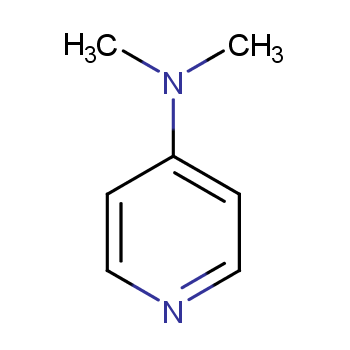
4-(Dimethylamino)pyridine (DMAP), with the chemical formula C7H10N2 and CAS number 1122-58-3, is another commonly used reagent in organic chemistry. DMAP is particularly known for its effectiveness as a nucleophilic catalyst in esterification and acylation reactions. It enhances the reactivity of carboxylic acids and acylating agents, making it a valuable tool in synthetic chemistry.
Dicyclohexylcarbodiimide (DCC) is a carbodiimide compound containing two cyclohexyl groups attached to a central carbon-nitrogen double bond. This structure allows DCC to effectively activate carboxylic acids for nucleophilic attack by alcohols or amines. In reactions where dehydration is necessary to drive the formation of amides, esters, or other carbon-carbon bonds, DCC is commonly used due to its high reactivity and stability. DCC itself is usually not a catalyst, but a reagent that is consumed in the reaction.

The function of DCC in synthesis often involves the formation of an O-acylisourea intermediate, which can react with nucleophiles like amines or alcohols to form the desired product. While highly efficient, DCC's use may also lead to side reactions, including the formation of urea byproducts, especially in the presence of excess water.
4-(Dimethylamino)pyridine (DMAP) is a strong nucleophilic base, characterized by its pyridine ring with a dimethylamino group at the 4-position. This structure is responsible for its catalytic activity in many esterification reactions. DMAP enhances the electrophilicity of the acylating agent, making it more reactive towards nucleophilic attack by alcohols or amines. Unlike DCC, DMAP typically acts as a catalyst in reactions, facilitating the formation of esters or amides without being consumed in the process.

DMAP is often used in tandem with DCC to improve reaction rates and reduce unwanted side products. It can assist in reactions involving less reactive substrates, ensuring that the reaction proceeds under milder conditions. DMAP is often preferred when a highly efficient and selective catalyst is required for esterification or acylation reactions.
The structural difference between DCC and DMAP lies in their core molecular frameworks. DCC features a carbodiimide group (-N=C=N-) flanked by two bulky cyclohexyl groups, while DMAP contains a pyridine ring with a dimethylamino group at the 4-position. This difference in structure influences their reactivity and role in organic synthesis. DCC Chemistry functions as a dehydrating agent, often driving the formation of amides and esters, while DMAP acts as a catalytic nucleophile, enhancing the reactivity of acylating agents without being consumed.
Regarding dcc chemistry, the bulky cyclohexyl group in DCC makes it highly efficient in promoting dehydration, but also contributes to the formation of by-products, such as dicyclohexylurea. In contrast, the smaller structure of DMAP allows it to function more selectively as a catalyst to promote esterification and acylation reactions with fewer side effects. Although the two reagents are used for similar reactions, the role of DCC is usually as a reagent to activate carboxylic acids, whereas DMAP acts as a catalyst to promote actual bond formation.

Dicyclohexylcarbodiimide (DCC) Applications: DCC is widely used in organic synthesis for coupling reactions, particularly in the formation of amides, esters, and peptide bonds. One of its most important uses is in the activation of carboxylic acids, which allows for subsequent nucleophilic attack by alcohols or amines. In peptide synthesis, DCC is used to couple amino acids to form peptides. This reaction is critical for the production of pharmaceutical compounds, peptides, and biologically active molecules.
In addition to its use in peptide synthesis, DCC Chemistry is also employed in the synthesis of various organic compounds, including esters and other functional derivatives. It is commonly used in the preparation of aryl and alkyl esters, which are important in the fragrance and pharmaceutical industries. DCC’s efficiency in promoting dehydration and coupling reactions makes it an indispensable reagent in many organic laboratories.
However, the use of DCC does come with some challenges. The formation of urea byproducts, such as dicyclohexylurea, can complicate purifications and lead to the generation of unwanted waste. To mitigate these side reactions, DCC Chem is often used in conjunction with additives like DMAP, which improve the selectivity and efficiency of the reaction while minimizing byproduct formation.
4-(Dimethylamino)pyridine (DMAP) Applications: DMAP is often employed as a catalyst in esterification and acylation reactions. By increasing the electrophilicity of acylating agents, DMAP enhances the rate and efficiency of these reactions, making it a valuable tool in synthetic chemistry. DMAP is particularly useful in reactions involving less reactive carboxylic acids or alcohols, where traditional methods may require harsher conditions or longer reaction times.
DMAP is often paired with DCC in esterification reactions to facilitate smoother, more efficient bond formation. When used in combination with DCC Chemical, DMAP helps activate the acylating agent and improve the overall yield of the desired product. It is also employed in various applications, including the synthesis of pharmaceuticals, agrochemicals, and fine chemicals.
DMAP’s ability to function as a mild and selective catalyst makes it particularly useful in reactions that require high levels of control over reaction conditions. It is often used in the synthesis of esters for the fragrance industry, as well as in the preparation of biologically active molecules. Its non-consumption in reactions allows for more sustainable processes, particularly in large-scale manufacturing.
| Reagent | Potential Side Effects |
|---|---|
| Dicyclohexylcarbodiimide (DCC) | DCC may cause irritation to the skin, eyes, and respiratory system. It also produces dicyclohexylurea as a byproduct, which can complicate purification. DCC should be handled with care to avoid exposure. |
| 4-(Dimethylamino)pyridine (DMAP) | DMAP can be toxic when inhaled or ingested, and it may cause irritation to the skin and eyes. It should be handled in a well-ventilated area with proper protective equipment. |
In conclusion, Dicyclohexylcarbodiimide (DCC) and 4-(Dimethylamino)pyridine (DMAP) are both essential reagents in organic synthesis, particularly for esterification and coupling reactions. DCC is a dehydrating agent widely used in peptide synthesis, while DMAP serves as a catalytic enhancer for acylation reactions. Both reagents are indispensable tools in organic chemistry, though they come with certain side effects that should be managed properly during their use.
If you're looking to purchase these compounds, Guidechem is your go-to platform for sourcing high-quality raw materials and reliable suppliers. With our extensive global network, we connect you to a wide range of Dicyclohexylcarbodiimide suppliers and 4-(Dimethylamino)pyridine suppliers, ensuring you find the right products to meet your specific research or production requirements. Whether you're in pharmaceuticals, food additives, or other industries, Guidechem simplifies the sourcing process, offering verified supplier information, competitive pricing, and seamless communication.
[1] Principles of Organic Synthesis by R. B. Taylor.
[2] Reagents in Organic Synthesis, Journal of Organic Chemistry.
[3] The Art of Organic Synthesis by M. R. Hart.
[4] Carbodiimide Coupling Reactions, Journal of Chemical Education.
|
 EN
EN
 Agricultural News
 Food News
 Industrial News
 Cosmetic News
 Pharmaceutical News
 Science News

 3YRS
3YRS