-
We detected your language preference as English. Would you like to switch to the English version for a better experience?
Switch to English
Stay here


Malic acid is an alpha hydroxy acid comprising two carboxylic acid groups and one hydroxyl group. It has a tart, sour taste and occurs naturally in certain fruits and wines, and it is used as an additive in the food and beverage industry for various purposes, including flavour enhancement, preservation and acidity adjustment.
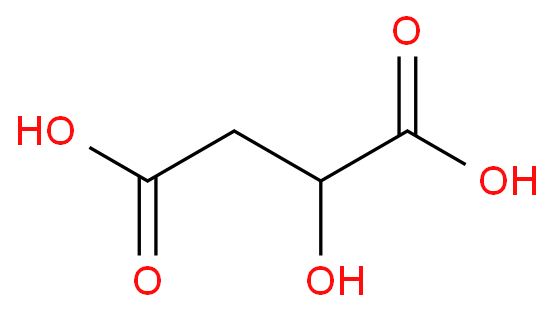
For product developers, the key technical questions are not simply whether malic acid acidifies, but how its sourness profile, lingering palate effect, dissolution rate, chelation behaviour and maximum usage levels interact with the food matrix and with the other acidulants in the blend. This guide consolidates those considerations into a practical B2B formulation framework.
| Parameter | Value | Technical Relevance |
|---|---|---|
| Chemical name | Malic acid (hydroxysuccinic acid; L-malic acid) | A dicarboxylic alpha hydroxy acid with two carboxylic groups and one hydroxyl group. |
| Formula | C4H6O5 | Two acid groups drive the buffering and chelation behaviour. |
| Molecular weight | 134.09 g/mol | Used for acid equivalency calculations against other acidulants. |
| CAS number | 6915-15-7 | Unique identifier for the material, whether the L or the DL form. |
| Food additive number | E 296; INS 296 | Defines the permitted-use framework in the EU and internationally. |
| pKa | pKa1 = 3.40; pKa2 = 5.20 | Explains the buffering behaviour and the sourness profile at different pH values. |
Malic acid is a dicarboxylic acid with the chemical formula C4H6O5. It occurs in living organisms as a metabolite in the Krebs cycle and in certain plants for photosynthesis, plant development and stress responses, and L-malic acid is an essential intermediate of cell metabolism. This biological familiarity is part of why the substance is a well-accepted food additive with a long history of use.
It is found in many fruits and vegetables, including apples, pears, tomatoes and grapes, and it is also found in some alcoholic beverages such as wine. The chemist Antoine Lavoisier named malic acid "acide malique" because of its similarity to a sour apple flavour, which captures the sensory character that formulators exploit: high acidity combined with a soft rather than sharp sour taste.
Malic acid is often grouped with the alpha hydroxy acids because it comprises two carboxylic acid groups and one hydroxyl group. Beyond food, when applied to the skin malic acid is used in skin care products to clear away dead skin cells, an application that follows from the same alpha hydroxy acid chemistry as glycolic and lactic acid.
For further chemical and commercial background, the technical encyclopedia entry provides additional context on nomenclature, synonyms and suppliers.
| Identifier | Value |
|---|---|
| Chemical name | Malic acid (hydroxysuccinic acid) |
| Molecular formula | C4H6O5 |
| Molar mass | 134.09 g/mol |
| CAS number | 6915-15-7 |
| EC number | 230-022-8 |
| E number / INS number | E 296 / INS 296 |
| pKa | 3.40; 5.20 |
Malic acid is not simply a pH-lowering agent; its functional value comes from the combination of acid chemistry and sensory behaviour, and the mechanisms below explain why it is chosen over other acidulants for particular applications.
As an acidulant malic acid imparts a sour taste and reduces pH, and as a flavouring agent it enhances fruit flavours, masks off-notes from salts and provides lingering sourness. Its sour tanginess increases at lower pH levels, so acidic foods with malic acid will have a more pungent tang, and its taste is similar to the sour taste of natural apples, with high acidity, a soft taste, and a sourness that stays longer on the palate.
Malic acid improves shelf life and has antimicrobial activity, which is why it functions as a preservative in addition to its acidulant role. As a flavour enhancer it works in harmony with artificial sweeteners and masks the aftertaste of sweeteners, and much like salt it intensifies flavour and melds different flavours within one product to create a more rounded taste experience; malic acid accounts for the memorable aftertaste in some confectionery items.
Malic acid acts as a gelling aid by enhancing gelling properties and improving pectin gel structure. It has potent antioxidant capacity as a sequestrant and helps retain colour, and it is also used as a deodorant to remove unpleasant odours, alongside its ability to stabilize colour and chelate metal ions.
Malic acid can be made synthetically through the chemical hydration of maleic or fumaric acid at high temperatures of 180 to 220 °C and high pressure of 14 to 18 bar, yielding a racemic mixture of DL-malic acid. The racemic route is a straightforward petrochemical pathway, but because the product is a mixture of optical isomers it does not match the naturally occurring L form.
The biosynthesis of L-malic acid from carbohydrates such as glucose involves the carboxylation of pyruvic acid, which leads to oxaloacetic acid that is then reduced to L-malic acid. Commercially, malic acid is produced via large-scale fermentation using microorganisms with high fumarase (fumarate hydratase) activity, gene promoters can amplify the enzyme for maximal malic acid production, and various agricultural residues can be used after treatment as a substrate for the fermentation.
For buyers, the qualification points centre on the isomeric form, the assay content, the moisture and the residual by-products of the chosen route. The L form may command a premium because it matches the natural isomer, while the DL form is used where optical purity is not required, so the specification must state which isomer is intended.
From a formulation perspective, malic acid is best understood as one member of the family of organic food acidulants, rather than as a standalone additive. Its closest relatives behave similarly in formulation, so a developer should recognise them as a group.
Malic acid sits alongside citric, lactic, tartaric, fumaric, succinic and glucono-delta-lactone as a food-grade organic acidulant. The members differ in sourness intensity, taste character, dissolution rate and solubility, and those differences rather than price alone determine which acid suits a given product.
Malic acid is also an alpha hydroxy acid, which links it to the cosmetic family that includes glycolic and lactic acid, where when applied to the skin it is used to clear away dead skin cells. The dual identity means the same substance can be specified either as a food acidulant or as a cosmetic exfoliating acid depending on the grade and the intended use.
The L form, produced by fermentation or by biosynthesis from glucose, matches the isomer found in nature, while the synthetic hydration route yields the racemic DL mixture. Because the two forms differ in optical composition, the choice between them is a regulatory and a labelling matter as well as a technical one.
| Parameter | Malic Acid | Citric Acid | Fumaric Acid |
|---|---|---|---|
| Relative sourness (units) | 75 | 100 | 55 |
| Sour character | High acidity, soft taste, lingering | Sharp, quick to fade | Very low solubility, slow |
| Molar mass | 134.09 g/mol | 192.12 g/mol | 116.07 g/mol |
| Solubility in water | 558 g/L at 20 °C, dissolves rapidly | Very high | Low |
| Flavour role | Enhances fruit notes, masks sweetener aftertaste | General acidulant | Acidulant with low use level |
| Gelling role | Delayed-action set for pectin | Fast pH drop | Limited |
| Chelation and colour | Sequestrant; retains colour | Chelates metal ions | Limited |
| Main categories | Beverages, confectionery, jelly, bakery | Broad beverage and food use | Powdered and dry mixes |
| Property | Value |
|---|---|
| Physical form | Crystalline powder or granules |
| Colour | Colourless to white |
| Odour | Odourless |
| Molar mass | 134.09 g/mol |
| Melting point | 130 °C |
| Density | 1.609 g/cm3 |
| Solubility | 558 g/L at 20 °C |
| Molar enthalpy of solution | 21846 ± 86 J/mol at 298.15 K |
| pKa | pKa1 = 3.40; pKa2 = 5.20 |
| pH (1% aqueous) | 2.34 |
| Vapour pressure | 0.00000293 mmHg |
| Function | Applications |
|---|---|
| Acidulant | It imparts a sour taste and reduces pH, and its sour tanginess increases at lower pH levels so that acidic foods acquire a more pungent tang. |
| Flavouring agent | It enhances fruit flavours, masks off-notes from salts and provides lingering sourness, imparting a sour taste whose profile differs from citric acid. |
| Preservative | It improves shelf life and provides antimicrobial activity, complementing the pH reduction that inhibits spoilage organisms. |
| Flavour enhancer | It works in harmony with artificial sweeteners and masks the aftertaste of sweeteners, improving the overall taste balance. |
| Raising agent and gelling aid | It enhances gelling properties and improves pectin gel structure in jams and jellies. |
| Sequestrant | It has potent antioxidant capacity, helps retain colour and chelates metal ions that would otherwise promote oxidation. |
Product examples span beverages including carbonated, still, milk-based and fruit juice drinks; confectionery including candies, chewing gums, soft chews and hard-boiled candies; convenience foods including powdered beverages and powder mixes; fruit preparations and preserves including jams, jellies and marmalades; bakery including cake, cookies, snack bars and pies; alcoholic beverages such as wine; and desserts including gelled and cream-based desserts.
Start from the target pH and the desired sensory profile rather than from the acid weight. Because malic acid has a soft taste that stays longer on the palate, replacing citric acid at a fixed weight with malic acid will change the sensory result even when the titratable acidity appears comparable, so the blend should be adjusted against the sensory target.
Confirm the applicable maximum level before setting the dose. Published maximum levels include 3.4% for non-alcoholic beverages, 3.0% for chewing gum, 0.8% for gelatines, puddings and fillings, 6.9% for hard candy, 2.6% for jams and jellies, 3.5% for processed fruits and fruit, 3.0% for soft candy, and 0.7% for all other food categories.
Malic acid dissolves rapidly, making it highly useful in powdered mixes, so it is added to the dry blend or the powder phase where rapid dissolution on reconstitution is required. In jelly, it can be used as a delayed-action or time-release acidulant to use pectin in a delayed gelation process efficiently, so that by enabling the optimum gelling pH the desired gel strength is achieved with minimal quantities of pectin.
Confirm that the finished product retains its colour and remains sensorially acceptable over shelf life. Because malic acid stabilizes colour and chelates metal ions, it can support the preservation of appearance in fruit systems, and its deodorant action can remove unpleasant odours, but the effect should be verified in the specific matrix rather than assumed.
The formulations below are illustrative examples of a pectin jelly and an effervescent tablet that use malic acid. They are reproduced from published patent reference data for illustration only and are not recommended commercial formulas.
| Phase | Ingredient | Composition |
|---|---|---|
| Pectin blend | Sucrose | 30 g |
| Pectin blend | Pectin (slow set, high methoxy 62 to 65 DM) | 4 g |
| Pectin blend | Sodium citrate | 1.0 g |
| Pectin blend | Malic acid | 0.75 g |
| Pectin blend | Water | 50 ml |
| Sugar syrup | Sucrose | 120 g |
| Sugar syrup | Corn syrup (80 DE) | 100 g |
| Sugar syrup | Water | 50 ml |
| Effervescent tablet | Baking soda | 35–45% |
| Effervescent tablet | Malic acid | 30–40% |
| Effervescent tablet | Sorbitol | 8–17% |
| Effervescent tablet | Flavour | 5% |
A fruit cake can also be formulated with malic acid alongside citric acid and potassium sorbate, for example with 100 to 120 g of blueberry pulp, 6 to 10 g of carrageenan, 40 to 50 g of sugar, 20 to 30 g of maltose, 0.5 to 2 g of citric acid, 0.5 to 1 g of malic acid and 0.5 to 2 g of potassium sorbate.
Regulatory treatment of malic acid is relatively harmonised for food use, but the permitted uses and maximum levels differ by category and by jurisdiction, so a statement that a material is food grade does not by itself establish compliance in every destination market. The category and the destination should each be checked explicitly.
| Market / Framework | Technical Relevance | Compliance Action |
|---|---|---|
| United States FDA | Malic acid is listed among the substances affirmed as GRAS and has defined maximum usage levels by food category, including 3.4% for non-alcoholic beverages and 6.9% for hard candy. | Confirm the category maximum and that the ingredient is affirmed as GRAS for the intended use. |
| European Union | Malic acid is listed as food additive E 296, and per the EU it shall be used following good manufacturing practice, at a level not higher than is necessary to achieve the intended purpose and provided the consumer is not misled. | Apply the good manufacturing practice principle and keep the level at the minimum needed for the intended effect. |
| JECFA and international standards | Malic acid is assessed in the WHO food additives and contaminants database and carries INS number 296 in the international numbering system. | Reference JECFA specifications and the INS number when documenting the ingredient for international trade. |
| National authority | Individual national authorities may set their own permitted-use lists, maximum levels and labelling obligations for food additives and for cosmetic uses. | Check the national regulation of each intended sales market before commercialisation. |
| REACH | The substance carries EC number 230-022-8, and industrial supply is subject to REACH registration and safety data sheet obligations for the relevant tonnage band. | Confirm the registration status and obtain a compliant safety data sheet. |
| ISO / HACCP | As a food additive, manufacturing is normally managed under food safety management systems with documented hazard control and impurity limits. | Require the supplier's ISO 22000 or equivalent certification and specification of impurity limits. |
Malic acid has a long history of safe use as a food acidulant because it is a natural metabolite. It occurs in living organisms as a metabolite in the Krebs cycle and in plants for photosynthesis, plant development and stress responses, and L-malic acid is an essential intermediate of cell metabolism, so dietary exposure is continuous and well characterised.
At the levels used in food the substance is not a hazard, but its acidity still demands respect in handling and in formulation. Because it is a strong solid acid with a 1% aqueous pH of 2.34, the raw material should be handled with appropriate controls to avoid dust exposure and eye contact, and the finished product pH should be verified against the sensory and stability targets rather than assumed from the formula.
In cosmetic use, malic acid shares the considerations of the alpha hydroxy acid family, where the exfoliating effect and any sun-sensitivity considerations depend on concentration and pH. For food use, the operative constraint is not a toxicological limit but the category maximum and the requirement that the level be no higher than necessary to achieve the intended purpose.
The following reference framework summarises the maximum usage levels and quality characteristics of malic acid and should be read as general guidance rather than as a fixed specification. Actual use depends on the product category and the destination market.
| Category | Maximum Level | Functional Basis |
|---|---|---|
| Non-alcoholic beverages | 3.4% | Acidulant and flavour level consistent with a drinkable sourness. |
| Hard candy | 6.9% | Highest permitted level because the acid defines the confectionery sour taste. |
| Chewing gum and soft candy | 3.0% | Moderate level balancing sourness against palatability and texture. |
| Jams and jellies | 2.6% | Level supporting pectin gel setting and fruit flavour. |
| Processed fruits and fruit | 3.5% | Level used to retain colour and control acidity in fruit systems. |
| Gelatines, puddings, fillings | 0.8% | Low level appropriate to a delicate dessert texture. |
| All other food categories | 0.7% | Default ceiling applying where no specific category level is defined. |
Note: The figures above are indicative and should be confirmed against the current JECFA, EU and national food additive provisions and the requirements of the specific product category.
It can be made synthetically through the chemical hydration of maleic or fumaric acid at 180 to 220 °C and 14 to 18 bar, yielding a racemic DL mixture. Commercially it is also produced by large-scale fermentation using microorganisms with high fumarase activity, with the L form matching the natural isomer.
In jelly it acts as a delayed-action or time-release acidulant so that pectin is used in a delayed gelation process efficiently. By enabling the optimum gelling pH, the desired gel strength can be achieved with minimal quantities of pectin.
Malic acid has high acidity, with sour acidity about 20% stronger than citric acid, but a soft taste. In relative sourness units malic acid is 75 and citric acid is 100, while glucono-delta-lactone is 310, lactic acid 107 and fumaric acid 55.
Published levels include 3.4% for non-alcoholic beverages, 3.0% for chewing gum, 0.8% for gelatines, puddings and fillings, 6.9% for hard candy, 2.6% for jams and jellies, 3.5% for processed fruits, 3.0% for soft candy and 0.7% for all other food categories.
| Identifier | Value | Resource |
|---|---|---|
| Chemical name | Malic acid (hydroxysuccinic acid) | Technical encyclopedia |
| CAS number | 6915-15-7 | Chemical dictionary |
| CAS product lookup | 6915-15-7 | Supply search |
| Supplier / trade search | 6915-15-7 | Supplier search |
1. Malic Acid and Its Potential Benefits, NCBI PubMed Central.
2. Malic Acid, ScienceDirect Topics in Biochemistry, Genetics and Molecular Biology.
3. Metabolic Engineering of Malic Acid Production, Frontiers in Bioengineering and Biotechnology.
4. Malic Acid, Bakerpedia.
5. Benefits of Using Malic Acid in Food Production, Bell Chem.
6. Subpart B, Listing of Specific Substances Affirmed as GRAS, US Code of Federal Regulations.
7. Malic Acid, WHO Food Additives and Contaminants JECFA Database.
8. Commission Regulation (EU) No 231/2012, Annex III Part B, Official Journal of the European Union.
9. Malic Acid, ScienceDirect Reference Module in Food Science.
10. Google Patents, pectin jelly, effervescent tablet and fruit cake formulation examples.
|
 |
 |
 |
 |
 |
 EN
EN
 Agricultural News
 Food News
 Industrial News
 Cosmetic News
 Pharmaceutical News
 Science News

 1YR
1YR

