-
We detected your language preference as English. Would you like to switch to the English version for a better experience?
Switch to English
Stay here


Choosing between Nylon 6 (polyamide 6, CAS 25038-54-4) and Nylon 66 (polyamide 66, CAS 32131-17-2) is one of the most common material-selection decisions in automotive, electrical, industrial, and packaging engineering. The two polyamide grades look nearly identical on a datasheet — similar density, similar chemistry, similar pricing — yet they differ in melting point, crystallinity, moisture uptake, stiffness retention, and processing window. Specifying the wrong grade leads to warpage, dimensional drift in humid service, premature softening near heat sources, or unnecessary cost. This guide compares the two polymers head-to-head across chemistry, properties, processing, cost, and compliance so you can make a defensible call for each application.
| Function | Target Applications | Key Specifications | Compliance Status |
|---|---|---|---|
| Nylon 6 — tough, general-purpose engineering thermoplastic with excellent fatigue resistance and surface finish | Gears, bearings, cable ties, fasteners, film and mono-filament, automotive trim and under-hood brackets, textiles | Tm ≈ 220–225 °C; density ≈ 1.13 g/cm3; water absorption at saturation ≈ 9%; UL 94 V-2 (unmodified) | FDA 21 CFR 177.1500; EU 10/2011; REACH registered; ISO 1874-1 designation |
| Nylon 66 — stiffer, higher-heat engineering thermoplastic for structural and heat-loaded parts | Powertrain components, air-intake manifolds, connectors, cable insulation, radiator end tanks, industrial fasteners | Tm ≈ 255–265 °C; density ≈ 1.14 g/cm3; water absorption at saturation ≈ 8.5%; UL 94 V-2 (unmodified) | FDA 21 CFR 177.1500; EU 10/2011; REACH registered; UL 94 and UL 746A long-term thermal ratings |
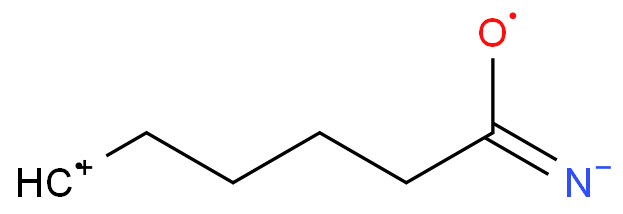
Both resins are linear aliphatic polyamides built from repeating amide (–CO–NH–) linkages, and it is the hydrogen bonding between those amide groups that gives both materials their strength, toughness, and abrasion resistance. The decisive difference is the monomer count and symmetry of the repeat unit. Nylon 6 is made from a single six-carbon monomer, ε-caprolactam (CAS 105-60-2), which ring-opens into a chain in which the amide groups alternate direction. Nylon 66 is built from two six-carbon monomers, hexamethylenediamine (CAS 124-09-4) and adipic acid (CAS 124-04-9), producing a fully symmetrical repeat unit with evenly spaced amide groups that align almost perfectly between neighboring chains.
The symmetry of the Nylon 66 chain packs the amide groups into a denser, more regular hydrogen-bonded lattice. This raises the melting point by roughly 40 °C, increases crystallinity and modulus, slows moisture diffusion slightly, and improves creep resistance under load. Nylon 6's less regular chain lowers the melting point and crystallization temperature — which is precisely why it offers a wider, gentler processing window, faster cycles, lower mold temperatures, and better surface finish and ductility. Water acts as a plasticizer in both polymers: absorbed moisture breaks interchain hydrogen bonds, so tensile strength falls and impact toughness rises as parts equilibrate with ambient humidity. Any fair PA6-vs-PA66 comparison must therefore state whether the data are dry-as-molded or conditioned (typically 23 °C / 50% RH after ISO 1110 accelerated humidification).
Nylon 66 dominates powertrain and under-hood components such as intake manifolds, where continuous service temperatures exceed the capability of Nylon 6.
The polyamide family is classified by the number of carbon atoms between amide groups. PA6 and PA66 are the two workhorse short-chain aliphatic grades, and every other commercial nylon trades one of their properties — moisture uptake, heat resistance, chemical resistance, or cost — against another.
High amide-group density (one amide per six carbons) gives the highest strength, stiffness, and toughness of the commodity nylons, but also the highest moisture absorption. PA6 leans toward parts needing impact strength, surface aesthetics, and economy; PA66 toward parts needing stiffness, heat deflection, and creep resistance. Both are the reference grades for glass-fiber and mineral-filled compounds.
More methylene groups per amide means lower moisture uptake (as little as 1.5–3% at saturation), better dimensional stability and hydrolysis resistance, but lower strength and higher price. PA12 and PA11 dominate fuel lines, pneumatic tubing, and flexible cable sheathing where humid dimensional drift cannot be tolerated.
Replacing adipic acid with terephthalic or isophthalic acid raises glass-transition and melting temperatures well beyond PA66, enabling solder-reflow connectors, E/E engine-bay parts, and long-term use above 150 °C. The trade-offs are brittleness, more aggressive processing (melt temperatures 290–340 °C), and significantly higher cost. PA46 offers the fastest crystallization and exceptional wear performance for gears and chain tensioners.
Copolymerizing irregular chains suppresses crystallinity, producing glass-clear nylons with low moisture uptake for sight glasses, fuel filters, and transparent flow meters — at the cost of lower mechanical strength and solvent resistance than the crystalline workhorses.
The table below compares Nylon 6 supply grades against Nylon 66 across the properties that drive material selection. Values are typical for unfilled resins, dry-as-molded unless noted (ASTM D638 tensile, ASTM D648 HDT, ASTM D570 / ISO 62 water absorption).
| Property | Nylon 6 (PA6, CAS 25038-54-4) | Nylon 66 (PA66, CAS 32131-17-2) |
|---|---|---|
| Melting point (ISO 11357) | ≈ 220–225 °C | ≈ 255–265 °C (≈ 40 °C higher) |
| Density | ≈ 1.13 g/cm3 | ≈ 1.14 g/cm3 |
| Water absorption (ASTM D570) | ≈ 2.8% at 50% RH; ≈ 9–10% at saturation — highest of the pair | ≈ 2.5% at 50% RH; ≈ 8.5% at saturation — slightly lower, faster equilibration |
| Tensile strength / modulus (dry) | ≈ 70–85 MPa / ≈ 2.8–3.0 GPa; better elongation and notched impact | ≈ 80–95 MPa / ≈ 3.0–3.3 GPa; stiffer, higher creep resistance |
| Heat deflection (ASTM D648, 1.8 MPa) | ≈ 60–75 °C unfilled (≈ 190–210 °C at 30% GF) | ≈ 75–100 °C unfilled (≈ 240–255 °C at 30% GF) |
| Processing window | Melt 230–270 °C; wider, more forgiving window; faster, lower-temperature cycles | Melt 270–300 °C; narrower window, degrades above ~300–310 °C |
| Relative cost and typical use | Lower resin and processing cost; film, fibers, general mechanical parts | Premium of roughly 5–15%; structural, E/E, and under-hood parts |
Both nylons are hygroscopic and must be dried before melt processing. Recommended drying is 2–4 h at 80 °C (desiccant dryer, dew point −20 °C or better) to bring residual moisture below ~0.10–0.15% for injection molding. Recommended machine settings:
| Parameter | Nylon 6 | Nylon 66 |
|---|---|---|
| Melt temperature | 230–270 °C | 270–300 °C (never above ~305 °C) |
| Mold temperature | 70–100 °C | 80–110 °C |
| Drying | 80 °C, 2–4 h, moisture < 0.15% | 80 °C, 2–4 h, moisture < 0.10% |
| Shrinkage (unfilled / 30% GF) | ≈ 1.0–1.5% / ≈ 0.3–0.5% | ≈ 1.5–2.0% / ≈ 0.3–0.6% (slightly higher and more anisotropic) |
Prevailing-torque locknuts use a precision nylon collar — a classic case where PA6 or PA66 is chosen for resilience, creep recovery, and temperature capability.
| Jurisdiction / Body | Regulation or Standard | Status for Nylon 6 / Nylon 66 |
|---|---|---|
| United States (FDA) | 21 CFR 177.1500 — Nylon resins for food contact | PA6 and PA66 listed; extractives limits and test conditions apply per paragraph (c); food-contact grades must be certified by the supplier |
| European Union | Commission Regulation (EU) No 10/2011 (plastic FCM) + Regulation (EC) No 1935/2004 | PA6 (ref. 146) and PA66 (ref. 147) listed as FCM substances with specific migration limits; caprolactam migration must be controlled in PA6 |
| EU chemicals | REACH (EC) No 1907/2006 / CLP (EC) No 1272/2008 | Polymers exempt from registration; monomers (caprolactam, adipic acid, HMD) fully registered; GHS classification applies to monomer handling |
| Electrical / fire safety (UL) | UL 94 flammability; UL 746A/746B relative temperature index (RTI) | Unmodified PA6/PA66 typically UL 94 V-2; FR-modified and GF grades reach V-0; PA66 generally earns higher RTI (up to ~125–150 °C) than PA6 |
| International standards | ISO 1874-1 (PA designation); ISO 1110 (conditioning); ASTM D638, D648, D570; ISO 11357 | Both grades designated per ISO 1874-1; always report conditioning state alongside test data |
| Drinking water (US) | NSF/ANSI 61 | Certified PA6 and PA66 compounds available for fittings and valve components; verify per formulation |
Dry-as-molded, Nylon 66 is modestly stronger and stiffer (roughly 80–95 MPa vs 70–85 MPa tensile strength) thanks to its more regular chain packing. However, Nylon 6 offers better elongation, notched impact toughness, and fatigue resistance. Because both plastics absorb moisture and lose stiffness as they equilibrate, always compare conditioned data for the actual service environment before deciding.
Not without revalidation. PA6 melts about 40 °C lower, absorbs slightly more water, and shrinks less but differently than PA66. In an existing tool, swapping grades can change dimensions enough to lose fits or crack features, and in hot environments (under-hood, electrical enclosures) PA6 may soften or creep where PA66 holds. A 30% glass-fiber PA6 can close much of the stiffness and HDT gap at lower cost, but thermal capability above ~150 °C generally still requires PA66 or higher-temperature polyamides.
Nylon 66's repeat unit contains twelve carbons and, critically, fully symmetric amide placement that lets adjacent chains align all hydrogen bonds in regular rows. Nylon 6's ring-opened repeat unit places alternating amide groups in opposite directions, disrupting the lattice. The result is lower crystal perfection, a lower melting point (~220 °C vs ~260 °C), lower crystallization temperature, and an easier, faster processing window.
For powertrain, air-intake, and E/E connector applications choose heat-stabilized or glass-filled PA66 for its higher HDT, RTI and creep resistance. For interior trim, clips, gears, cable ties, film, and textile fibers, PA6 usually wins on cost, surface finish, and toughness. Both grades have FDA 21 CFR 177.1500 and EU 10/2011 listings for food contact, but you must use a certified food-contact compound and control caprolactam migration in PA6.
|
 |
 |
|
|
 EN
 Agricultural News
 Food News
 Industrial News
 Cosmetic News
 Pharmaceutical News
 Science News


 6YRS


