-
We detected your language preference as English. Would you like to switch to the English version for a better experience?
Switch to English
Stay here


Phenolphthalein is one of the most recognized organic compounds in analytical chemistry, best known for the colourless-to-pink transition that marks the endpoint of an acid-base titration. First synthesized in the late nineteenth century by Adolf von Baeyer, the chemist also responsible for indigo dye and the recipient of the 1905 Nobel Prize in Chemistry, it has remained technically relevant for well over a century through its unique pH-dependent optical behaviour.
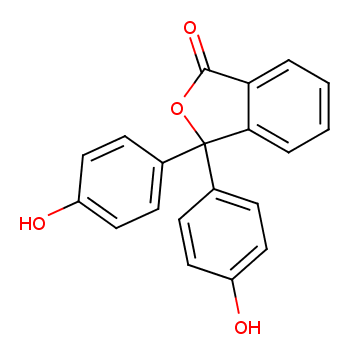
For industrial buyers and laboratory managers, phenolphthalein is a compound of contrasts: it is indispensable as an indicator and analytical reference, yet classified as possibly carcinogenic and withdrawn from former pharmaceutical uses. This guide consolidates its chemistry, production routes, derivatives and compliance position into a practical B2B reference.
| Function | Suitable Applications | Core Technical Indicators | Compliance Framework |
|---|---|---|---|
| Acid-base indicator | Titration endpoints, soil and water pH testing in laboratory and field kits | Transition range pH 8.2 to 10.0; pKa approximately 9 to 9.5 | Laboratory reagent grade; no food or drug use permitted |
| Analytical reference standard | Calibration of spectrophotometers and light-absorption instruments | Well-defined visible absorption maximum at 554 nm | Metrology-grade reference material requirements |
| Enzyme substrate precursor | Assays for esterases, lipases and alkaline phosphatase activity | Derivatives hydrolyse to release a spectroscopically detectable chromophore | In-vitro diagnostic reagent control |
| Dye intermediate | Synthesis of rhodamine B and related fluorescent dyes for research | Phthalein core reacts to build extended conjugated dye systems | Industrial chemical intermediate classification |
Phenolphthalein is an organic compound with the formula C20H14O4 that belongs to the phthalein dye class. Its structure comprises three benzene rings connected through a phthalein group, and it is usually abbreviated as phph in the chemical literature or as HIn in acid-base equilibrium reactions where it behaves as a weak acid. That weak-acid convention is not merely notational: it reflects the proton-transfer equilibrium that governs the colour change.
The compound is synthesized from phthalic anhydride and phenol and is supplied as a white or pale yellow crystalline powder that dissolves readily in alcohol, moderately in ether and other organic solvents, and only slightly in water. This solubility profile is a practical constraint, since indicator solutions are typically prepared as alcohol-based concentrates rather than aqueous solutions.
Phenolphthalein is colourless in acidic and neutral media and pink in basic media. The transition arises from structural changes that alter how the molecule absorbs light, converting a non-conjugated lactone into a highly conjugated quinoid chromophore. Understanding this equilibrium is the foundation for every analytical use of the compound, because it explains both the sharpness of the endpoint and the conditions under which the indicator can mislead.
The property set below supports lot verification, method development and storage planning. Two entries deserve particular attention: the extremely low vapour pressure, which means airborne exposure is primarily via dust rather than vapour, and the stability note, which explains why solutions should be protected from strong acid, light and heat.
| Property | Value | Practical Significance |
|---|---|---|
| Chemical formula | C20H14O4 | Basis for stoichiometric and purity calculations |
| Molecular weight | 318.33 g/mol | Used to prepare molar indicator stock solutions |
| Appearance | White to pale yellow crystalline powder | Colour shifts may indicate degradation or contamination |
| Odour | Odourless | Odour is not a useful exposure warning signal |
| Melting point | 258 to 263 degrees Celsius | Sharp range is a useful identity and purity check |
| Boiling point | 557.8 degrees Celsius | Confirms thermal robustness at ordinary process temperatures |
| Density | 1.3 g/cm3 | Informs weighing and bulk handling |
| Refractive index | 1.54 | Supplementary identity parameter for solid-state checks |
| Vapour pressure | 6.7 x 10^-13 mm Hg at 25 degrees Celsius | Negligible volatilization; exposure is dust-driven |
| Solubility | Insoluble in water; soluble in alcohol and ether | Drives alcohol-based stock solution preparation |
| pH colour-change range | 8.2 to 10.0, colourless to pink | Defines the window in which the indicator is usable |
| Absorption maximum | 554 nm | Detection wavelength for photometric indicator methods |
| pKa | 9 to 9.5 | Determines the midpoint of the visible transition |
| Stability | Stable under normal conditions; degrades under strong acid, light or heat | Store protected from light and heat in tight containers |
Phenolphthalein operates through a pH-dependent structural equilibrium. In acidic and neutral solution the molecule adopts a colourless lactone form in which the ring system is closed and the conjugation is limited, so the compound does not absorb in the visible region. As the pH rises, hydroxyl groups are deprotonated and the central ring opens, generating a quinoid structure with an extended conjugated pi system that absorbs strongly in the visible range.
That newly formed chromophore absorbs light with a maximum at 554 nm, which corresponds to the pink to fuchsia colour observed by the analyst. The transition begins around pH 8.2 and is essentially complete by pH 10.0, and because the pKa of about 9 to 9.5 sits near the midpoint of that range, the indicator changes colour close to the point at which half of the molecules have been converted to the coloured form. This relationship between pKa and transition midpoint is why phenolphthalein is well matched to strong-acid versus strong-base titrations, where the equivalence point falls in a pH region the indicator can resolve.
The change is effectively instantaneous and reversible, which is what makes the endpoint so visually striking and so reliable when the titration is properly designed. In very strongly alkaline media, however, the molecule can undergo further structural change that fades the colour, a behaviour that also appears in the related compound thymolphthalein and is a reminder to keep titrations within the validated pH window.
Phenolphthalein is a synthetic compound produced through condensation chemistry, and two manufacturing approaches dominate. Both convert phthalic anhydride and phenol into the same product, differing mainly in the catalyst system and the resulting process economics and purification demands.
Route A: homogeneous zinc chloride catalysis
The classic route runs as a homogeneous process with zinc chloride as catalyst. The reaction may be summarized as phthalic anhydride plus two equivalents of phenol, with zinc chloride, giving phenolphthalein plus two equivalents of water, with the zinc chloride unchanged at the end. Zinc chloride acts as a Lewis acid that activates the carbonyl group of phthalic anhydride and increases its reactivity toward the phenol. Chlorosulphonic acid can serve as a promoter or activating agent to accelerate the condensation. Once the reaction is complete, the product is isolated and purified by crystallization, filtration and solvent washing, and the zinc chloride can be recovered and reused in subsequent batches, which is a significant cost and waste advantage.
Route B: heterogeneous metal oxide catalysis
The second approach uses heterogeneous metal oxide catalysts such as tungstated ceria or molybdenum supported on silica. Here the net reaction is simply phthalic anhydride plus two equivalents of phenol giving phenolphthalein plus two equivalents of water, with no catalyst consumed. The heterogeneous catalyst provides both acid and redox sites on its surface, making it effective for the condensation. The reaction is typically carried out in a solvent such as toluene or xylene under reflux at around 200 degrees Celsius, with the catalyst added to the mixture and stirred for several hours until completion. The product is then isolated and purified by the same crystallization, filtration and washing sequence.
From a procurement standpoint, the choice of route can influence residual catalyst content, colour body and trace metals in the finished product. Heterogeneous catalysis offers easier catalyst separation and less contaminated wastewater, while the homogeneous route offers the attraction of catalyst recovery. Buyers specifying phenolphthalein for analytical use should confirm the route indirectly through certificate-of-analysis data on trace metals and purity.
Phenolphthalein's applications cluster around its indicator behaviour and its role as a synthetic intermediate. The table below summarizes the primary uses and the technical reason each application relies on a specific property of the molecule.
| Application | Technical Basis |
|---|---|
| Acid-base titration endpoint detection | Sharp colourless-to-pink change between pH 8.2 and 10 marks the endpoint in strong-acid versus strong-base titrations, such as HCl against NaOH. |
| Soil and water pH testing | Colour response reveals whether a sample is acidic, neutral or alkaline, informing crop selection in soil and corrosion or taste risk in water. |
| Analytical instrument calibration | The well-defined visible absorption spectrum makes it a convenient reference standard for spectrophotometers measuring light absorption. |
| Enzyme activity measurement | Phenolphthalein derivatives act as substrates for esterases and lipases, which hydrolyse them to release a chromophore detectable spectrophotometrically. |
| Dye intermediate | Phenolphthalein is a precursor to dyes including rhodamine B, a fluorescent tracer used in cell migration and membrane dynamics research. |
| Former laxative use (historical) | It once worked as a stimulant laxative, but the United States and many other countries have since banned its use in this role. |
In titration practice, phenolphthalein is used, for example, in the titration of a strong acid such as hydrochloric acid against a strong base such as sodium hydroxide. A known volume of acid is added to the base solution until the equivalence point is reached, at which the acid and base are completely neutralized and the solution is neutral. The indicator is chosen because its transition sits just on the basic side of the equivalence point, so the first persistent pink signals the endpoint with a small and predictable titration error.
In environmental testing the compound supports both soil and water assessment. In soil testing, an indicator solution is added to a sample and the resulting colour change indicates whether the soil is acidic, neutral or alkaline, information that guides which plants will grow best. In water testing, the indicator helps assess drinking water, swimming pool water and other sources, since pH that is too acidic or too alkaline can harm aquatic life, cause corrosion or alter taste and odour.
The reactivity of the phenolphthalein core has given rise to a family of related indicators, substrates and tracers. Several of these derivatives are more important commercially than the parent molecule, particularly in diagnostic assays and biological research, so a technical buyer should distinguish carefully among them.
| Derivative | Characteristics & Use |
|---|---|
| Fluorescein | Exhibits intense fluorescence under ultraviolet or blue light and serves as a fluorescent tracer in medical diagnostics and biological research. |
| Bromophenol blue | A dark blue pH indicator that turns yellow in acid and blue-green in alkali, widely used to monitor DNA or protein separation in gel electrophoresis. |
| Thymolphthalein | A white to pale yellow powder that changes from colourless to blue as pH rises, then fades above pH 10; useful for higher-pH titrations. |
| Phenolphthalein monophosphate | A substrate hydrolysed specifically by alkaline phosphatase, the enzyme that cleaves phosphomonoesters under alkaline conditions. |
| Phenolphthalein glucuronide | A glucuronic acid conjugate used as a biomarker for liver function and drug metabolism, measured by liquid chromatography and mass spectrometry. |
The diagnostic relevance of the glucuronide deserves emphasis. Because phenolphthalein is conjugated with glucuronic acid in the body, phenolphthalein glucuronide appears in blood and urine and functions as a marker for hepatic conjugation capacity. In the same way that certain dye compounds became useful hepatic function probes, the phenolphthalein scaffold illustrates how the metabolism of an indicator molecule can be repurposed into a clinical measurement rather than being merely a route of elimination.
The procedures below illustrate how phenolphthalein is used in practice. They are descriptive starting points rather than validated protocols, and each would need to be adapted to the analyst's method, sample matrix and quality system.
Method A: preparing the indicator solution
Dissolve the crystalline powder in alcohol rather than water, because aqueous solubility is negligible and a water-based preparation will give a hazy or ineffective indicator. A commonly cited preparation is a dilute solution in ethanol, added at a small volume to the titration vessel. Because the compound degrades under strong acid, light or heat, keep the stock solution in a tightly closed, light-protected container and discard it if the colour body changes.
Method B: strong-acid versus strong-base titration
Fill the burette with the strong base, such as sodium hydroxide, and place a known volume of the strong acid, such as hydrochloric acid, in the flask with a few drops of indicator. Add base gradually with continuous swirling. The solution remains colourless until the equivalence point approaches, then a faint pink appears that deepens; stop at the first persistent pink that survives brief swirling. The near-instantaneous, reversible transition is what allows the endpoint to be judged reproducibly.
Method C: photometric calibration standard
Because the coloured form has a well-defined absorption maximum at 554 nm, a carefully prepared solution of the coloured species can serve as a reference for verifying the wavelength accuracy and absorbance linearity of a spectrophotometer. Prepare the coloured form under controlled alkaline conditions, confirm the pH is within the transition window, and measure against a blank of the same matrix.
The regulatory picture for phenolphthalein is dominated by its carcinogenicity classification and the collapse of its former pharmaceutical use. The statuses below are the ones most commonly cited by suppliers and safety data sheets, but compliance must always be confirmed against current authority guidance for the specific jurisdiction and application.
| Authority | Position | Practical Implication |
|---|---|---|
| OSHA | Permissible exposure limit of 15 mg/m3 as an 8-hour time-weighted average | Workplace air monitoring and engineering controls should keep exposure below this ceiling |
| US FDA | Removed from over-the-counter laxative products in 1999 | No longer permissible as an OTC laxative active in the US market |
| IARC | Classified as Group 2B, possibly carcinogenic to humans | Drives hazard communication, labelling and substitution pressure |
| Other jurisdictions | Many countries took similar steps against laxative use | Confirm local status before importing for any consumer-facing purpose |
Phenolphthalein can cause skin and eye irritation when it contacts these tissues directly, so appropriate personal protective equipment, including gloves and safety goggles, is recommended whenever the powder or concentrated solution is handled. When ingested in large quantities it can cause gastrointestinal irritation, including nausea, vomiting and diarrhea, and long-term use of high doses as a laxative has been linked to an increased risk of colorectal cancer.
The most significant concern is carcinogenicity. Long-term rodent studies conducted by the United States National Toxicology Program showed that high doses of phenolphthalein can lead to an increased incidence of certain tumour types, raising concerns about human safety. This finding prompted the International Agency for Research on Cancer to classify phenolphthalein as Group 2B, meaning it is possibly carcinogenic to humans, and it was the direct basis for removing the compound from OTC laxatives.
Environmentally, phenolphthalein is not considered hazardous by the usual criteria, but proper disposal is still important to prevent contamination of water and soil. Facilities handling the material should treat it as a laboratory or industrial chemical waste stream rather than discharging it to drain, consistent with the general precaution that applies to any organic dyestuff.
| Identifier | Value |
|---|---|
| Chemical name | Phenolphthalein |
| Abbreviations | phph; HIn in acid-base equilibria |
| CAS number | 77-09-8 |
| EC number | 201-004-7 |
| Molecular formula | C20H14O4 |
| Molecular weight | 318.33 g/mol |
Why is phenolphthalein pink in base but colourless in acid? The molecule exists as a colorless closed lactone in acidic and neutral solution. As pH rises into the 8.2 to 10.0 window, the ring opens into a quinoid structure whose extended conjugation absorbs light at about 554 nm, which the eye perceives as pink to fuchsia. The change is effectively instantaneous and reversible.
Can phenolphthalein be used for any food or drug purpose? Not as a laxative in the United States, where the FDA removed it from over-the-counter products in 1999, and many other countries have taken similar action. Its legitimate uses are analytical and industrial rather than consumer ingestibles, and any new intended use would require a fresh regulatory assessment.
Why is such a small amount of indicator enough? Only a few drops are needed because the coloured quinoid form absorbs very strongly at 554 nm. Low indicator loading also minimizes the titration error, since the indicator itself consumes a small amount of titrant; keeping the concentration low ensures that this consumption is negligible relative to the measured volume.
Is phenolphthalein hazardous in normal laboratory use? At the small quantities used as an indicator it presents a modest hazard, but it can irritate skin and eyes and is classified as IARC Group 2B, possibly carcinogenic. Handlers should use gloves and eye protection, respect the OSHA exposure limit of 15 mg/m3 as an 8-hour time-weighted average, and dispose of waste responsibly.
ECHA substance information for phenolphthalein.
PubChem compound record for phenolphthalein.
DrugBank entry DB04824 for phenolphthalein.
National Toxicology Program rodent carcinogenicity studies on phenolphthalein.
IARC Monographs classification of phenolphthalein as Group 2B.
US FDA action removing phenolphthalein from over-the-counter laxatives, 1999.
|
 |
 |
|
 EN
EN
 Agricultural News
 Food News
 Industrial News
 Cosmetic News
 Pharmaceutical News
 Science News

 3YRS
3YRS


