-
We detected your language preference as English. Would you like to switch to the English version for a better experience?
Switch to English
Stay here


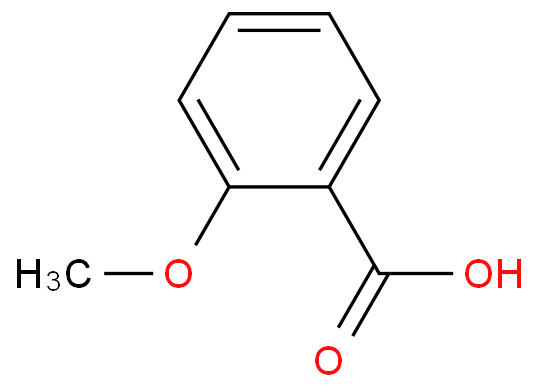
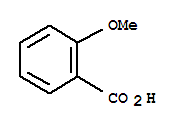
O-Anisic acid, also known as 2-methoxybenzoic acid or 2-methoxybenzoic acid, is a crystalline solid. It is an organic compound with the molecular formula CH3OC6H4CO2H. It is a colorless solid and is one of the isomers of anisic acid. The compound has been extensively studied for its intramolecular hydrogen bonding and as a substrate in various catalytic reactions. The uses of O anisic acid have been reported in Chinese cuisine, cowpea, and other biological systems.
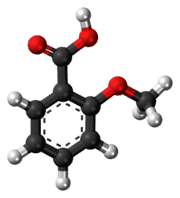
O-Anisic acid is used as a food additive to enhance the flavor or aroma of food.
It has NSAID properties, functioning as an anti-inflammatory agent without the use of steroids. Besides anti-inflammatory effects, NSAIDs also have analgesic, antipyretic, and platelet-inhibiting actions. They block the synthesis of prostaglandins by inhibiting cyclooxygenase, which converts arachidonic acid into cyclic endoperoxides, the precursors of prostaglandins.
Substituted benzoic acid compounds serve as good model molecules for studying hydrogen bonding. Studies by Margaret et al. have detailed the hydrogen bond arrangements of o-methoxybenzoic acid in solution and crystal forms, while Kharitonov and others have elucidated its intermolecular and intramolecular interactions in the gas phase. Parvez performed X-ray diffraction analysis on single crystals obtained from toluene and carbon tetrachloride (1:1), confirming that intermolecular hydrogen bonds form carboxyl dimers in the solid state. Wang Yan et al. used temperature-dependent infrared spectroscopy to find that o-methoxybenzoic acid in the solid state forms dimers and also exhibits tautomeric forms.
Researchers have explored the potential use of 2-methoxybenzoic acid as a carbon source in bacterial culture media. For example, studies on the bacterium Moraxella osloensis have shown that it can utilize 2-methoxybenzoic acid as a carbon source for growth. This finding is significant for understanding bacterial metabolic processes and optimizing the design of specific microbial culture media.
Khaled M. Khleifat and others investigated the substrate range of 2,4-dinitrotoluene (DNT) dioxygenase by measuring substrate-dependent O2 uptake and maximum growth on basal medium containing the substrate (measured as A600). Control strains were not supplemented with specific substrates. Aromatic compounds tested as potential substrates included o-phenylenediamine, α-naphthylacetic acid, β-dimethylaminobenzaldehyde, 3,4-dinitrosalicylic acid, p-nitrophenol, naphthol, o-anisic acid, salicylic acid, toluene, and benzoic acid. Among all substrates used, only p-nitrophenol showed zero oxygen uptake and zero growth, indicating it is unlikely to be a substrate analog for 2,4-DNT. Wild-type Escherichia coli (JM103) and dnt-transformant (JS39) both used o-phenylenediamine as the sole carbon source. Using α-naphthylacetic acid and β-dimethylaminobenzaldehyde as substrates, DNT dioxygenase exhibited oxygen uptake rates of 11.8 and 14 μM/hr/mg protein, respectively. For six tested substrates (3,4-dinitrosalicylic acid, p-nitrophenol, o-anisic acid, salicylic acid, toluene, and benzoic acid), JS39 appeared to have a growth advantage, even though growth rates were lower than controls, similar to the results with α-naphthylacetic acid and β-dimethylaminobenzaldehyde.
O-Anisic acid is used as a precursor for synthesizing various organic compounds and as a reagent in analytical chemistry.
According to the 2012 OSHA Hazard Communication Standard (29 CFR 1910.1200), O-anisic acid is classified as a hazardous chemical. It may cause irritation to the skin and eyes and can be an irritant to the respiratory tract. To ensure safety, it is recommended to avoid generating dust, inhaling mist, gases, or vapors, and direct contact with skin and eyes. Using personal protective equipment, such as chemical-resistant gloves, and ensuring good ventilation in the work environment are effective measures to prevent potential hazards.
[1]https://baike.baidu.com/item/%E9%82%BB%E7%94%B2%E6%B0%A7%E5%9F%BA%E8%8B%AF%E7%94%B2%E9%85%B8
[2]https://en.wikipedia.org/wiki/O-Anisic_acid
[3]https://fscimage.fishersci.com/msds/27128.htm
[4]https://www.ebi.ac.uk/chebi/chebiOntology.do?chebiId=CHEBI:421840
[5]Khleifat K M, Al-limoun M O, Alsharafa K Y, et al. Tendency of using different aromatic compounds as substrates by 2, 4-DNT dioxygenase expressed by pJS39 carrying the gene dntA from Burkholderia sp. strain DNT[J]. Bioremediation journal, 2019, 23(1): 22-31.
[6]Wang Yan, Sun Ziming, Dai Xiaochang, et al. Study on the temperature-dependent infrared spectrum of o-methoxybenzoic acid[J]. Yunnan Chemical Industry, 1992, (03): 5-6+12.
[7]https://pubchem.ncbi.nlm.nih.gov/compound/11370
|
 |
 |
 |
 |
 |
 EN
EN
 Agricultural News
 Food News
 Industrial News
 Cosmetic News
 Pharmaceutical News
 Science News

 4YRS
4YRS

