-
We detected your language preference as English. Would you like to switch to the English version for a better experience?
Switch to English
Stay here


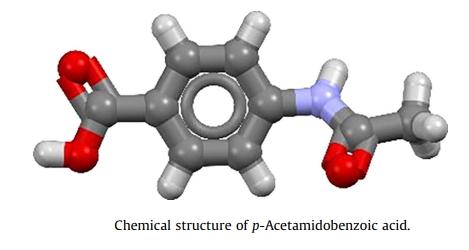
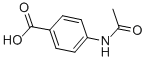
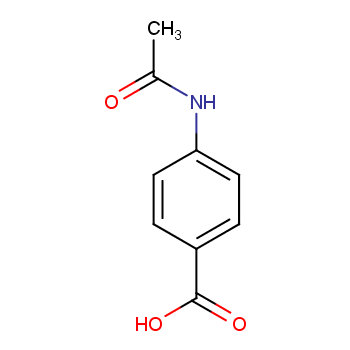
P-Acetylamino benzoic acid (4-acetamidobenzoic acid, C9H9NO3, CAS number 556-08-1) is an important intermediate in organic compound synthesis. It can be used to prepare fluorescent whitening agents and anti-asthma agents. Acedoben is also a component in some drug mixtures, such as Isoprinosine.
Isoprinosine (structure shown below) is an antiviral drug that also enhances immune function. Clinically, it is used to treat recurrent angular cheilitis, focal genital inflammation, subacute sclerosing panencephalitis, and herpes simplex virus infections. It also has certain efficacy in improving immune function in patients with AIDS, rheumatoid arthritis, and other immune system diseases. From the molecular structure, it is evident that Isoprinosine is a complex composed of inosine, p-acetylamino benzoic acid, and N,N-dimethylamino-2-propanol (DIP) in a 1:3:3 molar ratio. Inosine, being an endogenous substance, does not cause significant changes in plasma concentration when ingested, and is mainly excreted in the urine as uric acid.
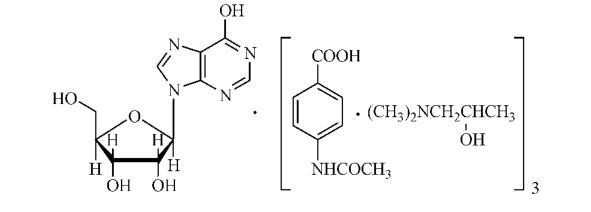
Acedoben is a component of some drug mixtures, such as Inosine pranobex. Acedoben is an N-acetyl derivative of p-aminobenzoic acid (PABA). Inosine pranobex (IAD) is a mixture of inosine, acetylphenyl, and N,N-dimethylamino-2-propanol (dimethyl methanol), used as an antiviral drug. IAD is used to treat diseases such as Dawson disease, human papillomavirus, human immunodeficiency virus, herpes simplex virus, influenza virus, airway viral infections, cytomegalovirus, and Epstein-Barr virus infections. Additionally, IAD has been used to treat post-viral chronic fatigue syndrome. Since its introduction over forty years ago, extensive in vivo and in vitro studies have been conducted to determine IAD’s mechanism of action. Depending on the model used, the actions of IAD compatible with its clinical indications have been attributed to a range of immune cell subtypes, functions, and effectors. Some studies indicate that IAD has the ability to restore natural killer cell activity in various immune deficiencies.
P-Acetylamino benzoic acid can serve as a multidentate ligand due to its two carboxyl functional groups and one acetyl group, presenting multiple coordination modes. As a member of the co-crystalline supramolecular family, p-acetylamino benzoic acid has attracted increasing attention from chemists, crystallographers, pharmacologists, and theorists, primarily because of its potential multifunctional coordination sites in constructing supramolecular frameworks. Miao-Ling Huang and colleagues synthesized mononuclear copper complexes [Cu(PABA)(phen)(H2O)2]·(NO3)·H2O(1) using p-acetylamino benzoic acid (HPABA) and phenanthroline with copper nitrate in DMF/CH3OH/H2O solution, and further obtained coordination polymers {[Zn(PABA)2(4,4′-bpy)]·4H2O}n(2) using 4,4′-bipyridine and zinc nitrate in DMF/CH3OH/H2O solution.
P-Acetylamino benzoic acid is used in studies related to enzyme inhibition and protein interactions. Early studies (Bridges and Williams, 1963) showed that the n4-sulfonamide varies with tissues and species. The in vitro deacetylation of p-acetylamino benzoic acid showed similar variations, found in rat, guinea pig, and mouse kidneys as well as guinea pig and mouse liver homogenates, but only mild activity was observed in rat and rabbit livers and rabbit kidneys. Activity was found to be similar in both sexes and occurred in the cell supernatant (105000g supernatant).
Inosine pranobex is an immunomodulatory drug approved for clinical use worldwide and is a potential adjuvant for cancer vaccines with lower clinical translation barriers. However, administering soluble InP agents in free form has the disadvantage of a short half-life and limited efficacy. Due to the coordination interactions between trivalent iron ions in InP and acedoben (Ace), Xia Li and colleagues proposed a rapid self-assembly method to synthesize cancer vaccines. Self-assembled cancer vaccines can be easily adjusted from the micron scale to the nanoscale, with shapes including rod-like, fibrous, and spherical. The Fe-Ace coordination complex not only acts as a carrier for tumor antigens but also enhances antigen-specific anti-tumor immunity due to its inherent adjuvant properties. Compared to free InP and other self-assembled cancer vaccines, Fe-Ace coordination complex-based nanofiber self-assembled cancer vaccines more effectively induce anti-tumor immune responses, showing significant therapeutic effects and inhibiting the growth of distant tumors. The proposed work provides a promising strategy for the rapid manufacture of self-adjuvant, self-carrier, and self-assembled vaccines for cancer immunotherapy derived from InP.
According to GHS, it is not classified as a hazardous substance. Its safety information is as follows:
Avoid contact with skin and eyes. Avoid dust and aerosol formation. Avoid contact – obtain special instructions before use. Provide appropriate ventilation in areas where dust is formed.
Store in a cool place. Keep container sealed and store in a dry, well-ventilated area.
[9]https://en.wikipedia.org/wiki/Acedoben
|
 |
 |
 |
|
 EN
EN
 Agricultural News
 Food News
 Industrial News
 Cosmetic News
 Pharmaceutical News
 Science News

 15YRS
15YRS

