-
We detected your language preference as English. Would you like to switch to the English version for a better experience?
Switch to English
Stay here


Mycotoxins remain a recurring food safety issue across internationally traded food commodities, according to an analysis of data from the EU Rapid Alert System for Food and Feed (RASFF). The study, published in Toxins, examined patterns in notifications involving mycotoxins and assessed differences according to contaminant, food category, country of origin, notifying country, risk decision, and notification type.
The researchers, from the University of Córdoba and the Spanish National Research Council (CSIC), reviewed 2,479 food and feed notifications submitted through the iRASFF platform between January 2020 and December 2024. To provide a longer-term perspective, annual RASFF reports were also used to assess notification patterns extending back to 2012.
The analysis found that aflatoxins dominated the notification dataset, with products originating outside the EU accounting for the large majority of reported cases. At the same time, the researchers emphasized that the RASFF system captures detected and reported regulatory non-compliances rather than providing a direct estimate of the prevalence of mycotoxin contamination across the food supply.
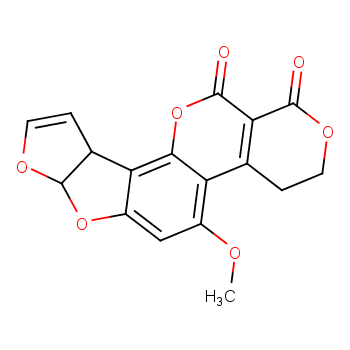
Of the 2,479 mycotoxin-related notifications recorded between 2020 and 2024, 2,076, or 84 percent, involved aflatoxins. Ochratoxins were the second-most frequently reported group, accounting for 361 notifications, or 15 percent.
Aflatoxin B1 (AFB1) alone was implicated in 1,848 notifications, highlighting its prominent role in the overall dataset. Nuts, nut products, and seeds accounted for 64 percent of aflatoxin notifications.
Across all mycotoxins, nuts, nut products, and seeds represented 54 percent of notifications. Fruits and vegetables accounted for another 23 percent, while cereals and bakery products represented 10 percent.
The distribution varied by contaminant. For ochratoxin A (OTA), fruits and vegetables accounted for 52 percent of notifications. OTA-related notifications increased from 44 cases in 2020 to 117 in 2024.
The researchers cautioned that the rise in OTA notifications could reflect changes in notification frequency and improvements in detection capacity, potentially alongside the influence of climate change on fungal proliferation.
Other mycotoxins appeared much less frequently in the dataset. The analysis recorded 26 notifications involving fumonisins, 16 involving patulin, 13 involving deoxynivalenol, seven involving T-2 toxin, and three involving zearalenone. A further 27 notifications involved Claviceps purpurea, which is associated with ergot alkaloids.
Products originating outside the EU accounted for 90 percent of mycotoxin-related notifications during the 2020–2024 study period. Türkiye was the most frequently reported country of origin, representing 24 percent of notifications overall, followed by the United States at 14 percent.
Among the 2,242 notifications involving products from outside the EU, Türkiye accounted for 585 cases. The United States followed with 353 notifications, while India accounted for 180, Egypt for 171, Iran for 155, Argentina for 146, and Pakistan for 127.
The researchers also identified differences in mycotoxin profiles between EU-origin and non-EU-origin products. Aflatoxins represented nearly 88 percent of notifications involving products originating outside the EU. For EU-origin products, the distribution was more varied: aflatoxins represented approximately 43 percent of notifications, followed by OTA at 31 percent and ergot alkaloids at 11 percent.
GuideView emphasizes that these country-level notification figures should be interpreted within the operational context of RASFF. Notification frequency can be affected by trade volumes, sampling intensity, border-control activity, and differences in national surveillance strategies. Consequently, a high number of notifications does not, by itself, establish that a country or commodity has a higher underlying contamination prevalence.
Border controls were a central component of the notification profile. Border rejections accounted for 68 percent of mycotoxin-related notifications between 2020 and 2024. Alerts represented 16 percent, information notifications for attention accounted for 13 percent, and information notifications for follow-up represented 2 percent.
The risk classification was also notable. Ninety-two percent of notifications during the five-year study period were classified as posing a “serious” risk. In each individual year analyzed, more than 85 percent of notifications received that classification.
The overwhelming majority of cases concerned food intended for human consumption. A total of 2,385 of the 2,479 notifications involved food, compared with 94 notifications involving animal feed.
The researchers cautioned against interpreting the smaller number of feed notifications as evidence that feed-related mycotoxin risks are negligible. Certain mycotoxins or their metabolites can potentially enter the human food chain through carry-over processes, making feed surveillance relevant to broader food safety management.
Annual RASFF mycotoxin notifications reached 663 in 2024, the highest annual level identified in the analysis. However, statistical analysis covering the longer 2012–2024 period did not identify a significant long-term increasing trend in mycotoxin notifications.
The broader RASFF system followed a different trajectory. Total RASFF notifications increased from 3,516 in 2012 to 5,364 in 2024. Against that expanding overall notification base, mycotoxins represented a smaller proportion of all RASFF notifications in recent years, declining from approximately 15–16 percent during 2015–2018 to 9–12 percent in 2023–2024.
This distinction is important when interpreting the 2024 peak. A higher annual count does not necessarily demonstrate a sustained deterioration in food safety conditions, particularly when detection practices, reporting activity, trade patterns, and the total volume of regulatory notifications can change over time.
The study's findings place particular attention on internationally traded commodities, where border surveillance can identify contaminated or non-compliant products before they enter wider distribution channels. The researchers concluded that continued border surveillance, international cooperation, and risk-based monitoring remain important tools for limiting dietary exposure to mycotoxins.
The researchers also called for surveillance and control strategies to evolve alongside scientific evidence, climate change, and international trade patterns. Changes in environmental conditions can influence fungal proliferation, while changes in global sourcing and commodity flows can alter the products and origins encountered by food-control authorities.
For food businesses and regulators, the findings reinforce the value of maintaining targeted controls around commodities and contaminant combinations that generate substantial numbers of notifications. At the same time, the study highlights the need to interpret surveillance data carefully rather than equating regulatory notifications directly with population exposure.
GuideView observes that the analysis illustrates two parallel realities in modern food safety surveillance. First, mycotoxin notifications remain concentrated in identifiable commodity groups, particularly nuts, nut products, and seeds, with aflatoxins accounting for the dominant share of reported cases. Second, notification data must be read as an indicator of regulatory detection activity rather than a standalone measure of contamination prevalence or consumer risk.
The strong representation of non-EU-origin products also underscores the importance of controls that operate across the international supply chain. For globally traded commodities, food safety management extends beyond domestic production and encompasses supplier controls, import requirements, border sampling, analytical capacity, and information exchange among authorities.
GuideView further notes that the absence of a statistically significant long-term increase from 2012 through 2024 provides important context for the 663 notifications recorded in 2024. The annual peak should be considered alongside the overall expansion of RASFF notifications and the changing share represented by mycotoxins. This approach helps distinguish an increase in reported regulatory events from evidence of a broad, sustained increase in underlying contamination.
From an industry perspective, the study also highlights why surveillance strategies may need to remain adaptable. Detection capabilities, international trade patterns, and environmental conditions can all change the profile of food safety risks. Continued risk-based monitoring, supported by international cooperation and data interpretation that accounts for these variables, therefore remains central to managing mycotoxin exposure across complex global food supply chains.
 EN
EN
 Agricultural News
 Food News
 Industrial News
 Cosmetic News
 Pharmaceutical News
 Science News