-
We detected your language preference as English. Would you like to switch to the English version for a better experience?
Switch to English
Stay here


Terpenes are among the largest and most diverse families of natural compounds, built from repeating five-carbon isoprene units and responsible for the characteristic aromas of pine, lavender, citrus peel, and countless other plants. In food and nutrition they function as flavour and aroma ingredients, as antimicrobial preservatives, and as nutraceutical actives with a broad range of reported biological activities.
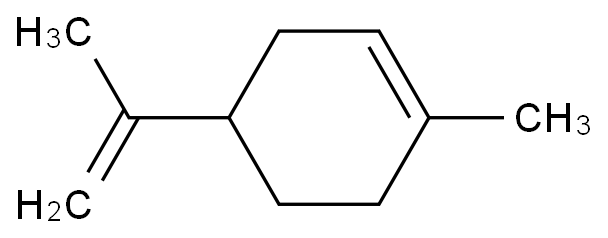
For product developers, the key technical questions are not simply whether terpenes smell pleasant or carry health claims, but how their carbon skeleton, volatility, and polarity determine extraction, stability, and solubility in a finished product. This guide examines terpene chemistry, classification, production, food applications, and the safety and regulatory parameters that shape their use.
| Function | Suitable Users | Core Technical Indicators | Compliance Framework |
|---|---|---|---|
| Flavouring / aromatic ingredient | Beverage, confectionery, and seasoning developers | Volatility; odour threshold; carbon number class | Flavour regulation; source-dependent status |
| Antimicrobial / preservative | Food preservation and shelf-life teams | Antibacterial and antifungal activity; volatility retention | Preservative rules vary by jurisdiction |
| Nutraceutical active | Supplement and functional food producers | Reported anti-inflammatory, antioxidant, and other activities | Dietary ingredient definition and source rules |
| Antioxidant support | Functional food formulators | Radical scavenging; protection of labile nutrients | No specific ceiling beyond ingredient rules |
| Sensory / top-note contribution | Flavour houses and aroma formulators | Evaporation rate; compactness of cyclic structures | Standard flavour and label rules |
Terpenes are natural compounds with the general formula (C5H8)n for n equal to two or greater. Plants, particularly conifers, produce more than thirty thousand terpene compounds, and the term itself was coined in 1866 by the chemist August Kekulé to describe hydrocarbons sharing the empirical formula C10H16, of which camphene was an early example.
Because terpenes can incorporate almost any common functional group, functional-group analysis is not a useful way to classify them. Instead, the number and structural organisation of their carbon atoms is the definitive characteristic, which is why they are grouped by carbon count into monoterpenes (C10), sesquiterpenes (C15), diterpenes (C20), and higher classes.
All terpenes are assembled from isoprene units, an empirical pattern known as the isoprene rule. Isoprene itself, a gaseous C5H8 hydrocarbon, is emitted by plant leaves as a natural byproduct of metabolism. The simplest terpenes have very low polarity, which makes them volatile and gives them their role as the light, evaporating "top notes" in the perfume and flavour industry.
For a broader reference on nomenclature and identity data, see the encyclopedia entry at Guidechem Chemical Encyclopedia.
| Class | Natural hydrocarbons and their oxidised derivatives |
| General formula | (C5H8)n, where n is 2 or greater |
| Building block | Isoprene (isopentane) units, per the isoprene rule |
| CAS number | Not applicable; terpenes are a family of compounds rather than a single substance |
| Principal classes | Monoterpenes, sesquiterpenes, diterpenes, sesterpenes, triterpenes |
The low polarity of small terpenes makes them volatile, so they partition readily into the gas phase and reach the olfactory receptors at very low concentrations. Monoterpenes, being the lightest class, evaporate quickly and register as top notes, while heavier sesquiterpenes linger longer, giving flavourists a natural tool for building aroma progression over time.
Many terpenes and terpenoids disrupt microbial cell membranes, giving them antibacterial and antifungal activity that supports food preservation. In latex-producing plants, sesquiterpenes act as potent antimicrobial and anti-insecticidal agents, and the same membrane-disrupting behaviour is what food technologists exploit to extend shelf life.
Beyond aroma and preservation, terpenes act through antioxidant, anti-inflammatory, and other pathways relevant to nutrition. d-limonene, for instance, has been reported to reduce allergic lung inflammation, probably through its antioxidant properties, while triterpenoid compounds such as celastrol and ginsenosides have been studied for neuroprotective effects against oxidative stress and neuroinflammation.
Traditionally, terpenes are obtained by extraction from plant material. Because most primary terpenes are composed of hydrocarbons and are very nonpolar, they can be extracted with nonpolar organic solvents such as hexane, or separated by chromatography using silica as a stationary phase. In chromatographic separation, terpenes with more carbons generally elute more slowly than lower molecular-weight compounds, although cyclised terpenes can elute faster than their non-cyclic counterparts of the same carbon number because of their more compact shape.
Volatile terpenes present in plant tissues are commonly recovered by traditional hydrodistillation, organic solvent extraction, or newer methods such as solid-phase microextraction and microwave-assisted extraction. Each method selects for a different profile of the volatile fraction, so the choice of extraction route directly shapes the sensory and functional character of the resulting material.
Microbial fermentation offers a modern alternative. A recombinant bacterium is cultured in the presence of a gaseous substrate and engineered to produce a target terpene or a precursor such as mevalonic acid, isopentenyl pyrophosphate, dimethylallyl pyrophosphate, isoprene, geranyl pyrophosphate, farnesyl pyrophosphate, or farnesene. Escherichia coli and yeasts have proved the most attractive platforms, and advances in genetic engineering allow them to generate either bulk or value-added terpenoids at scale.
Terpenes belong to the largest group of secondary metabolites and consist of five-carbon isoprene units assembled in thousands of ways. A useful distinction is that terpenes are simple hydrocarbons, while terpenoids are modified terpenes bearing different functional groups, with methyl groups oxidised, moved, or removed at various positions. Both are grouped by carbon count.
Comprising ten carbon atoms and two isoprene units, monoterpenes are found in essential and fixed oils from plants and carry the distinct aromas that make them valuable in flavour, fragrance, and pharmaceutical products. Most are biologically active with strong antibacterial properties.
Built from three isoprene units and found in linear, cyclic, bicyclic, and tricyclic forms, sesquiterpenes also occur as lactone rings. Many plant latexes contain sesquiterpenes as potent antimicrobial and anti-insecticidal agents.
Formed from four isoprene units and obtained from plants and fungi, diterpenes are mostly nonvolatile and appear only in trace amounts in essential oils. They have shown anti-inflammatory, antimicrobial, anticancer, and antifungal activity.
Comprising twenty-five carbon atoms and five isoprene units, sesterpenes occur in fungi, marine organisms, insects, sponges, lichens, and protective insect waxes. They are biologically active with anti-inflammatory, anticancer, antimicrobial, and antifungal properties.
Synthesised via the acetate/mevalonate pathway and produced by animals, plants, and fungi, triterpenes include squalene, the precursor to all steroids. They are described as anti-inflammatory, antiviral, antimicrobial, antitumoral, and immunomodulatory compounds, and several are implicated in the resolution of immune diseases.
Structure-function relationship: carbon count and the degree of cyclisation together govern volatility and polarity. Because the terpene backbone is a pure hydrocarbon, increasing the number of isoprene units raises molecular weight and lowers volatility, which is why C10 and C15 terpenes dominate aroma and antimicrobial roles while C20 and C30 terpenes serve nutraceutical functions.
Because terpenes span a wide range of molecular weights, comparing classes on volatility and polarity is essential to selecting the right one. The table below compares the principal classes on the parameters most relevant to food formulation.
| Class | Formula / Units | Volatility and Typical Role |
|---|---|---|
| Monoterpenes | C10H16; two isoprene units | High volatility; top notes, fragrance, antibacterial use |
| Sesquiterpenes | C15H24; three isoprene units | Moderate volatility; aroma, antimicrobial and anti-insecticidal action |
| Diterpenes | C20H32; four isoprene units | Mostly nonvolatile; nutraceutical and bioactive roles |
| Sesterpenes | C25H40; five isoprene units | Nonvolatile; bioactive compounds from fungi and marine sources |
| Triterpenes | C30H48; six isoprene units | Nonvolatile; includes squalene and steroid precursors |
| Polarity | Very nonpolar for primary hydrocarbon terpenes |
| Solubility | Soluble in nonpolar organic solvents such as hexane |
| Volatility | Terpenes of 15 carbons or fewer are volatile; higher classes are nonvolatile |
| Chromatographic behaviour | Higher-carbon terpenes elute more slowly; cyclic forms elute faster than non-cyclic analogues |
| Storage | Airtight containers away from light and heat to prevent degradation |
Terpenes are used across beverages, confectionery, and functional nutrition. The table below maps their functions to representative applications and the objective each serves.
| Function | Typical Applications | Key Formulation Objective |
|---|---|---|
| Flavour and aroma | Functional beverages, powdered beverages, tea, coffee | Deliver characteristic scent and taste at low use levels |
| Preservation | Beverages, beverages with essential oils, food preservation systems | Inhibit microbial growth and extend shelf life |
| Nutraceutical benefit | Nutraceuticals and functional foods | Deliver bioactivity such as antioxidant and anti-inflammatory support |
| Confectionery flavouring | Nutrition bars, sports bars, nutritional snacks, cereals | Improve palatability and mask off-notes of functional ingredients |
| Antioxidant support | Functional beverages and nutrition bars | Protect labile nutrients and fats from oxidative degradation |
The versatility of the family is what makes it so broadly useful: a single class of molecules can carry the aroma of a beverage, help preserve it, and contribute a functional claim on the label. Because their potency is high, terpenes are typically used at low concentrations, which limits their impact on the bulk cost of the formulation.
Begin by defining the role. For aroma and top notes, choose volatile monoterpenes or sesquiterpenes; for nutraceutical activity, choose nonvolatile diterpenes or triterpenes. Matching the class to the function avoids using a heavy terpene where a light one is needed.
Verify whether the material is plant-extracted, solvent-recovered, distillate-derived, or produced by microbial fermentation, since the route influences the impurity profile, the sensory character, and the regulatory status of the ingredient.
Formulate with antioxidant co-protection where the terpene is labile, and select packaging that limits headspace and light exposure. Because volatiles migrate into headspace, the delivered concentration at end of shelf life will be lower than the level added at manufacture.
Store terpenes in airtight containers away from light and heat to prevent degradation, and handle them carefully to avoid direct contact with skin and eyes. Because many are concentrated sensitisers or irritants in neat form, treat them as active materials rather than bulk fillers.
The table below illustrates the segments in which terpenes appear and the role they typically play. These are orientation examples rather than complete recipes, and the delivered levels should be established through sensory and stability work.
| Market Segment | Illustrative Products | Technical Role |
|---|---|---|
| Beverages | Functional beverages, powdered beverages, tea, coffee | Aroma and flavour delivery; antioxidant support |
| Confectionery | Nutrition bars, sports bars, nutritional snacks, cereals | Palatability improvement and off-note masking |
| Essential oils | Nutraceutical and flavouring essential oil blends | Concentrated source of monoterpenes and sesquiterpenes |
| Preservation systems | Food preservation formulations | Antimicrobial action extending shelf life |
The regulatory status of a terpene depends heavily on its source and intended use, and the rules differ between markets. The overview below is for orientation only and should not be interpreted as a substitute for the current legal text. Always verify current requirements with the competent authority before commercialising.
| Market / Framework | Technical Relevance | Compliance Action |
|---|---|---|
| US dietary ingredient definition | Plant-derived terpenes are considered botanical dietary ingredients; the source organism can change qualification | Document the derivation route and confirm the material meets the dietary ingredient definition |
| US FD&C Act section 201(ff)(3)(B) | THC and CBD are excluded from the dietary supplement definition; terpenes from plant parts free of these may qualify | Substantiate the source plant part and confirm exclusion does not apply |
| Flavour and food additive rules | Status and permissible levels vary with the specific terpene and the food category | Confirm the individual substance listing and any category-specific conditions |
The qualifying factor for terpenes is not toxicity alone but origin and history of use. A plant-derived terpene is treated as a botanical dietary ingredient, whereas the same structural compound obtained from an insect source may not qualify unless it can be shown to have been eaten as a food by people. For example, (E)-beta-caryophyllene occurs in Cannabis and lima beans as well as in the Asian lady beetle Harmonia axyridis, yet its source affects its regulatory treatment.
At high concentrations, terpenes are potent materials with documented biological activity, and this cuts both ways: the same membrane-disrupting and radical-scavenging actions that give them antimicrobial and antioxidant value mean that neat handling carries irritation and sensitisation risk. They should be stored in airtight containers away from light and heat and handled with care to avoid contact with skin and eyes.
For nutritional use, the relevant consideration is dose and evidence. Many bioactivities reported for terpenes, including anti-inflammatory, anticancer, neuroprotective, antiviral, and cardioprotective effects, derive from cell and animal studies rather than human trials, so claims should be framed cautiously and kept within the bounds of documented dietary use in the target market.
| Reference Point | Guidance |
|---|---|
| Volatility threshold | Terpenes of 15 carbons or fewer are volatile |
| Polarity | Primary hydrocarbon terpenes are very nonpolar |
| Extraction solvent | Nonpolar solvents such as hexane; silica chromatography for separation |
| Storage | Airtight containers away from light and heat |
| Handling | Avoid direct contact with skin and eyes |
| Regulatory qualifier | Source organism and derivation route affect dietary ingredient status |
Note: the guidance above is a reference framework for orientation and varies with the specific terpene, its source, and the target market. Confirm all points against current official sources before use in a commercial formulation.
What is the difference between terpenes and terpenoids?
Terpenes are simple hydrocarbons built from isoprene units, while terpenoids are modified terpenes bearing functional groups, with methyl groups oxidised, moved, or removed. Both are grouped by carbon count into monoterpenes, sesquiterpenes, diterpenes, sesterpenes, and triterpenes.
Why are monoterpenes called top notes?
Monoterpenes are light compounds that evaporate easily because of their low polarity and low molecular weight. That fast evaporation is exactly the behaviour the perfume and flavour industry describes as a top note, delivering the first, most volatile part of an aroma profile.
Does the plant source of a terpene matter for regulatory purposes?
Yes. The same compound can be derived from multiple organisms, and where it originated can determine whether it meets the definition of a dietary ingredient. Plant-derived terpenes are treated as botanical dietary ingredients, while some non-plant sources may not qualify without a demonstrated history of being eaten as food.
How are terpenes extracted and separated?
Nonpolar terpenes can be extracted with a nonpolar organic solvent such as hexane, or separated by chromatography using silica as the stationary phase. Higher-carbon terpenes elute more slowly than lighter compounds, and cyclic terpenes elute faster than non-cyclic forms of the same carbon number because they are more compact.
Because terpenes are a family rather than a single substance, sourcing begins with identifying the specific compound and class. The resources below support specification writing and supplier verification.
| Identifier | Value | Lookup Resource |
|---|---|---|
| Family reference | Terpenes: isoprene-based natural hydrocarbons | Dictionary entry |
| Supplier listings | Individual terpene compounds; plant-extracted and fermentation-derived | Supply channel |
| Verified suppliers | Regional and global flavour and botanical ingredient suppliers | Supplier directory |
|
 EN
 Agricultural News
 Food News
 Industrial News
 Cosmetic News
 Pharmaceutical News
 Science News

