-
We detected your language preference as English. Would you like to switch to the English version for a better experience?
Switch to English
Stay here


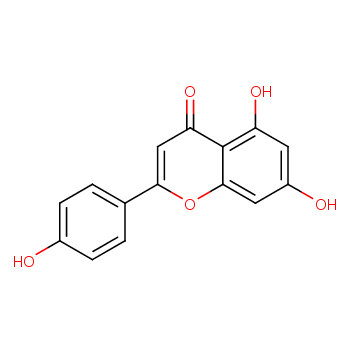
Apigenin (4',5,7-trihydroxyflavone) is a canonical flavone belonging to the flavonoid family, characterized by a C6–C3–C6 tricyclic scaffold with a C2=C3 double bond and a C4 carbonyl group that collectively govern its antioxidant and anti-inflammatory behavior. Beyond structural identity, its industrial relevance depends heavily on thermal stability and sourcing pathways. This article integrates structural chemistry, thermal degradation kinetics in plant matrices, and industrial supply chain engineering to clarify whether apigenin is a flavonoid and how its stability defines real-world formulation performance in food, nutraceutical, and pharmaceutical systems.

Yes—apigenin is unequivocally a flavonoid, more precisely a flavone subclass compound defined as 4',5,7-trihydroxyflavone. Its molecular architecture follows the canonical flavonoid backbone (C6–C3–C6), composed of two aromatic rings (A and B) linked by a heterocyclic C-ring. The presence of a C2=C3 double bond conjugated with a C4 carbonyl group enhances electron delocalization, which is directly responsible for its radical scavenging capacity and modulation of inflammatory mediators such as COX-2 and NF-κB pathways.
Although crystalline apigenin exhibits a high melting point (~347°C), its real-world stability in aqueous and biological matrices is governed not by melting behavior but by glycosidic hydrolysis kinetics and oxidative degradation. In plant-based food systems such as spinach, apigenin is predominantly present as glycosides (e.g., apiin), which are significantly more sensitive to heat and pH shifts than the aglycone.
Under thermal processing conditions, degradation follows pseudo-first-order kinetics:
Corresponding half-life (t1/2) values vary dramatically depending on matrix composition:
These results confirm a critical industrial insight: apigenin stability is matrix-dependent rather than molecule-limited. Lipid-rich or low-water systems significantly slow hydrolysis compared to aqueous formulations.
Industrial apigenin supply originates from two parallel pathways: botanical extraction systems and chemical synthesis routes. The dominant commercial sources remain plant-derived due to regulatory acceptance and clean-label positioning.
Primary botanical sources include Matricaria recutita (chamomile flowers), Apium graveolens (celery seeds), and Cicer arietinum (chickpea biomass). These matrices typically contain apigenin as glycosidic conjugates, requiring hydrolysis prior to purification.
Extraction technologies significantly influence yield efficiency:
Synthetic routes, although less common commercially, include pathways via p-coumaric acid intermediates or Baker–Venkataraman rearrangement, achieving ≥92–96% conversion efficiency under optimized catalytic conditions. However, solvent recycling complexity and stereoisomer control remain industrial bottlenecks at scale.
Purity assessment of apigenin cannot be reduced to percentage alone; instead, impurity fingerprinting (HPLC/LC-MS profiling) determines regulatory and functional suitability.
Natural extracts often contain co-eluting flavonoids (luteolin, kaempferol derivatives), plant waxes, and pesticide residues. Synthetic apigenin, while capable of achieving ≥99.0% purity, may introduce trace metal residues (Pd, Pt catalysts) and positional isomers requiring stringent QC validation.
From a regulatory standpoint, neither source is inherently superior; instead, suitability depends on end-use positioning—nutraceutical branding favors botanical extracts, while pharmaceutical intermediates favor synthetic consistency.
Expert Commentary: “Procurement teams often overvalue label perception and undervalue impurity traceability. The real competitive advantage lies in validated LC-MS impurity fingerprints and supplier capability to maintain batch-to-batch consistency under ISO 17025-certified analytics.” — Senior Analytical Chemist, Global Flavonoid Standards Initiative
Supply chain reliability is increasingly defined by systemic resilience rather than yield alone. Botanical apigenin supply is vulnerable to climate variability, agricultural disease pressure, and seasonal harvesting cycles, particularly in chamomile-dominant regions.
A robust audit framework should evaluate:
Industrial buyers increasingly adopt “dual-source redundancy models,” combining botanical extraction with synthetic fallback supply chains to mitigate geopolitical and agricultural disruption risks.
Looking for stable, high-purity apigenin with validated impurity fingerprinting and full GMP compliance? Discover how leading nutraceutical and pharmaceutical manufacturers secure resilient supply chains for scalable production.
[1] Journal of Agricultural and Food Chemistry, “Thermal stability of flavonoids in plant matrices”, 2024.
[2] Food Chemistry, Elsevier, “Kinetics of flavone degradation during thermal processing”, 2023.
[3] ISO 17025:2017 General requirements for testing and calibration laboratories.
[4] CAS SciFinder Database, Apigenin compound profile and sourcing pathways, 2025 update.
[5] European Pharmacopoeia (Ph. Eur.) monograph: Flavonoid impurities and analytical requirements.
 |
 |
|
 |
|
|
 EN
EN
 Agricultural News
 Food News
 Industrial News
 Cosmetic News
 Pharmaceutical News
 Science News

 1YR
1YR


Expert Commentary: “In modern nutraceutical manufacturing, the biggest misconception is equating high melting point with processing stability. For flavones like apigenin, the true failure mode is glycosidic cleavage during aqueous thermal processing. Facilities that delay addition until post-thermal cooling can preserve up to 30–45% more active aglycone fraction. This is now a key design principle in beverage R&D pipelines.” — Dr. Elena Martinez, PhD in Food Chemistry, former senior researcher at EU Flavonoid Stability Consortium