-
We detected your language preference as English. Would you like to switch to the English version for a better experience?
Switch to English
Stay here


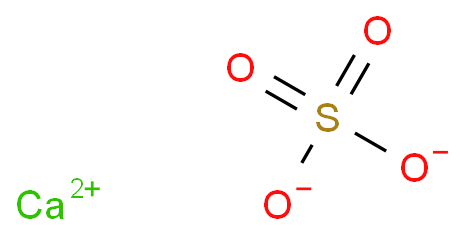
Calcium sulfate and its hydrates represent significant industrial compounds with a rich historical utilization. Gypsum, commonly known as calcium sulfate dihydrate (CaSO4•2H2O), and plaster of Paris, recognized as calcium sulfate hemihydrate (CaSO4• H2O), are key derivatives of calcium sulfate. While naturally occurring in mined gypsum rock, calcium sulfate also manifests itself in mineral form. Gypsum is formed as sedimentary rock in beds when calcium sulfate, a natural component of seawater, precipitates as shallow marine water bodies undergo evaporation. Gypsum deposits exhibit a global presence, and the mineral itself, being transparent, soft, and white, stands as the most prevalent sulfate mineral. Alabaster, a dense translucent variant of gypsum, finds application in sculpture, engravings, and carvings, while selenite presents itself in crystallized transparent sheets.
The historical utilization of gypsum dates back to prehistoric times, evident in archaeological findings of its extraction from caves and application in ancient gravestone painting. The earliest recorded use as a building material dates to 6000 BCE in the southwestern Asian regions of ancient Anatolia and Syria. The Egyptians incorporated gypsum and plaster in their architectural endeavors, notably in the construction of the Great Pyramids around 3700 BCE. Over 2,000 years ago, China employed calcium sulfate in the production of tofu. The term "gypsum" originates from the Greek word "gypsos," meaning chalk, as referenced by the Greek natural philosopher Theophrastus (371–286 BCE). Gypsum witnessed extensive use during Roman times and throughout the Middle Ages.
The process of calcination transforms calcium sulfate dihydrate (CaSO4•2H2O) into the hemihydrate form through the reaction: CaSO4•2H2O → CaSO4•H2O + H2O. Throughout history, various calcination methods have been employed to convert gypsum into plaster. The resulting hemihydrate form is commonly referred to as plaster of Paris. In the 1700s, Paris emerged as a prominent center for plaster production, with a significant portion of its architecture constructed using plaster. Following the 1666 fire in London, which devastated 80% of the city, the King of France mandated the application of plaster to all wooden houses in France for fire protection.
The term "plaster of Paris" originated from the extensive gypsum deposits quarried in the Montmartre district of Paris. Antoine Lavoisier (1743–1794) contributed to the understanding of gypsum in 1765 and 1766, presenting papers to the French Academy of Science. Lavoisier determined that gypsum is a hydrated salt and elucidated the plaster-setting process, revealing that the hemihydrate form rehydrates back to gypsum. Plaster hardening occurs because hemihydrate calcium sulfate exhibits greater solubility in water compared to gypsum. Mixing the hemihydrate plaster form with water leads to its reformation into gypsum, precipitating as solid fibrous crystals.
The calcination of CaSO4•2H2O, producing hemihydrate calcium sulfate or plaster of Paris, occurs in the temperature range of approximately 150°C to 200°C. Further heating beyond 200°C up to 300°C results in complete dehydration, forming an anhydrous calcium sulfate known as soluble anhydrite. Soluble anhydrites, such as Drierite, are employed as drying agents, undergoing a color change from blue to pink upon water absorption. At temperatures exceeding 300°C, calcium sulfate loses its water-absorbing capability, becoming insoluble calcium sulfate, also referred to as insoluble anhydrite, dead burnt calcium sulfate, or dead burnt gypsum.
The United States holds a prominent position as the primary global producer of gypsum, contributing approximately 15% to the worldwide production of 120 million tons of mined gypsum. Key gypsum-producing states within the U.S. include Oklahoma, Texas, Nevada, Iowa, and California. Gypsum extraction is a global phenomenon, with mines spanning across 90 countries. Complementing mined gypsum, synthetic gypsum constitutes 25% of the United States' gypsum production. Notably, synthetic gypsum is a by-product of chemical processes, primarily emanating from flue gas desulfurization methods utilized to mitigate sulfur emissions, especially in coal-burning power plants. This involves the reaction of calcium carbonate with sulfur dioxide, resulting in the formation of calcium sulfite (CaSO3): CaCO3(s) + SO2(g) → CaSO3(s) + CO2(g). Subsequently, calcium sulfite undergoes oxidation to yield gypsum: 2CaSO3(s) + O2(g) + 4H2O(l) → 2CaSO4·2H2O(s). Another significant source of synthetic gypsum arises from acid neutralization, a process integral to the sulfate production of titanium dioxide (TiO2), a whitening agent in various commercial products. The neutralization of acidic waste in this context yields gypsum as a by-product. Additionally, gypsum is generated in the production of sugar and citric acid, where dilute citric acid (C6H8O7) is precipitated with calcium hydroxide to form calcium citrate (Ca3(C6H5O7)2). The subsequent treatment of calcium citrate with sulfuric acid results in the production of citric acid, with gypsum emerging as a by-product.
The primary application of calcium sulfate is within the construction industry, constituting over 90% of its overall production. The hemihydrate or calcined variant is combined with water to form plaster. This plaster slurry is poured between layers of paper to create standard drywall, commonly referred to as wallboard or sheetrock (Sheetrock being a registered trademark of USG Corporation, the parent company of United States Gypsum Company). Drywall exhibits high fire resistance due to water's elevated specific heat and its presence in the hydrated form of gypsum.
Another significant construction application of calcium sulfate is its dihydrate uncalcined form, used as an ingredient in Portland cement. Portland cement typically contains 3.5% gypsum by weight, with gypsum retarding hydration and preventing the cement from rapid hardening.
Beyond the construction sector, gypsum finds numerous applications. Agriculturally, it serves several purposes such as supplying calcium and sulfur to soils, balancing pH, and conditioning soil. Food-grade calcium sulfate acts as a calcium supplement in enriched foods like flour, cereals, and baked goods. Additionally, it functions as a gelling and firming agent in canned vegetables. Notably, calcium sulfate is a prevalent coagulant in tofu production, where the positively charged calcium ions attract negatively charged groups in protein molecules, facilitating the coagulation of thermally denatured proteins.
Anhydrous calcium sulfate is utilized as a whitening filler in various food and consumer products, including frostings, ice creams, paper, paints, and toothpaste. Furthermore, powdered gypsum can be employed as chalk for marking athletic fields and large areas.
Richard L. Myers (2009). The 100 Most Important Chemical Compounds: A Reference Guide. Greenwood Publishing Group. October 1, 2009. https://doi.org/10.1021/ed086p1182
 |
|
 |
 |
|
 EN
EN
 Agricultural News
 Food News
 Industrial News
 Cosmetic News
 Pharmaceutical News
 Science News

 1YR
1YR


