
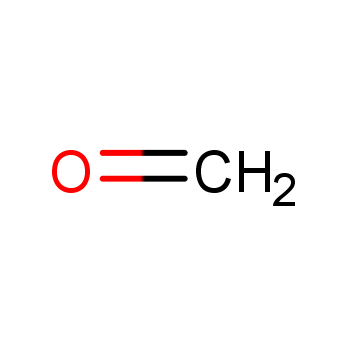
Formaldehyde, a colorless and flammable gas, exhibits a distinctive pungent odor and represents the simplest aldehyde within the class of organic compounds characterized by the carbonyl group bonded to at least one hydrogen atom. The compound's elucidation can be credited to August Wilhelm von Hoffmann (1818–1892) in 1867, following the inadvertent synthesis by the Russian chemist Aleksandr Butlerov (1828–1886) in 1857. When dissolved in water, formaldehyde forms formalin, a solution commonly marketed at a 37% concentration.
A by-product of the combustion of organic compounds, metabolic processes, and other natural occurrences, formaldehyde emerges from wood combustion and may escalate in atmospheric concentrations due to forest fires and urban pollution, particularly from transportation sources. Recognized as a significant indoor air pollutant, formaldehyde finds its major sources in building materials like particleboard, plywood, and paneling, incorporating formaldehyde resins as bonding adhesives. Carpets, upholstery, drapes, tobacco smoke, and indoor combustion products also contribute to indoor formaldehyde levels. Emission from building materials can persist for several years post-installation. In the 1960s and 1970s, approximately half a million homes in the United States employed urea formaldehyde foam insulation; however, health concerns led to its discontinuation as an insulator in the early 1980s. Individual reactions to formaldehyde exposure vary, with an estimated 10% to 20% of the population experiencing reactions at concentrations as low as 0.2 parts per million. Formaldehyde exposure may result in irritation of the eyes, nose, and throat, causing symptoms such as coughing, sneezing, runny nose, and burning eyes. More severe reactions include insomnia, headaches, rashes, and breathing difficulties. Some states have instituted indoor air quality standards, ranging from 0.05 to 0.5 ppm.
The industrial production of formaldehyde dates back to the late 1800s and involves the catalytic oxidation of methanol: 2CH3OH(g) + O2(g) → 2CH2O(g). This oxidation process occurs at temperatures ranging from 400°C to 700°C with the presence of metal catalysts, including silver, copper, molybdenum, platinum, and their alloys. Formaldehyde is commonly utilized in the form of an aqueous solution known as formalin, with commercial solutions varying between 37% and 50% formaldehyde. The preparation of formalin involves heating and the addition of methanol to prevent polymerization, resulting in a final formalin solution containing between 5% and 15% alcohol.
Formaldehyde boasts a myriad of applications, with its primary use in the production of synthetic resins. Many formaldehyde resins are employed in the manufacturing of hard plastics for molding and laminates. Additionally, formaldehyde resins are instrumental in treating textiles to impart a "wrinkle-free" quality, producing adhesives extensively used in plywood and particleboard production. Other prevalent applications include its role as a disinfectant, fungicide, and preservative. Formalin, a solution of formaldehyde, has been the traditional embalming fluid in the mortuary industry for over a century. Formaldehyde also finds application in papermaking, textile production, and the fertilizer industry.
More than half of the commercial formaldehyde output is directed towards the manufacture of phenolic, urea, and melamine formaldehyde resins. Another 5–10% is allocated to polyacetyl resins, while approximately 80% contributes to the resins and plastics sector. Phenolic-formaldehyde resins mark the inception of synthetic plastics, with the first plastic, Bakelite, created in 1906 by chemist Leo Hendrik Baekeland. Bakelite served as a thermosetting phenol plastic, hardening into its final shape upon heating. The initial application of Bakelite was in electrical insulators, and its adaptation led to the formation of the Formica Corporation. Formaldehyde has a historical role as a preservative in biology and medical laboratories, prominently featured in embalming fluids. These fluids typically contain 5–15% formaldehyde along with a significant alcohol percentage and other additives serving various functions, such as bleaches and coloring agents to preserve skin color. Since 1900, formaldehyde has been utilized to preserve deceased bodies, distinguished by its low cost and biochemical advantages, including germ and microorganism eradication, decomposition enzyme destruction, retardation of protein decomposition, and tissue hardening.
Richard L. Myers (2009). The 100 Most Important Chemical Compounds: A Reference Guide. Greenwood Publishing Group. October 1, 2009. https://doi.org/10.1021/ed086p1182
 |
 |
 |



 3YRS
3YRS


