-
We detected your language preference as English. Would you like to switch to the English version for a better experience?
Switch to English
Stay here


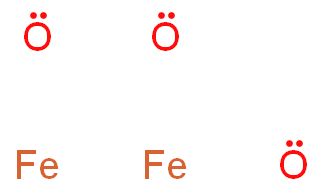
Iron(III) oxide, commonly known as hematite in its mineral form, stands as the principal variety of iron ore, contributing significantly to the iron industry. Referred to colloquially as rust when denoting the corrosion of iron objects, iron(III) oxide played a pivotal role in human history, marking the culmination of the three prehistoric archaeological stages following the Stone and Bronze Ages. The onset of the Iron Age, varying across different geographic regions, represented a period of technological evolution. Evidence from Egypt and the Near East indicates the appearance of smelted iron items shortly after 2000 BCE, with crude iron objects emerging even earlier. The utilization of iron from meteorites predates these developments. In central Europe, the early Iron Age commenced around 800 BCE, while the introduction of smelted iron in the Americas occurred with the arrival of European explorers and colonists.
The smelting process crucially involves the reduction of oxidized iron in iron ore to elemental iron. Achieving elemental iron requires heating the iron-bearing mineral with carbon, leading to the separation of oxygen from iron, which then bonds with carbon. Carbon monoxide, generated by burning charcoal or coke, serves as the reducing agent, reacting with iron oxide compounds to produce elemental iron. The production of iron from iron(III) oxide can be succinctly expressed as:

Carbon may also act directly as a reducing agent, as per the equation : Fe2O3(l) + 3C(s) → 2Fe(l) + 3CO(g). The elimination of impurities such as silica, calcium, and aluminum occurs by introducing limestone or other agents into the process, causing the impurities to float to the top as slag.
The initial product of smelting, pig iron, possesses a carbon content of 3–5%, high impurity levels, and brittleness, constituting approximately 90% iron. The term "pig iron" is derived from the parallel sand bed molds fed by a common runner from the furnace, resembling suckling pigs. To transform pig iron into usable iron and steel, further processing is imperative, involving a reduction in carbon content and impurities. Cast iron, akin to pig iron, exhibits a carbon content between 2% and 4%, with hardness and brittleness. Steel, featuring intermediate carbon content between 0.2% and 2%, undergoes alloying with various metals to yield diverse types. For instance, stainless steel incorporates chromium and nickel, while high carbon steel, with a carbon content of about 1.5%, stands as a robust material for cutting tools. Wrought iron, nearly pure iron with a carbon content below 0.2%, combines softness and malleability with limited structural strength.
Hematite, constituting 70% iron, serves as the mineral form of iron(III) oxide and remains a predominant source of iron ore globally. Hematite, known for its blood-red powdered color, has historical associations with battles and the spillage of blood into the earth. Moreover, large deposits of hematite have been identified on Mars.
In the process of iron production, iron ores undergo reduction to yield iron metal, while the reverse process occurs as iron metals undergo oxidation, resulting in the formation of iron oxides, commonly known as rust. Rust, primarily iron(III) oxide, is not produced through the direct combination of iron and oxygen but involves an electrochemical oxidation process. The formation of rust necessitates both oxygen and water, as exemplified by the observation of automobiles in dry climates and iron objects recovered from anoxic water. Vehicles and ships exposed to these conditions exhibit minimal rust, with the former lacking water, and the latter lacking oxygen.
Electrochemical reactions on a piece of iron or steel lead to the formation of iron(III) oxide. Iron metals exhibit minor irregularities in both composition and physical structure, giving rise to anodic and cathodic regions involved in rust formation. During the rusting process, iron undergoes oxidation at the anode, following the reaction: Fe(s) → Fe2+ + 2e−. Electrons generated by this reaction flow through the metal to an area where oxygen is reduced as per the reaction: O2(g) + 4H+(aq) + 4e− → 2H2O(l). Hydrogen ions in this reaction are primarily supplied by carbonic acid from the dissolution of atmospheric carbon dioxide in water, which acts as an electrolyte connecting the anode and cathode regions. Iron ions, Fe2+, migrate through the electrolyte, further oxidizing to Fe3+ by dissolved oxygen in the water. Iron(III) oxide forms at the cathode.

Water serves as an electrolyte facilitating the migration of iron ions, explaining why vehicles in regions using road salts for winter ice melting experience accelerated corrosion due to enhanced electrolyte conductivity. Most metals undergo some form of corrosion, except for noble metals like gold, platinum, and palladium. Metals such as aluminum and zinc possess a greater tendency than iron to oxidize, but the oxide layer formed on these metals acts as a protective barrier. Unlike iron(III) oxide, which is highly porous and fails to shield the underlying metal from further corrosion.

Several methods are employed to mitigate and prevent corrosion, with one of the most prevalent approaches involving the application of paint to iron materials. This protective measure shields the metals from the detrimental effects of water and oxygen exposure. Alloying iron with other metals represents another effective strategy for corrosion reduction; exemplifying this is stainless steel, an alloy composed of iron and chromium. Additionally, a protective coating of another metal can be applied to safeguard iron, a process known as galvanizing. In galvanizing, a layer of zinc is applied to shield the underlying metal, leveraging the fact that zinc, being a more active metal, undergoes oxidation in preference to iron.
Cathodic protection is a widely employed technique to safeguard iron objects, notably applied in scenarios such as underground storage tanks, ship hulls, bridges, and buried pipes. This method involves connecting iron objects to a more active metal, a process known as cathodic protection. Magnesium is frequently utilized in cathodic protection, where it is connected to an iron object, resulting in magnesium, rather than iron, serving as the anode in the oxidation process. In this form of protection, bars of magnesium are linked directly or via wire to the iron structure. The metal connected to the iron, which corrodes over time, is termed the sacrificial anode. However, to sustain the protective efficacy, sacrificial anodes must eventually be replaced. The fundamental chemistry underlying cathodic protection is depicted in Figure.

Richard L. Myers (2009). The 100 Most Important Chemical Compounds: A Reference Guide. Greenwood Publishing Group. October 1, 2009. https://doi.org/10.1021/ed086p1182
|
 |
 |
 |
 |
 EN
EN
 Agricultural News
 Food News
 Industrial News
 Cosmetic News
 Pharmaceutical News
 Science News

 1YR
1YR

