-
We detected your language preference as English. Would you like to switch to the English version for a better experience?
Switch to English
Stay here


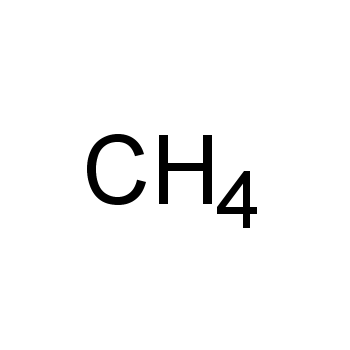
Methane, the simplest alkane, is a colorless, odorless, and flammable hydrocarbon gas. The term "methane" originates from the Greek root word "methe," meaning wine. In the early 19th century, "methylene" was used for methanol (wood alcohol), and this term evolved from "methe" and the Greek word "hydē," signifying wood. Methanol was initially discovered by Robert Boyle in the 17th century through destructive distillation of wood. The name "methane" is formed by combining "methez" with the suffix "ane," characteristic of an alkane. The tetrahedral structure of methane is depicted in Figure 56.1, where carbon is positioned at the center of an assumed equilateral pyramid, surrounded by hydrogen atoms at each of the four corners, with bond angles measuring 109.5 degrees.

Methane serves as the primary constituent of natural gas, constituting at least 75% in most sources. Its natural production occurs through methanogenesis, a process involving anaerobic respiration by single-cell microbes known as methanogens. Methanogens, categorized as archaebacteria, belong to prokaryote bacteria. Methane, resulting from anaerobic digestion of submerged dead plant matter, has earned the common name "marsh gas."
Utilized as a fossil fuel for centuries, methane's discovery is credited to the Italian physicist Alessandro Volta, renowned for his contributions to electricity. During his visit to the Lake Maggiore region in November 1776, Volta observed flammable gas bubbles emerging from disturbed marsh sediments. Investigating further, he found that the gas was highly flammable when mixed with air. Volta developed instruments like Volta's pistol and a methane-fueled lamp to conduct combustion experiments with methane.
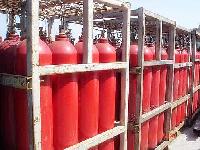
Methane, a principal gas associated with coal and oil deposits, stands as a major fuel and chemical resource within the petrochemical industry, contributing to nearly 20% of the world's energy needs. The United States relies on natural gas for approximately 30% of its energy requirements. Industrial synthesis methods, such as the Sabatier method, Fischer-Tropsch process, and steam reforming, enable the production of methane. The Sabatier process, named after the Nobel laureate Paul Sabatier, involves the reaction of carbon dioxide and hydrogen with a nickel or ruthenium metal catalyst: CO + 4H → CH₄ + 2H₂O.

Methane serves as a pivotal starting material for various chemicals, including ammonia, methanol, acetylene, synthesis gas, formaldehyde, chlorinated methanes, and chlorofluorocarbons. In the petrochemical industry, methane is used to produce synthesis gas, a mixture of hydrogen and carbon monoxide, which serves as a feedstock for diverse reactions. Additionally, methane plays a crucial role in the production of ammonia and methanol through complex processes.
The chlorination of methane results in the formation of methyl chloride, methylene chloride, chloroform, and carbon tetrachloride. Methane, acting as a fossil fuel and a greenhouse gas, has garnered widespread attention in global warming research due to its potent infrared radiation absorption capabilities, with a global warming potential 21 times higher than carbon dioxide.
Methane concentrations have exhibited a steady increase since the Industrial Revolution, with a current global warming potential of 21. However, the reasons for the recent plateau in methane increases remain unclear. Atmospheric methane concentrations, determined from ice cores, have risen from approximately 700 parts per billion (ppb) by volume in 1750 to the current levels of 1,750 ppb.
Global atmospheric methane concentrations result from both natural and human sources, with human-related activities, particularly in agriculture, contributing to about two-thirds of the total emissions. Livestock, fossil fuel sources, and landfills are significant contributors to anthropogenic methane emissions. Ongoing exploration, including the potential extraction of methane hydrates, presents a notable source for future natural gas reserves, with estimates suggesting the amount trapped in hydrates is twice the known reserves of all other fossil fuels combined.

Richard L. Myers (2009). The 100 Most Important Chemical Compounds: A Reference Guide. Greenwood Publishing Group. October 1, 2009. https://doi.org/10.1021/ed086p1182
 |
 |
 |
 |
|
 |
 EN
EN
 Agricultural News
 Food News
 Industrial News
 Cosmetic News
 Pharmaceutical News
 Science News

 4YRS
4YRS

