Vanillin, the principal chemical compound imparting the widely recognized flavoring attribute to vanilla, manifests in its pure state as a white crystalline substance. Natural vanilla extract is derived from the seed pods, often inaccurately referred to as beans, of select orchid vines thriving in tropical regions. Among the numerous vanilla orchid species, commercially significant ones include Vanilla planifolia (also known as Vanilla fragrans), Vanilla tahitensis, and Vanilla pompona. Indigenous to southeast Mexico and Guatemala, the cultivation of vanilla has expanded globally within tropical climates. The etymology of "vanilla" traces back to the old Spanish term "vainilla," originating from the Latin "vagina," denoting a sheath or scabbard—a nod to the small sheath-like pods on the plants.
While the exact duration of vanilla's use as a spice remains uncertain, its historical roots extend back at least a millennium. The Totonac people in the Veracruz region of Mexico were the initial cultivators of vanilla, considering it a sacred plant with deodorizing properties. The Aztecs adopted the use of vanilla after interacting with the Totonacs, referring to it as "tlilxochitl" or black flower, signifying the dark color of the dried pods. European exposure to vanilla occurred when Spanish explorer Hernando Cortez introduced it to Europeans in the 1520s as an ingredient in cocoa drinks. The flavor gained popularity, expanding from its use in cocoa to various culinary applications, notably French vanilla ice cream.
Efforts to cultivate vanilla outside Mexico faced challenges until the 1800s, enabling the Spanish to maintain a trade monopoly. Successful cultivation breakthroughs came with the revelation of the orchid's dependence on a specific Mexican bee species, Melipona, for pollination. Charles François Antoine Morren and Edmond Albius played pivotal roles in understanding and innovating artificial pollination methods. Albius's technique, using a small pointed stick or thorn, broke the Spanish monopoly, fostering vanilla plantations in diverse tropical regions. Presently, Madagascar dominates global vanilla production, accounting for 50% to 60% of the world's output, with Indonesia and Comoros as substantial producers. In 2005, worldwide production reached approximately 2,500 tons of cured beans, yielding around 50 tons of natural vanillin.
The journey of vanilla pods from harvest to flavor-rich fruition involves a meticulous curing process comprising multiple stages. Commencing with the cessation of ripening through methods like sun drying, hot water scalding, oven drying, or freezing, the subsequent phases encompass sweating, drying, and conditioning. Sweating, conducted at elevated temperature and humidity, fosters flavor development, while the final stages of drying and conditioning occur over several months, allowing the dried pods to mature in closed, dark containers, culminating in the full development of their distinctive flavor.
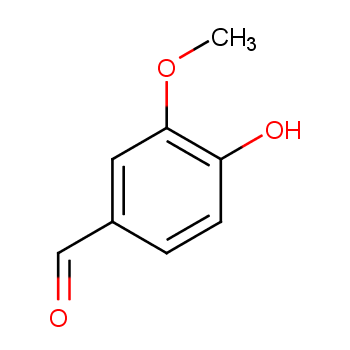
Cured vanilla pods undergo sorting and grading before being utilized in various forms such as extract, paste, powder, flavorings, vanilla sugars, and vanilla beans. Vanilla extract, the most commonly used form, is produced by soaking vanilla beans in a water-ethyl alcohol solution, adhering to the Food and Drug Administration's specification of at least 35% alcohol, for several months. The extraction process involves percolating the alcohol solution through macerated vanilla pods, akin to brewing coffee. While natural vanilla comprises several hundred compounds, the primary contributor to its characteristic flavor and aroma is vanillin or 4-hydroxy-3-methoxy-benzaldehyde. Vanillin's structure was first isolated by the French chemist Nicolas-Theodore Gobley in 1858. Subsequently, German chemists Ferdinand Tiemann and Wilhelm Haarmann deduced its structure and synthesized vanillin in 1874.
Vanillin was initially synthesized from coniferin, a glucoside found in the sap of coniferous trees, and later, various laboratory methods, such as the Reimer-Tiemann reaction, were explored. Eugenol from clove oil and lignin obtained from the waste pulp of paper production were also utilized for vanillin synthesis. However, environmental and economic concerns led to the abandonment of these methods. In the contemporary scenario, vanillin and ethyl vanillin are primarily synthesized from petrochemicals, such as guaiacol or glyoxylic acid. The catechol method of vanillin synthesis involves benzene conversion to phenol, then to catechol, guaiacol, and eventually vanillin.

Recent research has concentrated on a green biosynthetic process for catechol production, involving glucose. Ethyl vanillin, an alternative to vanillin, exhibits a stronger flavor, and both synthetic vanillin and ethyl vanillin significantly surpass the use of natural vanillin globally. The predominant application of vanillin lies in the flavoring industry, with a substantial demand in products such as ice cream, soft drinks, candies, baked goods, coffees, teas, perfumes, deodorants, and personal care products. Additionally, the chemical industry employs vanillin to mask unpleasant odors in certain products, while it serves as an intermediate in pharmaceutical and fine chemical production.
Richard L. Myers (2009). The 100 Most Important Chemical Compounds: A Reference Guide. Greenwood Publishing Group. October 1, 2009. https://doi.org/10.1021/ed086p1182
 |
 |
 |


 2YRS
2YRS


