Adamantane is an organic compound with a wide range of uses. This article will provide a detailed overview of adamantane and its various uses, emphasizing the importance of a thorough understanding of its functions. The article will focus on exploring adamantane's applications in areas such as polymer materials, organic intermediates, and luminescent auxiliary materials, as well as its potential applications in materials, pharmaceuticals, and energy storage. Through in-depth research on adamantane, we can better understand its applications in different fields and provide guidance for future research and development.
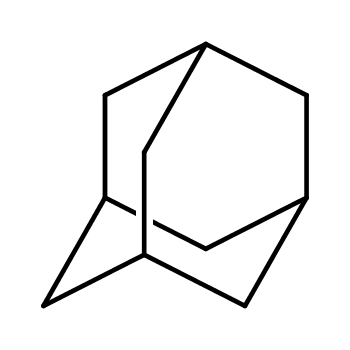
Adamantane is an organic compound with the chemical formula C10H16 or (CH)4(CH2)6. The adamantane molecule can be described as the fusion of three cyclohexane rings. This molecule is both rigid and nearly stress-free. Adamantane is the most stable isomer of C10H16. The spatial arrangement of carbon atoms in adamantane molecules is the same as that in diamond crystals. This similarity led to the name "adamantane," which comes from the Greek word "adamantinos" (related to steel or diamond). It is a white solid with a camphor-like odor. It is the simplest diamondoid. Its structure is as follows:
Adamantane was discovered in petroleum in 1933, opening up a new field of chemistry dedicated to the synthesis and properties of polyhedral organic compounds. Adamantane derivatives have practical applications in pharmaceuticals, polymer materials, and heat-stable lubricants.
Adamantane molecules are among the latecomers discovered in the hydrocarbon family, with the molecular formula C10H16, formed by the fusion of four cyclohexane rings into a chair-shaped rigid structure. The spatial arrangement of carbon atoms in this multi-ring cage is similar to the unit cell of a diamond lattice, with C-C bond lengths almost identical, corresponding to 1.54 Å. The molecule exhibits tetrahedral symmetry, resembling the carbon framework structure of a diamond lattice, distinguishable only by two equivalent positions, namely bridge and bridgehead positions. Adamantane can be isolated from various natural sources, such as crude oil, natural gas, and sediments.
Due to the relatively prominent physicochemical properties of adamantane and its non-toxic nature, it is often used in the process of drug synthesis to enhance the pharmacological properties of the main compound. In the process of using adamantane, to better improve the membrane permeability of compounds, the adamantane structure with good lipophilicity can be introduced to achieve the purpose of enhancing biological activity. Due to the aforementioned advantages of adamantane, it is relatively highly valued in current drug research processes, and more applications of adamantane-related derivatives have been made, mainly in the fields of pharmaceuticals, polymers, and surfactants.
Adamantane is a key molecule in the pharmaceutical field, playing an important role in drug development in various therapeutic areas. What is the function of adamantane? One of the most prominent applications of adamantane is its antiviral activity. By inhibiting the replication of viruses, especially influenza A virus, adamantane has become a cornerstone in the development of antiviral drugs. Its mechanism of action targets viral proteins, preventing their ability to hijack host cells and spread infection, thus providing hope for the prevention and treatment of viral diseases.
In addition to its established role in antiviral therapy, the multifunctionality of adamantane extends to potential applications in a range of diseases beyond viral infections. Research into its neuroprotective properties has shown promising results, indicating its potential utility in neurodegenerative diseases such as Parkinson's disease. The ability of adamantane to modulate neurotransmitter levels and alleviate oxidative stress has sparked interest in its neuroprotective effects, paving the way for the development of innovative therapies to alleviate symptoms and slow disease progression. Furthermore, its anti-inflammatory properties have garnered attention in the field of autoimmune diseases, where dysregulated immune responses can lead to tissue damage and systemic inflammation. The ability of adamantane to inhibit inflammatory pathways holds promise for the development of treatments for autoimmune diseases, offering hope for improving patient outcomes and quality of life.
Adamantane holds tremendous potential in treating various conditions. From its established role in combating viral infections to its emerging applications in neuroprotection and immune modulation, adamantane embodies the multifaceted nature of harnessing the therapeutic potential of existing compounds for drug development. By leveraging insights into its molecular properties and mechanisms, researchers are poised to unlock new therapeutic avenues and treatment strategies.
Adamantane has become a focal point in materials science applications for improving the performance of various materials. What is the Adamantane uses in Materials Science? Adamantane can form a strong bond with substrates, enhancing adhesion and longevity, making it indispensable in protective coatings for metals, ceramics, and even polymers. Additionally, its chemical stability in harsh environmental conditions makes it an essential component in developing corrosion-resistant coatings, crucial for infrastructure and industrial applications.
The incorporation of adamantane into coatings has fundamentally changed the durability and resilience of surfaces against corrosion and wear. In the field of plastics, adamantane's applications include enhancing mechanical strength, thermal stability, and flame retardancy. By incorporating adamantane into polymer matrices, manufacturers can tailor the properties of plastics to meet specific performance requirements for various applications, from automotive components to electronic devices. Furthermore, the compatibility of adamantane with various polymers paves the way for developing new materials with enhanced functionalities.
Composite materials represent another frontier where adamantane has made significant strides, providing solutions for improving the performance and durability of composite materials. By reinforcing matrices with adamantane, composite materials exhibit excellent mechanical properties, such as increased tensile strength and fracture toughness, while maintaining low weight and high flexibility. This multifunctionality drives the use of adamantane in industries such as aerospace, construction, and sports equipment, where lightweight and robust materials are highly sought after.
Looking ahead, ongoing exploration of adamantane's potential in materials science is expected to further progress. Current research focuses on optimizing its synthesis, exploring new applications, and addressing sustainability concerns to meet the evolving needs of different industries.
Adamantane is a stable hydrocarbon with excellent energy storage potential. By leveraging the energy storage potential of adamantane-based compounds, researchers aim to overcome long-standing challenges such as limited battery life, slow charging rates, and safety issues. The unique molecular structure of adamantane offers opportunities for designing high-capacity and long-lasting energy storage devices, potentially revolutionizing energy storage systems for portable electronics, electric vehicles, and grid-scale applications.
One of the key advantages of integrating adamantane into battery systems is its ability to improve performance and stability. Through innovative electrode designs and electrolyte formulations, adamantane compounds can enhance the charge storage capacity, cycle life, and overall efficiency of batteries. Additionally, the inherent chemical stability and low reactivity of adamantane contribute to safer battery operation, reducing the risk of thermal runaway and catastrophic failures.
Adamantane-based compounds also play a significant role in applications of renewable energy. For example, adamantane-based aviation coal offers advantages such as high density, high energy density, low freezing point, and low viscosity. Energy storage systems equipped with adamantane-based batteries can store excess energy during periods of high generation and release it during peak demand, thus stabilizing the grid and facilitating greater penetration of renewable energy. The synergistic interaction between adamantane-based energy storage solutions and renewable energy is poised to accelerate the transition to sustainable and resilient energy infrastructure.
Adamantane is a colorless crystal widely used in pharmaceuticals and other industrial sectors. In the production process, its environmental footprint includes the use of chemicals and energy, as well as the generation of wastewater, emissions, and solid waste. Additionally, adamantane may face fire hazards during transportation and storage. Therefore, effective environmental management strategies, such as sustainable production and safe disposal, as well as environmental impact assessments, are crucial for protecting the environment and achieving the sustainable utilization of adamantane.
These strategies include adopting metal/molecular sieve-loaded catalysts to achieve green, continuous, and stable preparation of adamantane. Additionally, sealed packaging using paperboard drums with plastic bag liners should be used and placed in a ventilated, dry environment, prohibiting placement in high-temperature, humid, or exposed environments. These measures not only help reduce the environmental impact of adamantane but also enhance its sustainability. Furthermore, these strategies align with the principles of green chemistry initiatives, contributing to the advancement of sustainable development.
Adamantane is a multifunctional compound widely used in chemical, pharmaceutical, energy, and other fields, playing important roles. Its unique chemical properties make it an indispensable component in many industries. We should further explore the potential Adamantane uses, explore its broader applications, and promote technological innovation and industrial development. By fully leveraging the characteristics of adamantane, we can bring more opportunities and benefits to society and economic development. Let us work together to open a new chapter in the application of adamantane!
[1] https://pubmed.ncbi.nlm.nih.gov/20858176/
[2] https://go.drugbank.com/drugs/DB03627
[3] Guo, R., Synthesis and Antitumor Activity of Novel Schiff Bases Derivatives Containing Adamantane Skeleton, Changchun University of Technology, 2023. DOI: 10.27805/d.cnki.gccgy.2023.000228.
[4] Jiang, C., Luo, S., & Li, L. (2022). Analysis of the Current Situation and Development Trend of Adamantane Industry in China. Sichuan Chemical Industry, 25(04), 17-20.
[5] Pang, H., & Zhou, J. (2020). Research Progress and Application Status of Adamantane. Guangdong Chemical Industry, 47(07), 116-117+115.
[6] https://en.wikipedia.org/wiki/Adamantane
 |
|



 14YRS
14YRS


