-
We detected your language preference as English. Would you like to switch to the English version for a better experience?
Switch to English
Stay here


Darifenacin hydrobromide has stirred waves in the medical field due to its expanding therapeutic applications. Initially developed as a foundational medication for treating overactive bladder (OAB), darifenacin hydrobromide's potential far exceeds its initial success. Let's delve into the applications and advantages of this medication and explore its growing role in modern healthcare.
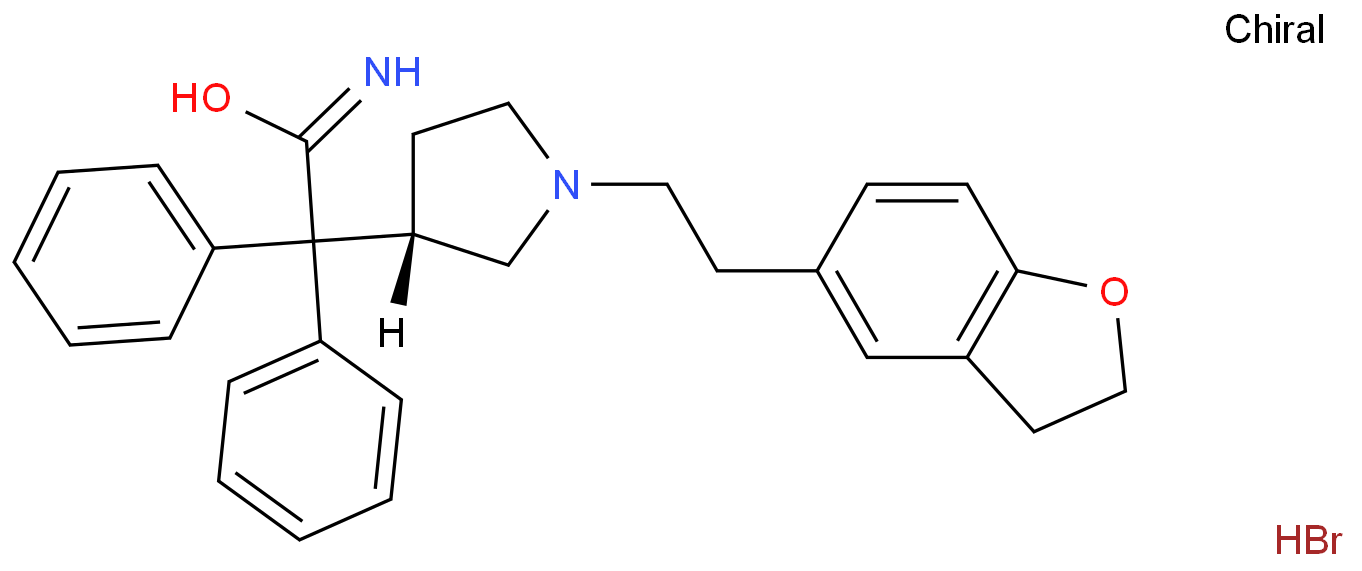
Overactive bladder (OAB) is a common bladder dysfunction characterized by urgency, with or without urge incontinence, often accompanied by frequency and nocturia. Darifenacin hydrobromide, developed by Novartis, was first marketed in Germany in January 2005. It is a selective muscarinic receptor antagonist with strong selectivity for the cholinergic M3 receptor. The contraction of the bladder detrusor muscle is primarily mediated by activation of cholinergic M receptors. Antagonism of the M receptor by darifenacin hydrobromide inhibits involuntary detrusor contractions, reducing bladder excitability. Compared to oxybutynin, solifenacin, and tolterodine, darifenacin hydrobromide exhibits greater selectivity for bladder cholinergic M3 receptors over salivary glands. It also demonstrates stronger receptor inhibitory activity compared to the aforementioned drugs. Additionally, it has better safety and tolerability profiles, with lower impact on central nervous system function, cognitive function, and cardiovascular risk. Its structural formula is as follows:

Darifenacin hydrobromide is metabolized primarily by the hepatic cytochrome P450 enzyme system, mainly through three pathways: dihydrobenzofuran ring opening, dihydrobenzofuran ring hydroxylation, and pyrrolidine nitrogen dealkylation. The hydroxylated metabolite's activity is 1/50 that of the parent compound. The drug is rapidly eliminated from the body, with approximately 77% of the dose excreted within 48 hours, predominantly in the urine (56%) and feces (44%), with the main metabolites being inactive. The unchanged drug accounts for only 3% of the dose, with a clearance rate of 32-40 L and an elimination half-life of approximately 13-19 hours.
Darifenacin hydrobromide has an oral bioavailability of 15%-19%, unaffected by food intake. In healthy volunteers receiving multiple doses of extended-release tablets, peak plasma concentrations are reached around 7 hours, with steady-state concentrations achieved after 6 days of continuous dosing. The drug's plasma protein binding is approximately 98%, primarily to alpha1-acid glycoprotein, with an apparent volume of distribution at steady state of approximately 163 L.
In vitro experiments indicate that stimulation of muscarinic M3 receptors can mediate contraction of bladder smooth muscle and secretion of salivary glands. Darifenacin hydrobromide exhibits strong selectivity and affinity for muscarinic M3 receptors, with significantly greater selectivity for bladder smooth muscle M3 receptors than for salivary glands. In a group of healthy male subjects receiving oral doses of 7.5 mg/day or 15 mg/day for one week, electroencephalogram testing showed no adverse effects comparable to placebo, indicating no adverse effects on cognitive function (related to M1 receptors) or myocardial function (related to M2 receptors). Another group of elderly subjects aged 65 to 84 years received oral doses of 7.5 mg/day or 15 mg/day for 14 days, and the results of a randomized, double-blind, controlled three-arm trial of memory scanning, reaction time, and word recognition, showed no adverse effects on cognitive impairment in the elderly. Following administration of darifenacin hydrobromide, OAB patients experience reduced frequency of unstable bladder contractions, increased threshold, increased bladder capacity, effectively relieving symptoms of bladder overactivity.
(1) Darifenacin hydrobromide plays a crucial role in controlling symptoms of overactive bladder (OAB). OAB, characterized by involuntary bladder muscle contractions, leads to urgency, frequency, and sometimes urge incontinence. Darifenacin works by relaxing these muscles, allowing the bladder to hold urine for longer periods, reducing the urge to urinate frequently, significantly improving bladder control in OAB patients.
(2) The ability of darifenacin to relax bladder muscles also makes it beneficial for treating urge incontinence, involuntary urine leakage. By improving bladder control, darifenacin helps prevent leakage associated with OAB and other conditions that may weaken pelvic floor muscles, significantly improving patients' quality of life, reducing anxiety, and embarrassment associated with urinary incontinence.
(3) In addition to its established uses, ongoing research explores the potential applications of darifenacin in other areas. Some studies suggest its effectiveness in treating neurogenic bladder (a condition where nerve damage affects bladder function). Furthermore, research is investigating its role in treating gastrointestinal disorders and pelvic pain.
Darifenacin hydrobromide has been thoroughly researched and evaluated for safety. While it may have some side effects, following the doctor's advice and adhering to the correct dosage and administration methods can help avoid or reduce these adverse reactions. Additionally, darifenacin hydrobromide does not cause significant irritation to the respiratory and digestive systems, so patients need not overly worry about its use.
Indeed, darifenacin hydrobromide has been widely used in clinical practice and proven to be an effective and safe medication. For example, from 2016 to 2021, the sales of darifenacin hydrobromide have increased annually, indicating widespread recognition of its effectiveness in treating OAB.
Compared to other drugs used to treat OAB, darifenacin hydrobromide has several distinct advantages. A notable benefit is its once-daily dosing, which enhances medication compliance compared to drugs requiring multiple daily doses. Additionally, darifenacin is known to have more targeted effects on specific bladder receptors, which may result in fewer side effects compared to other anticholinergic drugs.
However, darifenacin may not be suitable for everyone. It may not be suitable for those with certain medical conditions or taking medications that may interact with it. Additionally, like other OAB medications, darifenacin can cause dry mouth and constipation in some users.
The choice between darifenacin hydrobromide and other OAB medications depends on careful consideration of individual needs, side effects, and potential drug interactions. Consulting healthcare professionals is crucial for determining the most suitable treatment for overactive bladder.
The typical dosages are 7.5mg/tablet and 15.0mg/tablet. The recommended dosage of darifenacin hydrobromide depends on individual factors and the severity of OAB symptoms. Healthcare professionals will determine the appropriate dosage.
Darifenacin hydrobromide is usually administered orally as tablets. It is crucial to take the prescribed dose and administration time as directed by the doctor.
In Phase III clinical studies, 3.3% of patients discontinued treatment due to adverse reactions, mainly including constipation and dry mouth. Other adverse reactions were mostly mild to moderate and occurred mainly within the first two weeks of treatment. Adverse reactions include gastrointestinal symptoms such as constipation, dry mouth, dyspepsia, abdominal pain, and nausea; genitourinary symptoms such as urinary tract infection and urinary disorders; neurological symptoms such as dizziness and headache; respiratory symptoms such as flu-like symptoms, bronchitis, pharyngitis, rhinitis, and sinusitis; cardiovascular symptoms such as hypertension; systemic symptoms such as fatigue, back pain, and peripheral edema;
metabolic and nutritional symptoms such as weight gain; musculoskeletal symptoms such as joint pain; skin symptoms such as dry skin, rash, and itching; and other symptoms such as eye discomfort, dry eyes, and visual abnormalities.
When initiating darifenacin hydrobromide therapy, it is essential to inform the doctor and actively participate in the treatment. Keep a record of your medication schedule and any side effects you experience. Discuss any concerns openly with your doctor. Lifestyle changes, such as pelvic floor muscle exercises and fluid intake control, can complement the effectiveness of your medication. Remember, open communication with your healthcare provider is key to achieving optimal outcomes and effectively managing OAB.
Darifenacin hydrobromide offers a well-tolerated and effective solution for treating symptoms of overactive bladder. It improves bladder control and quality of life, making it a valuable tool for many patients. While its established use in OAB is crucial, ongoing research suggests broader applications in the future. If you are struggling with overactive bladder or other conditions that may benefit from darifenacin hydrobromide, remember that this information cannot replace personalized medical advice. Consult healthcare professionals, discuss your specific needs, and explore whether darifenacin hydrobromide is suitable for you.
[1] https://pubmed.ncbi.nlm.nih.gov/15493952/
[2] https://go.drugbank.com/salts/DBSALT001041
[3] Cui Hecheng, Wang Xingyong. Research Progress on Key Intermediates for the Synthesis of Darifenacin Hydrobromide. Chemical Intermediates, 2012, 9(11): 9-12.
[4] Gao Juan. Research on Synthesis Process of Darifenacin Hydrobromide [D]. Shandong University, 2012.
|
 |
 |
 |
 EN
EN
 Agricultural News
 Food News
 Industrial News
 Cosmetic News
 Pharmaceutical News
 Science News

 3YRS
3YRS

