-
We detected your language preference as English. Would you like to switch to the English version for a better experience?
Switch to English
Stay here


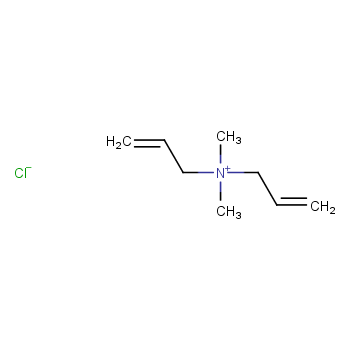
What is Diallyldimethylammonium chloride used for? Diallyldimethylammonium chloride (DADMAC) is a chemical compound with diallyldimethylammonium chloride molecular weight of 161.67. Its uses are extensive, demonstrating versatile applications across various fields and industries. This article aims to uncover the multifunctionality of DADMAC and explore its uses and roles in different domains. By delving into its characteristics and applications, we can better understand this compound and explore its potential value and roles in areas such as chemical engineering and pharmaceuticals, providing readers with a comprehensive understanding.
Cationic polymers, particularly water-soluble polymers like DADMAC, play a crucial role in various industries such as petrochemicals, papermaking, textile printing and dyeing, and household chemicals. What are the uses of DADMAC?
In today's industries ranging from papermaking, water treatment, textile printing and dyeing, pharmaceuticals, leather, to cosmetics, water-soluble cationic monomer Diallyldimethylammonium Chloride (DMDAAC) contributes significantly. Foreign researchers have conducted extensive studies on DMDAAC since the 1950s due to its unique properties. Its wide applications and developmental prospects stem from its advantages such as high positive charge density, good water solubility, easily controllable relative molecular mass, high efficiency, non-toxicity, and low cost.
DADMAC plays a pivotal role in enhancing the water purification process. As a cationic coagulant, it carries a positive charge, enabling it to attract and bind with negatively charged particles such as bacteria, viruses, and other common contaminants found in water.
Introducing DADMAC into the water treatment process neutralizes and aggregates these pollutants. This process, known as coagulation, significantly improves the efficiency of impurity removal from water. These larger aggregates are then more easily precipitated in subsequent purification stages, resulting in cleaner and safer drinking water.

Diallyldimethylammonium chloride (DADMAC) is becoming a critical component in the advancement of polymer science. Its unique chemical structure, containing reactive double bonds and permanent positive charges, allows DADMAC to participate in a process called cationic polymerization. Compared to traditional techniques, this method offers better control over polymer chain growth and structure. This precise control enables the creation of high-quality polymers with customized properties for specific applications. For example, polymers based on DADMAC can be designed for higher conductivity in electronics or better water solubility in drug delivery systems. Polydiallyldimethylammonium chloride (PDMDAAC) is a water-soluble polymer compound with various special functions, including high positive charge density, good water solubility, and high efficiency, widely used in oilfield development, water treatment, papermaking, textile printing and dyeing, and daily chemical industries. As research continues, DADMAC's role in polymer science is expected to expand further, bringing hope for innovation in various industries and the development of high-performance materials.
The positively charged nature of DADMAC makes it a valuable tool for protein immobilization. By immobilizing proteins with DADMAC, researchers can gain deeper insights into their functions, potentially advancing drug discovery and enzyme engineering. DADMAC also holds promise for direct medical applications. When incorporated into materials such as wound dressings or catheters, it can impart antimicrobial properties. This means the material itself can help prevent bacterial growth, reducing the risk of infections associated with medical devices and procedures. As research into DADMAC in these areas progresses, it has the potential to significantly improve patient outcomes and transform medical practices.
DADMAC can be applied at various stages of textile production to enhance the quality and performance of fabrics. One key application is dye fixation. As a cationic agent, DADMAC attracts anionic dyes commonly used in textiles. The stronger attraction between these dyes and the fabric improves color fastness, meaning colors resist fading during washing or exposure to light. DADMAC can also be used to modify the fabric itself. By chemically attaching DADMAC to natural fibers like cotton, researchers can improve their hydrophilicity or hydrophobicity. This translates to faster drying times and a softer feel for consumers. Additionally, DADMAC's antimicrobial properties can be utilized to manufacture textiles with built-in odor resistance, a crucial feature for sportswear and activewear.
While DADMAC offers many benefits across industries, handling and storage precautions are essential. Due to its potential for skin and eye irritation, it is recommended to use personal protective equipment such as gloves, goggles, and respirators during handling. Additionally, DADMAC should be stored in a cool, dry, well-ventilated area to maintain stability and prevent accidental exposure.
Regulatory compliance plays a vital role in ensuring the safe use of DADMAC. Manufacturers and users must adhere to relevant laws and regulations, which may involve registration, proper labeling, and disposal procedures. By following safety guidelines and regulatory standards, potential risks associated with DADMAC can be effectively minimized.
The future of DADMAC is brimming with possibilities. Researchers are actively exploring its potential in new applications beyond existing uses. One promising area is gene therapy, where materials based on DADMAC can efficiently deliver therapeutic genes into cells. Additionally, research is underway to utilize DADMAC's antimicrobial properties for disinfection, which could change hygiene practices in hospitals and public spaces. With the continuous advancement of polymer science, DADMAC may also play a role in creating novel high-performance biomaterials and applications in tissue engineering and drug delivery systems.
Through this discussion, we have gained insight into the primary uses and advantages of DADMAC across various fields. Its multifunctionality and widespread applicability offer numerous possibilities. Unleashing the potential of DADMAC requires continuous exploration and innovation to uncover its broader application areas and deeper mechanisms of action. We encourage further research and practice to tap into the potential advantages of DADMAC, contributing to social development and human welfare.
[1] https://www.mdpi.com/2073-4441/15/19/3352
[2] https://atamankimya.com/sayfalaralfabe.asp?LanguageID=2&cid=3&id=2871&id2=5348
[3] https://www.sigmaaldrich.com/US/en/product/aldrich/409030
[4]https://www.researchgate.net/publication/373504331_Grafting_of_cotton_fabrics_with_diallyldimethylammonium_chloride
[5] https://pubchem.ncbi.nlm.nih.gov/compound/Diallyldimethylammonium-chloride
[6] Li, J., Shen, S., Liu, X., et al. (2012). Research Progress on Polydiallyldimethylammonium Chloride Polymers. Fine Petrochemicals, 13(09), 48-53.
[7] Xiang, Y., Liu, Q., Xu, W., et al. (2008). Research Progress and Application of Polydiallyldimethylammonium Chloride Polymers. Packaging Engineering, (10), 49-51.
|
 |
 |
 |
 EN
EN
 Agricultural News
 Food News
 Industrial News
 Cosmetic News
 Pharmaceutical News
 Science News

 13YRS
13YRS

