-
We detected your language preference as English. Would you like to switch to the English version for a better experience?
Switch to English
Stay here


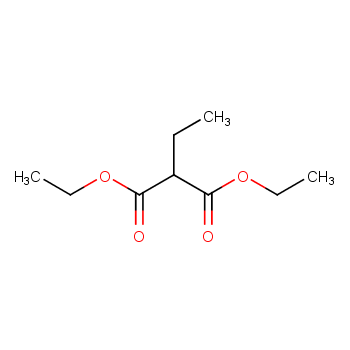
Diethyl ethylmalonate is a common organic compound with widespread applications and significance. Serving as a solvent and plasticizer, diethyl ethylmalonate plays a crucial role in industries such as chemical engineering, plastics, fragrances, pharmaceuticals, cosmetics, and food. This article will explore the properties, preparation methods, application areas, and significance of diethyl ethylmalonate across various industries, aiming to deepen our understanding of its importance in industrial production and daily life. Through the study of diethyl ethylmalonate, we can better comprehend and utilize this compound, fostering the development and innovation of relevant industries.
The synthesis involves the following steps: dissolving 2.3g of sodium in 25g of anhydrous alcohol, with the resulting sodium ethoxide solution gradually treated with 16g of cooled ethyl diethylmalonate. The transparent crystals of sodium ethoxide are initially separated, followed by the formation of a substantial amount of sodium malonate paste. Portions of 20g of ethyl iodide (or equimolar amounts of ethyl bromide) are added dropwise to the substance via oscillation. The reaction mixture is then heated until the liquid no longer exhibits alkaline reactions, which may take one to two hours. The alcohol is evaporated, the residue is treated with water, and the reaction product is extracted with ether. After evaporating the ether, the residue is distilled to collect fractions at 206-208°C. The yield of diethyl ethylmalonate is approximately 15g. The synthesis route is as follows:

While specific market trend data for diethyl ethylmalonate may not be readily available, we can analyze dynamic factors that might influence its future prospects. Due to its role as a precursor in organic synthesis, the demand for diethyl ethylmalonate may be associated with the entire pharmaceutical and specialty chemicals industry. Growth in these industries, particularly in Asia, could lead to an increased demand for diethyl ethylmalonate. Additionally, research into new applications of this compound could open up new market opportunities. However, without more specific information regarding production capacity and pricing, it is challenging to predict the exact trajectory of the diethyl ethylmalonate market in the future.
The NMR spectrum of diethyl ethylmalonate reveals four distinct chemical environments, with one peak absorbed at low field and three peaks absorbed at both high and low fields. The positions and intensities of these absorption peaks provide valuable information about the molecular structure of diethyl ethylmalonate.
Specifically, the low-field absorption peak is associated with carbonyl atoms, while the high-field absorption peaks are related to ester groups and ethyl groups. This information aids in determining the chemical structure of diethyl ethylmalonate, furthering research into its applications in organic synthesis and drug development.
Diethyl ethylmalonate serves as a versatile cornerstone in organic synthesis across various fields. In the pharmaceutical sector, it is a crucial precursor for various drugs including the vasodilator papaverine and the antiepileptic drug vigabatrin. It is also vital for herbicides crucial to agricultural weed control. The diverse applications of this valuable compound highlight its significance in shaping various scientific disciplines.
Due to its flammability and potential for eye irritation, safe handling of diethyl ethylmalonate is paramount. Personal protective equipment (PPE) such as gloves, safety glasses, and laboratory coats serve as the first line of defense to minimize skin and eye contact. Working in well-ventilated fume hoods is essential to prevent inhalation of vapors. Keeping this chemical away from heat sources and open flames is critical due to its flammable nature. Absorbent materials for flammable liquids should be immediately used to control spills, and proper disposal procedures should be followed according to local regulations. By adhering to these preventive measures, researchers and chemists can ensure a safe working environment when handling diethyl ethylmalonate.
In conclusion, diethyl ethylmalonate, as a multifunctional organic compound, holds significant applications and importance across various industries. Through this article's exploration, we see the wide-ranging applications of diethyl ethylmalonate in fields such as chemical engineering, plastics, fragrances, pharmaceuticals, cosmetics, and food, providing robust support for the development and innovation of these industries. With advancing technology and increasing emphasis on environmental and safety concerns, the application of diethyl ethylmalonate is poised for optimization and expansion, bringing further benefits to society. It is hoped that this article will enhance understanding of diethyl ethylmalonate, fostering research and development in related fields and laying a solid foundation for future applications and innovations.
[1]https://prepchem.com/synthesis-of-diethyl-ethylmalonate/
[2]https://www.fishersci.com/store/msds?partNumber=AC114450250&productDescription=DIETHYL+MALONATE+99%25+25G&vendorId=VN00032119&countryCode=US&language=en
[3]https://www.sepsservices.com/resources/fume-hood-essential-info-guidelines/
|
 EN
EN
 Agricultural News
 Food News
 Industrial News
 Cosmetic News
 Pharmaceutical News
 Science News

 3YRS
3YRS