-
We detected your language preference as English. Would you like to switch to the English version for a better experience?
Switch to English
Stay here


Direct Blue 86, also known as Direct Blue 86, is a commonly used dye widely employed in the textile industry and other fields. As a direct dye, Direct Blue 86 exhibits excellent dyeing performance and stability, forming strong molecular bonds on the fiber surface, resulting in long-lasting vibrant colors. The dyeing process of Direct Blue 86 is simple and efficient, with good light and wash fastness, making it widely used in textile dyeing and printing. Through the discussion of Direct Blue 86, we aim to gain a better understanding and utilization of this important dye.
Direct Blue 86 is a synthetic dye belonging to the class of hydroxy-containing ethylene glycol ethers. It holds significance across various industries. In the textile industry, Direct Blue 86 serves as a commercial dye used for coloring cotton and viscose-treated fabrics. Apart from textiles, it is also a crucial tool in staining myelin sheaths in medical research, which are the fatty substances surrounding nerve fibers. Additionally, Direct Blue 86 exhibits antimicrobial properties, making it suitable for bacterial control in wastewater treatment. Interestingly, its color changes with variations in the surrounding environment. For instance, concentrated sulfuric acid turns it purple, while dilution restores its blue hue.

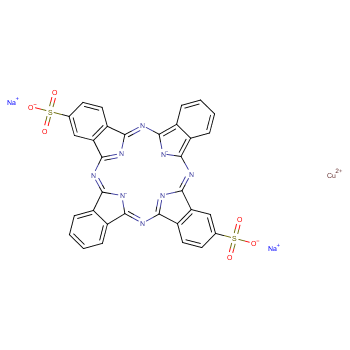
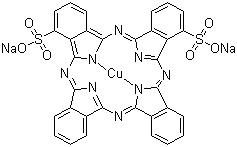
The chemical formula of Direct Blue 86 is C32H14CuN8O6S2·2Na. This molecular formula delineates the exact quantity of each atom in the Direct Blue 86 molecule, including two sodium atoms as part of its salt form. Its SMILES number is: C1=CC=C2C(=C1)C3=NC4=NC(=NC5=C6C=CC=CC6=C([N-]5)N=C7C8=C(C=C(C=C8)S(=O)(=O)[O-])C(=N7)N=C2[N-]3)C9=C4C=CC(=C9)S(=O)(=O)[O-]. This is an advanced symbol used in chemical software to represent structures in a manner easily interpretable by computers.
The Chemical Abstracts Service (CAS) number is assigned as a unique identifier to each chemical substance registered with the American Chemical Society. It functions akin to a social security number for chemicals, ensuring clear identification and preventing confusion between similar compounds. The CAS number of Direct Blue 86 is 1330-38-7. This number facilitates easy access for scientists and regulatory agencies to information regarding the properties, safety data, and applications of Direct Blue 86.
The Harmonized System (HS) code is an internationally standardized system for the classification of goods used by customs and statistics. It categorizes products based on their material composition, purpose, and other characteristics. While Direct Blue 86 does not have a universally accepted specific HS code, import data suggests its classification under the general category of dyes and pigments. More specific HS codes exist based on the type and form of the dye. Direct Blue 86 may be classified under the following categories:
(1) 3204: Retail organic coloring matter (including preparations based on coloring matter)
(2) 3205: Plant or animal source coloring matter (including preparations based on plant or animal source coloring matter); inorganic products used as coloring matter; preparations based on one inorganic product used as coloring matter; glass enamels, glazes, paints, and other glassmaking preparations; glassware and other glass-made articles
The specific HS code for Direct Blue 86 will depend on the exact form (powder, granules, solution) of the dye and its intended use. Importers and exporters should consult customs authorities or qualified trade professionals to determine the most appropriate HS code for their specific product.
Direct Blue 86 exhibits a bright green and light blue color. It is a gray-blue to blue powder. It forms a lake blue solution in water. What is the solubility of Direct Blue 86? The solubility of Direct Blue 86 is 40 g/L (60°C) and 80 g/L (97°C). Concentrated sulfuric acid turns it yellow-green, while dilution leads to a light green and blue color, with light green and blue precipitate. When used for cellulose fiber dyeing, the dye has poor swallowing properties. It is primarily used for reactive dyeing and printing of silk items and viscose, as well as for dyeing viscose fabrics and twisted silk. It can also be used for leather and paper dyeing, as well as for the manufacture of organic pigment precipitates.
Direct Blue 86 is a dye commonly used in textile, leather, and paper dyeing. It offers several advantages compared to other dyes:
Direct Blue 86 is renowned for its excellent resistance to fading caused by light, washing, and chemicals. This makes it highly suitable for applications where color durability is crucial, such as in clothing, interior furnishings, and carpets.
Unlike some dyes specific to certain fiber types, Direct Blue 86 can effectively dye a wider range of materials. This includes natural fibers such as silk and viscose, as well as synthetic fibers like rayon. It can also be used for leather and paper dyeing.
However, some variants of Direct Blue 86 may be preferable to others compared to other dyes as they improve the environmental profile. Information regarding the specific environmental impact of various variants of Direct Blue 86 is complex and depends on factors such as manufacturing processes and disposal methods.
It is irritating to the eyes and skin upon contact. Inhalation can irritate the lungs and respiratory system. The characteristics of eye inflammation include redness, tearing, and itching. Characteristics of skin inflammation include itching, scaling, redness, or occasional blistering. When handling this compound, adhere to safe industrial hygiene practices and always wear appropriate protective equipment.
Repeated exposure to this substance may lead to the accumulation in one or more human organs, resulting in a general deterioration of health conditions.
Check and remove contact lenses. Immediately flush eyes with flowing water for at least 15 minutes. Keep eyelids open. Cold water may be used. Do not use eye ointment. Rinse eyes with flowing water for at least 15 minutes, occasionally lifting upper and lower eyelids. Seek medical attention.
After skin contact, immediately flush with plenty of water. Gently wash contaminated skin with flowing water and non-abrasive soap. Take special care to clean folds, creases, and groin areas. Cold water may be used. Cover irritated skin with moisturizer. Seek medical attention. Wash contaminated clothing before reuse.
If the victim is not breathing, perform artificial respiration. Loosen tight clothing such as collars, ties, belts, or waistbands. If breathing is difficult, administer oxygen. Seek medical attention.
Induce vomiting by inserting a finger into the throat. Lower the head to prevent vomit from reentering the mouth and throat. Loosen tight clothing such as collars, ties, belts, or waistbands. If the victim is not breathing, perform artificial respiration.
Examine lips and mouth to determine if tissues are damaged, which may indicate ingestion of toxic substances; however, the absence of these signs does not conclude. Seek medical attention immediately and, if possible, present the chemical label. Provide symptomatic treatment and support.
(1) When handling direct blue 86, wear gloves, safety glasses, and a respirator.
(2) Avoid the formation and inhalation of dust.
(3) Thoroughly wash hands after handling.
(4) Do not eat, drink, or smoke while handling this chemical.
(1) Store direct blue 86 in a cool, dry, and well-ventilated area.
(2) Keep out of reach of children and pets.
(3) Affix appropriate labels to containers.
(4) Dispose of unused or expired chemicals according to local regulations.
(5) Handle with care, minimizing contact as much as possible. Keep away from heat and flames. Mechanical exhaust is required. When not in use, seal containers and store in a dry, cool place. Avoid overheating and excessive exposure to light. Do not swallow. Do not inhale dust. Wear appropriate protective clothing. In case of ingestion, seek medical attention immediately and present the container or label. Provide symptomatic treatment and support. Always keep away from incompatible compounds such as oxidizers.
As a direct dye, Direct Blue 86 plays a vital role in the textile industry, with its excellent dyeing performance and stability making it an ideal choice for fiber dyeing and printing. By exploring the properties of Direct Blue 86, we can better utilize this dye to enhance dyeing efficiency and quality, meeting the dyeing needs of various textiles. It is hoped that this article will provide readers with valuable information, enriching their understanding of Direct Blue 86 and promoting its widespread application in the textile industry.
[1] Shoaib A G M, Ragab S, El Sikaily A, et al. Thermodynamic, kinetic, and isotherm studies of Direct Blue 86 dye absorption by cellulose hydrogel[J]. Scientific Reports, 2023, 13(1): 5910.
[2] https://us.vwr.com/assetsvc/asset/en_US/id/8248564/contents
[3] https://www.worlddyevariety.com/direct-dyes/direct-blue-86.html
[4] https://www.flexport.com/data/hs-code/32041425-direct-blue-86-direct-red-83-and-direct-yellow-28/index.html
|
 |
 |
|
 EN
EN
 Agricultural News
 Food News
 Industrial News
 Cosmetic News
 Pharmaceutical News
 Science News

 6YRS
6YRS

