Physical Properties of Epoxidized Fatty Acid Methyl Ester
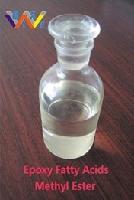
Epoxidized fatty acid methyl ester (EFAME) is a chemical compound with the formula C19H36O3. The molecular weight of EFAME is approximately 312.49 g/mol. It is typically a pale yellow liquid with a faint, mild odor. The compound has a melting point ranging between -10°C to 0°C, and a boiling point around 300°C. Structurally, EFAME consists of a fatty acid chain that has been modified with an epoxide group, enhancing its stability and reactivity. The CAS number for epoxidized fatty acid methyl ester is 6084-76-0. The structure of epoxy fatty acid methyl ester is as follows:

Mechanism of Action of Epoxidized Fatty Acid Methyl Ester
Chemical Reactivity of Epoxide Groups
The epoxide groups in EFAME are highly reactive due to the ring strain in the three-membered cyclic ether structure. This makes them susceptible to nucleophilic attack, allowing EFAME to participate in various chemical reactions.
Plasticization Mechanism
As a plasticizer, EFAME interacts with polymer chains, particularly in PVC. The epoxide groups form secondary bonds with the polymer, reducing intermolecular forces and increasing the flexibility and plasticity of the material. This allows the polymer chains to move more freely, enhancing the material's flexibility and softness.
Stabilization Mechanism
In PVC stabilization, EFAME reacts with hydrochloric acid (HCl) released during the thermal degradation of PVC. The epoxide groups neutralize the HCl, preventing further autocatalytic degradation of the polymer. This reaction helps maintain the stability, color, and mechanical properties of PVC over time.
Cross-Linking Mechanism
In some applications, EFAME can also act as a cross-linking agent. The reactive epoxide groups can react with other functional groups in a polymer or resin matrix, leading to the formation of cross-linked networks. This enhances the mechanical strength, chemical resistance, and thermal stability of the final product.
Epoxidized Fatty Acid Methyl Ester Compared with Other Compounds
Epoxidized Fatty Acid Methyl Ester (EFAME) differs from other fatty acid esters due to its unique chemical structure. EFAME contains epoxide groups, which are cyclic ether rings introduced by reacting fatty acid methyl esters with oxidizing agents. This contrasts with general Fatty Acid Esters, which are simply esters formed from fatty acids and alcohols without any specific functional groups.
The chemical reactivity of EFAME is also distinct. The presence of epoxide groups makes EFAME highly reactive, capable of participating in various chemical reactions. In comparison, Fatty Acid Esters typically exhibit lower reactivity, and Methyl Esters, which are a subset of fatty acid esters, show moderate reactivity primarily through their ester bonds. Stearic Acid Methyl Ester, a specific methyl ester, has reactivity similar to other methyl esters but does not possess the heightened reactivity of epoxidized forms.
The production process of EFAME involves the epoxidation of fatty acid methyl esters, creating its unique epoxide groups. In contrast, Fatty Acid Esters are produced through the esterification of fatty acids with alcohols. Methyl Esters are specifically produced by esterifying fatty acids with methanol, while Stearic Acid Methyl Ester is derived from the esterification of stearic acid with methanol.
Application of Epoxidized Fatty Acid Methyl Ester
Plastics Industry
In the plastics industry, Epoxidized Fatty Acid Methyl Ester (EFAME) is used primarily as a plasticizer for polyvinyl chloride (PVC). EFAME enhances the flexibility and durability of PVC by reducing its rigidity. It works by reacting with chlorine ions in the PVC resin, which stabilizes the material and improves its mechanical properties. This reaction helps prevent the degradation of PVC, making it more resistant to environmental stressors and extending its lifespan. EFAME also contributes to the improved processing of PVC by enhancing its flow properties during manufacturing.
Coatings Industry
In the coatings' industry, Epoxidized Fatty Acid Methyl Ester (EFAME) is used as a plasticizer and stabilizer in paints and coatings. As a plasticizer, EFAME improves the flexibility and workability of coatings, allowing for better application and adhesion to surfaces. It enhances the flow properties, which helps in achieving a smoother finish. As a stabilizer, EFAME provides resistance to weathering, UV light, and chemical exposure, contributing to the durability and longevity of the coating. Its use ensures that the coating maintains its integrity and appearance over time, even under harsh environmental conditions.
Rubber Industry
In the rubber industry, Epoxidized Fatty Acid Methyl Ester (EFAME) is used as a plasticizer and cross-linking agent. As a plasticizer, EFAME enhances the flexibility and elasticity of rubber products, making them more durable and resistant to wear and tear. It helps in reducing the viscosity of rubber compounds, which improves their processability during manufacturing. Additionally, EFAME acts as a cross-linking agent by reacting with rubber chains, forming chemical bonds that improve the strength, resilience, and overall performance of the rubber material. This contributes to better mechanical properties and extends the lifespan of rubber products.
Personal Care Products
In personal care products, Epoxidized Fatty Acid Methyl Ester (EFAME) is used as a plasticizer and emulsifier. As a plasticizer, EFAME enhances the texture and smoothness of formulations, improving the sensory experience for users. It helps in making the products more pliable and easier to apply. As an emulsifier, EFAME aids in stabilizing and blending oil and water components in products such as creams and lotions, ensuring a consistent texture and preventing separation. This contributes to the overall stability and effectiveness of the personal care product.
Safety, Hazards and Storage of Epoxy Fatty Acid Methyl Esters
Safety: Epoxy Fatty Acid Methyl Esters (EFAME) should be handled with care to ensure safety. They are generally low in toxicity but can cause irritation. Proper safety measures include wearing protective gloves, goggles, and masks to prevent skin, eye, and respiratory tract contact. Inhalation of fumes should be avoided by ensuring adequate ventilation in the working area. Spills should be cleaned up promptly, and contact with skin and eyes should be avoided. It is also important to follow the manufacturer's safety data sheet (SDS) for specific handling and emergency procedures.
Hazards : Epoxy Fatty Acid Methyl Esters (EFAME) can pose several hazards. They may cause skin and eye irritation upon contact, leading to redness, itching, or discomfort. Inhalation of EFAME vapors or mist can irritate the respiratory tract, potentially causing coughing or difficulty breathing. Prolonged or repeated exposure may result in allergic reactions or dermatitis. EFAME can also release harmful fumes when heated, so proper ventilation is essential to prevent accumulation and exposure.
Storage
: Epoxy Fatty Acid Methyl Esters (EFAME) should be stored in a cool, dry place away from direct sunlight and heat sources. Containers should be tightly sealed to prevent contamination and evaporation. Storage areas must be well-ventilated to avoid the buildup of potentially harmful fumes. EFAME should be kept away from incompatible materials and sources of ignition to ensure safety. Proper labeling and adherence to the manufacturer's storage guidelines are also essential.
Conclusion
Epoxidized fatty acid methyl ester (EFAME) is a versatile compound with significant applications in various industries, particularly as a plasticizer and stabilizer in polymer production. Its unique chemical properties, including the presence of epoxide rings, make it an effective and eco-friendly alternative to traditional plasticizers. However, safety precautions must be observed when handling EFAME to prevent potential hazards. When used correctly, EFAME offers numerous benefits and contributes to more sustainable industrial practices. Consultation with a professional is recommended for specific applications or if any concerns arise.



 EN
EN
 Agricultural News
 Food News
 Industrial News
 Cosmetic News
 Pharmaceutical News
 Science News

