-
We detected your language preference as English. Would you like to switch to the English version for a better experience?
Switch to English
Stay here


Over the past two decades, with the rapid advancement of technology and the significant improvement in people's living standards, the relationship between polyunsaturated fatty acids (especially gamma-linolenic acid, an essential fatty acid that the body cannot synthesize on its own) and health has garnered increasing attention. Due to its significant and extensive physiological and pharmacological effects in the immune system, cardiovascular system, reproductive system, endocrine system, and even the nervous system, gamma-linolenic acid has been highly regarded as the "protagonist of functional foods in the 21st century," attracting widespread attention and in-depth research from both domestic and international nutrition and clinical communities.
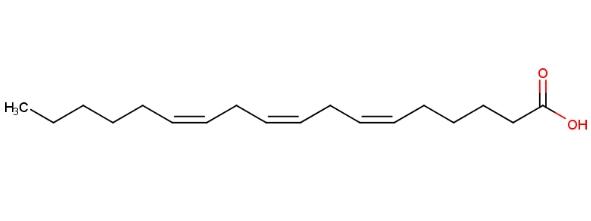
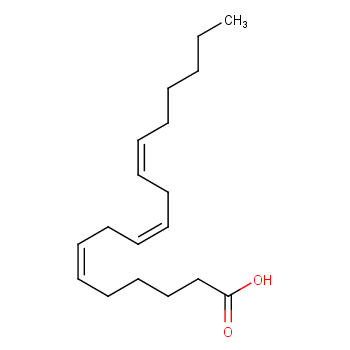
Gamma-linolenic acid, also known as ω-6 polyunsaturated fatty acid (PUFA), is referred to as 18:3n-6; 6,9,12-octadecatrienoic acid; or delta-6-desaturase metabolite of linoleic acid, produced in small amounts in the body. It is converted to dihomo-gamma-linolenic acid, a precursor of monounsaturated prostaglandins (such as PGE1) biosynthesis. Gamma-linolenic acid naturally occurs in the fatty acid composition of some plant seed oils, with evening primrose oil and borage oil being rich sources of gamma-linolenic acid. Evening primrose oil has been studied for clinical treatment of menopausal syndrome, diabetic neuropathy, and breast pain, with concentrations of gamma-linolenic acid ranging from 7-14% in these cases.
Various clinical indications of gamma-linolenic acid have been studied, including rheumatoid arthritis, atopic dermatitis, acute respiratory distress syndrome, asthma, premenstrual syndrome, cardiovascular diseases, ulcerative colitis, attention deficit hyperactivity disorder, cancer, osteoporosis, diabetic neuropathy, and insomnia.
Gamma-linolenic acid is a biologically active fatty acid (FA) with various health effects; however, it exists only in a few oils. GLA is present in human milk and various common foods, with relatively low levels found in organ meats. Higher concentrations of GLA are found in plant seed oils such as evening primrose (7-10 g/100 g GLA), black currant (15-20 g/100 g GLA), borage (18-26 g/100 g GLA), and fungal oils (23-26 g/100 g GLA). The triglyceride stereo-specific structures of these oils differ, with GLA concentrated at the sn-3 position in evening primrose oil and black currant seed oil, the sn-2 position in borage oil, and the sn-2 and sn-3 positions in fungal oil.
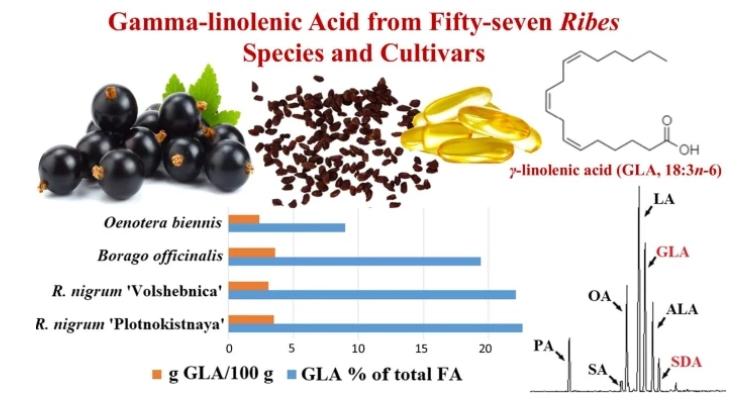
Ekaterina Golovenko et al. examined GLA-rich Ribes species and cultivars (cv) by conducting a fatty acid spectrum survey of seeds from 7 Ribes taxa and 50 Ribes cv. The highest percentages of GLA (accounting for total FA) were found in R. nigrum cv 'Plotnokistnaya', 'Volshebnica', 'Atlant', and 'Nara' (22.6%, 22.1%, 20.9%, and 20.0%, respectively), as well as in R. komarovii (19.6%) and R. nigrum var. sibiricum (18.3%). Stearidonic acid (SDA, 18:4n-3) had the highest content in R. rubrum 'Konstantinovskaya' and R. niveum 'Smolyaninovskaya' (4.8%). The GLA content ranged from 0.4 in some R. rubrum cv and R. niveum 'Smolyaninovskaya' to 3.5 g/100 g seed in R. nigrum 'Plotnokistnaya'.
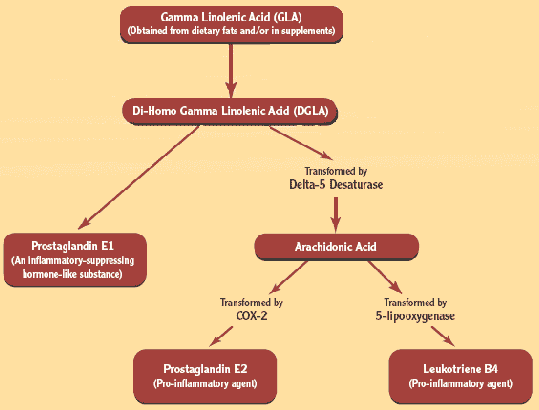
Years of research have shown that gamma linolenic acid (GLA) has therapeutic and ameliorative effects on various inflammatory diseases involving oxidative stress, such as rheumatoid arthritis, inflammatory bowel disease, nephritis, bronchial asthma, and coronary artery disease. One of the common pathological features of these inflammatory diseases is an increase in local neutrophils. Trials have indicated that neutrophils treated with long-chain fatty acids increase peroxide levels by reducing cytochrome C, thereby enhancing the anti-inflammatory effects of macrophages. Additionally, oral intake of 3-6g/day of GLA results in increased levels of GLA, dihomo-gamma-linolenic acid (DGLA), and arachidonic acid (AA) in serum lipids. The amount of DGLA in neutrophil phospholipids also significantly increases, while GLA and AA levels remain unchanged. Furthermore, it has been observed that after three weeks of consuming 3g/day of GLA, neutrophils synthesize fewer leukotriene B4 and platelet activating factors, indicating that the anti-inflammatory effect of GLA is achieved by increasing DGLA levels in inflammatory cells and attenuating AA biosynthesis.
GLA has been confirmed to have significant inhibitory effects on more than 40 types of tumor cells. Some studies suggest that the anti-tumor activity of GLA is achieved through the activation of macrophages, generation of free radicals, and lipid peroxidation-induced apoptosis. In vivo studies by Suma et al. have shown that GLA, GLA liposomes, and GLA lipid gels all have anti-tumor effects, significantly reducing tumor volume by 7.3%, 18.3%, and 59.7%, respectively, compared to the control group after 14 days. Mayra et al. have demonstrated that GLA primarily induces intrinsic apoptosis pathways through mechanisms associated with oxidative stress, thereby exerting anticancer effects. Therefore, GLA may be a biologically active phytochemical with potential attractiveness as an anti-tumor agent, inhibiting tumor activity and serving as a core of anticancer effects. However, further research is needed to determine the specific mechanisms of action of GLA in triggering exogenous cell apoptosis pathways.
Gamma-linolenic acid is generated in the body through the enzyme delta-6-desaturase, and linoleic acid is an essential omega-6 fatty acid. GLA is further metabolized to dihomo-gamma-linolenic acid (DGLA), which is oxidatively metabolized by cyclooxygenase and lipoxygenase to produce anti-inflammatory eicosanoids (series 1 prostaglandins and series 3 leukotrienes). GLA and its metabolites also affect the expression of various genes by regulating gene product levels, including matrix proteins. These gene products play important roles in immune function and cell death (apoptosis).
GLA also has certain physiological effects on the human immune system. Experimental evidence has shown that GLA-rich fish oil can be used clinically to treat immune-related diseases such as lupus erythematosus and psoriasis. Newson et al. found in a longitudinal survey of infants and some parents in the UK that a diet rich in GLA and other unsaturated fatty acids significantly resists specific diseases such as eczema and asthma in infants. GLA can significantly reduce the incidence of such diseases. However, the specific mechanism of action of GLA remains to be further studied.
Some studies support the use of supplements rich in GLA for treating atopic dermatitis (eczema) and other skin diseases. GLA supplements may contain borage, evening primrose, or black currant seed oil. However, a review questions the actual effectiveness of supplements rich in GLA. Although a clinical trial in 2014 suggested that GLA in evening primrose oil may be beneficial for children and adults with atopic dermatitis.
Due to mixed research results, it is necessary to conduct additional high-quality, long-term clinical trials on more populations to better evaluate the effectiveness of supplements rich in GLA.
Dietary supplementation of essential fatty acids can alleviate symptoms of dry eyes. Topical application has also been shown to reduce ocular surface inflammation, making it potentially commercializable as eye drops for treating dry eyes. They are essentially lipids that, when applied topically to the ocular surface, can interact with the lipid layer of the tear film and affect its integrity. Studies have shown that gamma-linolenic acid and alpha-linolenic acid can affect the biophysical properties of tear lipid.
Before taking supplements, be sure to consult a healthcare provider to ensure that the supplements and dosage are suitable for your individual needs. Although there are some studies on human GLA, additional high-quality clinical trials are still needed. This is because several reasons, including the small scale of many available studies and different doses in each study. For these reasons, there are no guidelines on the appropriate dose of GLA to take in any situation. If you are taking GLA, follow the advice of your healthcare provider or label instructions.
In conclusion, gamma-linolenic acid plays an important role in maintaining human health, with diverse and extensive uses. However, when adding gamma-linolenic acid to the diet or supplementing it, it is advisable to consult a doctor or nutritionist to ensure proper dosage and appropriate sources, and to develop the best nutritional plan according to individual circumstances.
[1]https://iovs.arvojournals.org/article.aspx?articleid=2688839
[2]You Yue, Zhang Wenjing, Xu Rui, et al. Research progress on the enrichment and physiological functions of γ-linolenic acid [J]. Cereals, Oils and Food Science and Technology, 2024, 32 (03): 101-108. DOI:10.16210/j.cnki.1007-7561.2024.03.010.
[3]Zhou Tongyong, Ren Fei, Deng Li, et al. Research progress on γ-linolenic acid and its physiological and biochemical functions [J]. Guizhou Agricultural Sciences, 2011, 39 (03): 53-58.
[4]Golovenko E, Lyashenko S, Akimova S, et al. Gamma-linolenic acid from fifty-seven Ribes species and cultivars[J]. Plant Foods for Human Nutrition, 2021, 76: 385-393.
[5]https://www.verywellhealth.com/the-benefits-of-gamma-linolenic-acid-89185
[6]https://go.drugbank.com/drugs/DB13854
[7]https://www.eurekaselect.com/article/3335
 |
 |
 |
 |
|
|
 EN
EN
 Agricultural News
 Food News
 Industrial News
 Cosmetic News
 Pharmaceutical News
 Science News

 6YRS
6YRS

