Methyltrienolone (development code R1881), also known as methyltrienolone, is a synthetic orally active anabolic androgenic steroid (AAS) and a 17α-alkylated nandrolone (19-nortestosterone) derivative. Although it has never been used for medical purposes, it has been extensively used in scientific research as a hot ligand in androgen receptor (AR) binding assays (LBA) and as a photoaffinity label for AR. Specifically, methyltrienolone is a 17α-methylated derivative of trenbolone. In the late 1960s and early 1970s, methyltrienolone was briefly studied for the treatment of advanced breast cancer in women, but its development was halted due to severe hepatic toxicity observed at very low doses. The structure of methyltrienolone is as follows:
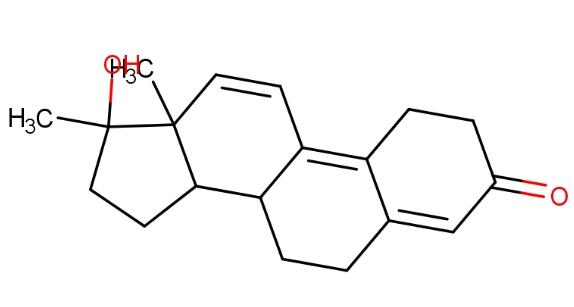
Methyltrienolone is known for its potent anabolic and androgenic activities. Compared to its parent compound, methyltrienolone offers high oral bioavailability and resistance to aromatization into estrogen. These characteristics make it popular among bodybuilders seeking rapid muscle growth and strength enhancement. Methyltrienolone uses in bodybuilding include:
Significant Muscle Mass Increase: Methyltrienolone effectively promotes protein synthesis, accelerating muscle growth.
Strength Enhancement: By increasing nervous system excitability and muscle fiber recruitment, it significantly boosts strength levels.
Due to its potency and hepatic toxicity, extreme caution is advised when using methyltrienolone. Dosage and cycle length should be based on experience.
Methyltrienolone is used extensively to evaluate the potency of other androgenic compounds. Research indicates that its androgenic and anabolic activities are significantly higher than those of natural androgens.
Ligand Binding Assay (LBA): Methyltrienolone is frequently used as a radiolabeled ligand to study AR expression levels and binding capabilities under different tissue and physiological conditions.
Photoaffinity Labeling: Methyltrienolone forms stable covalent bonds with AR, allowing the study of AR structure and interacting proteins through proteomics methods.
Progesterone Receptor (PgR): In some cases, methyltrienolone is more suitable than traditional radiolabeled androgens (such as DHT) for measuring PgR, especially in conditions with significant plasma protein interference.
Mineralocorticoid Receptor (MR): Methyltrienolone has been found to have mineralocorticoid antagonist activity, making it useful for studying MR function.
Glucocorticoid Receptor (GR): Methyltrienolone can bind to GR, providing a tool for studying glucocorticoid signaling pathways.
Methyltrienolone uses in bodybuilding
Aside from scientific research, methyltrienolone is also found in non-medical settings, such as in sports and bodybuilding as a performance-enhancing drug.
Methyltrienolone is a potent oral anabolic steroid initially developed in the 1960s for treating advanced breast cancer. However, due to severe side effects on the body (especially the liver), it was quickly withdrawn from the market. Today, it is used only for research purposes.
Hepatotoxicity: Methyltrienolone has high potential for liver toxicity, similar to other 17α-alkylated AAS. Its hepatotoxicity is notably high, likely due to its very high potency and metabolic stability. In a study for treating advanced breast cancer, severe hepatic impairment was observed even at very low doses. Methyltrienolone (17α-methyl-4,9,11-androstatrien-17β-ol-3-one) is an oral anabolic agent, with daily doses below 1.0 mg tested for liver function impacts. Methyltrienolone is currently known as one of the most "hepatotoxic" steroids.
Androgenic Effects: Although methyltrienolone does not convert to estrogen, it is not entirely benign. For instance, while Anadrol is also a non-aromatizable oral steroid, it may still bind with estrogen. Methyltrienolone, as a 19-nor progestin, binds to progesterone receptors, potentially causing progesterone-induced gynecomastia in men, even if it does not convert to estrogen. Additionally, due to its potency, methyltrienolone may also cause androgenic side effects such as aggression, acne, and male-pattern baldness. It may also lead to cardiovascular stress and suppression. For women, methyltrienolone may cause significant virilization symptoms, so female athletes should avoid using this drug.
Cardiovascular Strain: Methyltrienolone also shares common steroid-related issues, such as cardiovascular stress and suppression.
In summary, methyltrienolone shows efficacy in treating certain conditions. However, its use should be guided by a healthcare professional. If you have questions about what methyltrienolone is used for, its suitability, side effects, or interactions with other medications, consult a professional for personalized advice. Proper usage under medical guidance can maximize therapeutic benefits and minimize adverse effects.
[1]https://www.sciencedirect.com/science/article/abs/pii/0039128X66901140
[2]https://en.wikipedia.org/wiki/Metribolone
[3]https://www.sciencedirect.com/topics/medicine-and-dentistry/metribolone
[4]https://go.drugbank.com/
|




 2YRS
2YRS

