Methyltrimethoxysilane (MTMS) is a versatile compound with a wide range of potential applications in various fields. MTMS exhibits unique characteristics, including excellent heat resistance, chemical stability, and adhesion, making it an important material in many industrial and scientific areas. This article will briefly introduce the characteristics and methyltrimethoxysilane uses to help readers gain a more comprehensive understanding of the importance and potential of this compound. By delving into the properties and uses of MTMS, we can better understand its role in various fields and promote its wider application and development.

Methyltrimethoxysilane is an organosilicon compound with the molecular formula CH3Si(OCH3)3, widely used as a coupling agent in various industries. MTMS is a colorless, free-flowing liquid. What is methyltrimethoxysilane used for? The unique ability of MTMS to enhance adhesion between organic and inorganic materials makes it an important material in many industries and is used as a crosslinking agent in the preparation of polysiloxane polymers. Methyltrimethoxysilane is typically prepared from methyltrichlorosilane and methanol.
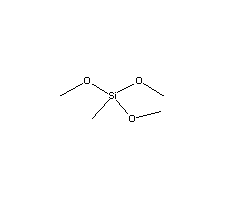
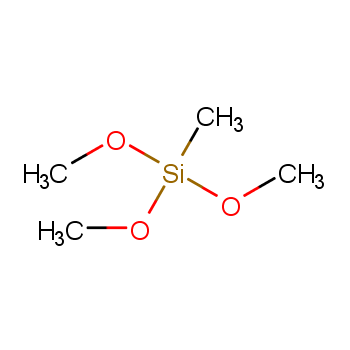
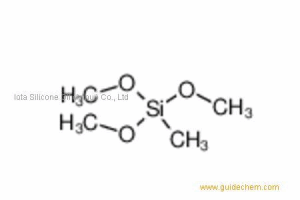
Methyltrimethoxysilane (MTMS) has the chemical formula CH3Si(OCH3)3. The structural analysis is as follows:
(1) Central silicon atom (Si): Forms the core of the molecule.
(2) Methyl (CH3): A carbon atom bonded to three hydrogen atoms.
(3) Methoxy (OCH3): Three identical groups, each containing an oxygen atom (O) bonded to the methyl (CH3) via a single bond.
(1) Bifunctionality: Key property of MTMS. The methoxy groups, due to their slight polarity, have affinity for organic materials such as polymers and resins. On the other hand, silicon atoms easily bond with inorganic materials like glass, metals, and ceramics.
(2) Silane Coupling Agent: This bifunctionality allows MTMS to act as a coupling agent. It forms strong chemical bonds between incompatible organic and inorganic materials, enhancing the adhesion of composites, adhesives, and coatings.
(3) Stability: MTMS exhibits excellent stability. It resists degradation from sunlight and hydrolysis (decomposition by water) to a certain extent, ensuring reliable long-term applications.
(4) Hydrophobicity: Methoxy groups contribute to mild hydrophobicity, meaning it repels water to some extent. This is beneficial in applications such as waterproof textiles.
(5) Solubility: Slightly soluble in water. The polarity mismatch between methoxy and methyl hinders its ability to dissolve in water.
(6) Hydrolysis: MTMS undergoes hydrolysis upon contact with water. Methoxy groups are replaced by hydroxyl groups (OH), releasing methanol (CH3OH). This is significant as it affects the material's performance over time.
(7) Flammability: MTMS is a flammable liquid with a low flash point, requiring caution during handling and storage.
MTMS, compared to other silane crosslinking agents, is widely used in the production of alcohol-type vulcanized silicone rubber due to its low cost and fast reaction rate. Transparent alcohol-type single-component room temperature vulcanized silicone rubber is prepared by condensation end-capping reaction with hydroxy-terminated polydimethylsiloxane as the base polymer, catalyst, filler, additives, and MTMS as the crosslinking agent.
Glass fiber, as a composite material, has a wide range of applications. Glass fibers have almost complete cylindrical cross-sections, and the inter-fiber voids are filled relatively densely, which is beneficial for increasing the glass fiber content. However, due to the smooth surface, it is not easy for fibers to be bundled, and the bonding between fibers and resins is poor. As a reinforcement material for resins, it is necessary to treat the smooth surface of glass fibers to increase the bonding strength between glass fibers and resins, prevent the infiltration of water and other media, improve the status of fiber-resin interface, and improve weather resistance and resistance. Medium corrosion resistance, etc. According to the interface theory, the performance of glass fiber reinforced plastic depends not only on the properties of the selected reinforcing material and synthetic resin but also on the combination of the two. Due to the presence of organic and inorganic groups in the product, organosilane coupling agents, such as MTMS, transform the surface of the treated glass fiber from hydrophilic to oleophilic, which is conducive to the bonding between fibers and resins.
MTMS, as the simplest silane coupling agent, when the Si-OH formed by its hydrolysis reacts with the Si-OH on the surface of the glass fiber, forms a strong bond.
Methyl silicone resin is widely used in the coating and special materials industries due to its heat stability, insulation properties, and weather resistance. Methyl silicone resin can be prepared by hydrolyzing MTMS at a certain temperature.
Wang Jianguo et al. prepared a transparent film of MTMS/silica sol/hydroxypropyl acrylate acrylic acid to enhance the hydrophobicity of glass surfaces. They discussed the relationship between the hydrolysis temperature, pH value, reaction time, and dosage of MTMS with silica sol and the hydrophobicity of the film. Chen Yuhong et al. used the hydrolysis-polymerization product of MTMS as the main film-forming material, introduced silica sol, the hydrolysis product of tetraethyl orthosilicate, as an inorganic reinforcement, and used a sol-gel method to form a wear-resistant coating on polycarbonate surfaces. Xie Zhenbin studied the application of MTMS in archaeology: in recent years, MTMS has been widely used to prepare spherical polymeric beads, which are extensively used in optical diffusion materials, LED lighting applications, coating matting agents, cosmetics, etc., further expanding the application of MTMS.
Due to environmental and safety concerns, methyltrimethoxysilane (MTMS) needs to be handled with care. While its hydrolysis products are generally considered biodegradable, uncontrolled release during use or disposal can have negative impacts on water quality. Therefore, compliance with regulations and appropriate waste management measures are crucial.
Safety precautions are important when using MTMS. Its flammability and potential health hazards require the use of personal protective equipment (PPE) such as gloves, respirators, and goggles. Additionally, proper ventilation is essential to prevent inhalation of vapors. Regulatory agencies like OSHA (Occupational Safety and Health Administration) have established exposure limits and outlined safety protocols for workplaces handling MTMS. By adhering to these regulations and adopting safe working practices, environmental risks can be minimized, and worker safety ensured.
Research on methyltrimethoxysilane continues to explore its potential in various innovative applications. A promising trend is its use in manufacturing high-performance composites with improved mechanical properties. Recent studies have incorporated MTMS into bio-based polymers to develop sustainable composites with excellent strength and durability. These bio-composites are expected to replace traditional materials in applications such as automotive components and construction materials, contributing to a more environmentally friendly future.
Another exciting area of exploration is the application of MTMS in nanotechnology. Researchers are investigating how MTMS can modify the surface properties of nanoparticles, enhancing their compatibility with various materials and enabling them to be used in new applications. For example, MTMS-treated nanoparticles show potential in developing self-healing coatings and fabrics due to their better adhesion and ability to form interconnected networks within materials.
Adding MTMS to concrete sealants has been shown to significantly improve waterproofing performance and resistance to freeze-thaw damage, extending the service life of concrete structures. These advancements highlight the ongoing potential of MTMS research to thoroughly transform various industries by creating stronger, more durable, and sustainable materials.
MTMS stands out among silane coupling agents due to its unique properties and functions. Here is a comparison with some alternative options:
(1) Balanced Functionality: MTMS offers a good balance between organic and inorganic affinity due to its single methyl and three methoxy groups. This allows it to be used on a wider range of substrates compared to silanes with a higher proportion of methoxy groups.
(2) Stability: MTMS exhibits excellent resistance to sunlight and hydrolysis, ensuring durability in applications.
(3) Cost-effectiveness: Generally, MTMS is a cost-effective choice compared to some other silane coupling agents.
(1) Hydrophobicity: The slight hydrophobicity of MTMS may not be suitable for applications requiring strong adhesion on highly polar surfaces.
(2) Hydrolysis: While hydrolysis is beneficial for some applications, it is important to consider its potential impact on material performance.
When selecting a silane coupling agent, specific applications and desired outcomes should be considered. If a strong bond between moderately polar organic materials and various inorganic substrates is needed, and cost-effectiveness is a factor, MTMS is a good choice. However, for applications requiring adhesion on highly polar surfaces or strict control of hydrolysis, alternative silanes with different functional groups may be preferable.
No, Methyltrimethoxysilane itself is not toxic. However, prolonged exposure to the compound environment may be harmful to the lungs, primarily manifesting as acute and chronic damage. Therefore, strict compliance with relevant safety production regulations is necessary when using Methyltrimethoxysilane to ensure the health and safety of workers.
Methyltrimethoxysilane is an organosilicon compound that can degrade in the environment and does not cause long-term pollution. However, care should be taken to avoid discharging it into groundwater, waterways, or sewage systems during use to prevent environmental harm.
No, Methyltrimethoxysilane should not be used in food contact materials as it may cause contamination and pose a risk to human health.
Yes, Methyltrimethoxysilane can be used in cosmetics to enhance stability and durability. However, when using Methyltrimethoxysilane, it is important to select products that comply with relevant standards and strictly follow the regulations for cosmetic production.
This article has extensively discussed the diverse uses and unique properties of MTMS, including its advantages such as heat resistance, chemical stability, and adhesion. We encourage further exploration and experimentation of MTMS's potential to drive its application and development in various fields. By fully leveraging MTMS in innovative applications, exploring its broader prospects, we can contribute to more innovation and development opportunities for science, industry, and society.
[1] https://en.wikipedia.org/wiki/Methyltrimethoxysilane
[2] Hu Jiaqi. Research on the Problem of Methyltrimethoxysilane Returning Acid [D]. Zhejiang University, 2017. DOI: 10.27461/d.cnki.gzjdx.2017.000047.
[3] https://www.hindawi.com/journals/amse/2012/124820/
[4] https://www.sciencedirect.com/science/article/abs/pii/S0300944019317060
[5] https://www.santos.com/wp-content/uploads/2021/08/Methyl-acetate-June-2021.pdf
[6] https://www.gelest.com/wp-content/uploads/product_msds/SIM6560.0-msds.pdf
 |
|
 |


 4YRS
4YRS