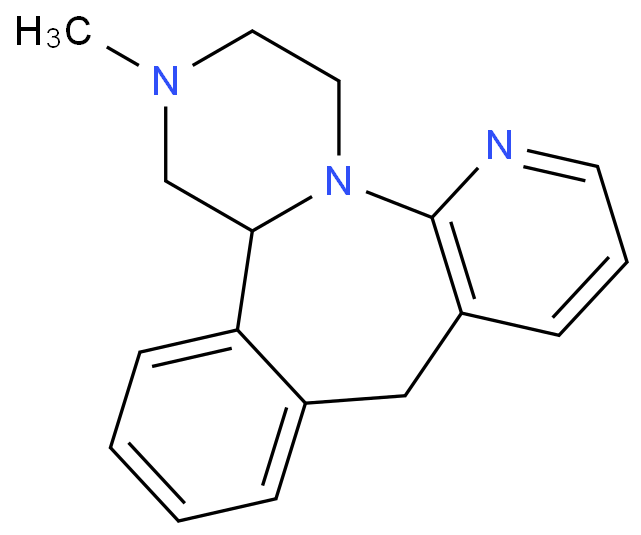
Mirtazapine is a norepinephrine and specific serotonin antidepressant. Its uses are extensive, with many countries approving it for the treatment of depression. It has sedative effects, good tolerability, and minimal anticholinergic effects, with no impact on the cardiovascular system at therapeutic doses. In veterinary medicine, mirtazapine is used to improve appetite in pets like dogs and cats, and to treat appetite loss and nausea related to gastrointestinal disorders, liver and kidney diseases, and other conditions with simultaneous appetite loss and nausea. Below is a 15 mg generic mirtazapine tablet:

Treatment of major depressive disorder (MDD)
Fibromyalgia
What is mirtazapine best used for?
Mirtazapine is an antidepressant approved in 1996 for treating major depression, with a recommended dose of 15-45 mg per day. Some European countries approve a maximum dose of 60 mg per day.
In addition to depression, mirtazapine is also used as an adjunctive treatment. It is relatively easy to combine with other antidepressants, and its combination with venlafaxine is even referred to as "California rocket fuel." Since mirtazapine does not affect the reuptake of monoamine neurotransmitters, its mechanism complements selective serotonin reuptake inhibitors (SSRIs) and selective norepinephrine and serotonin reuptake inhibitors (SNRIs).
Despite theoretical rationale, evidence for mirtazapine as an adjunctive agent is limited. The STAR*D trial indicated that the combination of mirtazapine and venlafaxine was superior to antidepressants, but this finding was not statistically significant. A case series study involving 32 patients assessed the combination of venlafaxine and mirtazapine, showing response rates of 44% at 4 weeks and 50% at 8 weeks. Thus, while the combination of mirtazapine and venlafaxine is pharmacologically reasonable, clinical evidence mainly comes from case reports. Its use should be determined based on clinical judgment.
Mirtazapine is approved only for treating depression. However, research supports its use in anxiety disorders (such as panic disorder, generalized anxiety disorder, and social anxiety disorder). Small randomized controlled trials support mirtazapine as adjunctive therapy for treating negative symptoms of schizophrenia. Given its anti-nausea mechanism involving 5-HT3 receptor antagonism, mirtazapine is an interesting option for treating nausea and vomiting caused by chemotherapy.
Additionally, due to its H1 receptor antagonism, Mirtazapine for sleep. It should be noted that mirtazapine may help alleviate insomnia symptoms in depressed patients but should not be used as a first-line treatment for insomnia in patients without depression.
What is the main side effect of mirtazapine?
Mirtazapine has several notable side effects. Adverse reactions occurring in more than 10% of users include:
Sedation (54%)Mirtazapine can counteract the antihypertensive effects of clonidine; therefore, cardiovascular disease patients should use it with caution.
Patients allergic to mirtazapine or its components should avoid its use.
Patients currently on monoamine oxidase inhibitors should wait at least 14 days before starting mirtazapine therapy, and vice versa, to reduce the risk of serotonin syndrome.
Patients receiving intravenous methylene blue or linezolid should avoid mirtazapine due to increased risk.
Boxed warning - Mirtazapine can paradoxically worsen depression and anxiety and even lead to suicidal thoughts in some individuals. Close monitoring of these patients is essential.
[1]https://en.wikipedia.org/wiki/Mirtazapine
[2]Huanong (Zhaoqing) Bio-Industry Technology Research Institute Co., Ltd. Mirtazapine oral preparation and its preparation method. 2020-09-29.
[3]https://go.drugbank.com/drugs/DB00370
[4]https://www.drugs.com/
[5]Jilani T N, Gibbons J R, Faizy R M, et al. Mirtazapine[J]. 2018.
[6]https://www.ncbi.nlm.nih.gov/books/NBK519059/
[7]McGrath, Patrick, et al. "Tranylcypromine versus venlafaxine plus mirtazapine following three failed antidepressant medication trials for depression: a STAR* D report." American Journal of Psychiatry 163.9 (2006): 1531-1541.
[8]Hannan, Noel, et al. "Venlafaxine—mirtazapine combination in the treatment of persistent depressive illness." Journal of Psychopharmacology 21.2 (2007): 161-164.
|
 |
 |


 15YRS
15YRS

