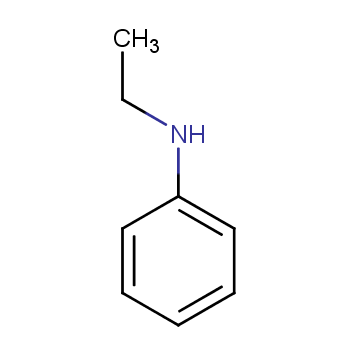
N-Ethylaniline is a dark-colored liquid with an aromatic odor and is insoluble in water. It has a density of 0.963 g/cm3. Skin absorption and inhalation of vapors are toxic. Combustion releases toxic fumes. Its flash point is 185°F.

The SDS (Safety Data Sheet) is a document used by chemical manufacturers and importers to clarify the physical and chemical properties of chemicals (such as pH, flash point, flammability, reactivity, etc.) and potential health hazards (such as carcinogenicity, teratogenicity, etc.) to users. In European countries, the SDS is also referred to as the safety data sheet (SDS), while in the US, Canada, Australia, and many Asian countries, the term MSDS (Material Safety Data Sheet) is still used.
The MSDS (Material Safety Data Sheet) is a comprehensive legal document provided by chemical production or sales companies according to legal regulations. This document details the chemical’s physical and chemical properties, explosive characteristics, health hazards, safe use and storage, spill handling, first aid measures, and relevant regulations, among other aspects. Manufacturers can create their own MSDS following the relevant regulations.
What is N-Ethylaniline?
N-Ethylaniline, also known as Ethylaniline, has the CAS number 103-69-5 and the molecular formula C8H11N. It is an organic amine compound and appears as a yellow-brown transparent oily liquid with the odor of aniline. It is an important intermediate in many organic compounds and is widely used in dyes, pharmaceuticals, polymers, rubber, plastics, and pesticides. N-Ethylaniline is also found in tea, making it a potential biomarker for consuming this food.
Understanding N-Ethylaniline SDS - Typical SDS Sections
Hazard Identification
GHS Label Elements:

Signal Word: Danger
Hazard Statements
:H301+H311+H331 (10.04%): Toxic if swallowed, in contact with skin, or if inhaled [Danger: Acute toxicity, oral; Acute toxicity, skin; Acute toxicity, inhalation]
H301 (100%): Toxic if swallowed [Danger: Acute toxicity, oral]
H311 (100%): Toxic in contact with skin [Danger: Acute toxicity, skin]
H331 (100%): Toxic if inhaled [Danger: Acute toxicity, inhalation]
H373 (100%): May cause damage to organs through prolonged or repeated exposure [Warning: Specific target organ toxicity, repeated exposure]
N-Ethylaniline Hazards
- Air and Water Reactivity: Unstable in air and/or light; insoluble in water.
- Fire Hazard: Flammable material; may burn but not easily ignited. Vapors may form explosive mixtures with air: indoor, outdoor, and sewer explosion hazards. Substances marked with (P) may undergo explosive polymerization when heated or exposed to fire. Corrosives in contact with metals may release flammable hydrogen gas. Containers may explode when heated. Spills may contaminate waterways. The substance may be transported in molten form.
- Health Hazards: Toxic and/or corrosive; inhalation, ingestion, or skin contact may cause severe injury or death. Bromine ethyl acetate (UN2643) is an eye irritant/tear gas (causes tearing). Contact with molten material may cause severe burns to skin and eyes. Avoid any skin contact. Fire may produce irritating, corrosive, and/or toxic gases. Firefighting water or diluted water runoff may be corrosive and/or toxic and cause environmental contamination.
- Reactivity Profile: N-Ethylaniline may react violently with nitric acid. It may react with strong oxidizers. In exothermic reactions, acids are neutralized to form salts and water. Incompatible with isocyanates, halogenated organics, peroxides, phenols (acidic), epoxides, anhydrides, and acyl halides. May produce flammable hydrogen gas when combined with strong reducers (e.g., hydrides).
Handling and Storage
- Safe Handling Precautions: Avoid contact with skin and eyes. Avoid dust and aerosol formation. Avoid exposure - obtain special instructions before use. Provide appropriate ventilation in areas where dust is formed.
- Safe Storage Conditions, including any incompatibilities: Store separately from food and feed, strong oxidizers, and strong acids. See chemical hazards. Ventilate along the floor. Store in a dry, well-ventilated place away from heat sources, oxidizing materials, and sunlight. Preferably store outdoors or in a separate storage facility.
Protective Measures
- Respiratory Protection: Wear a respirator if vapors may be encountered. In emergency situations or during escape, wear a self-contained breathing apparatus with a positive pressure.
- Eye Protection: Wear safety goggles.
- Protective Clothing: Wear tight-sleeved work clothes and long rubber boots.
- Hand Protection: Wear rubber gloves.
- Other: No smoking, eating, or drinking at the work site. Change work clothes promptly. Avoid alcohol before and after work, and wash with warm water. Monitor for toxins. Conduct pre-employment and regular medical examinations.
First Aid Measures
- General Advice: Consult a physician. Present the safety data sheet to the attending doctor.
- If Inhaled: Move to fresh air and rest. Seek medical attention.
- If Skin Contacted: Remove contaminated clothing. Wash thoroughly with water and soap. Seek medical attention.
- In Case of Eye Contact: Rinse with plenty of water for several minutes (remove contact lenses if possible), then seek medical attention.
- If Swallowed: Rinse mouth. Seek medical attention.
Recommendations
Reviewing the N-Ethylaniline SDS highlights key safety points including the chemical’s toxicity, flammability, and emergency measures for spills or accidental contact. This information is crucial for ensuring worker health and safety. Therefore, we urge all users of N-Ethylaniline to thoroughly review its SDS and adhere strictly to the safety protocols to effectively reduce risks and protect both themselves and others.
References:
[1]https://baike.baidu.com/item/%E5%8C%96%E5%AD%A6%E5%93%81%E5%AE%89%E5%85%A8%E6%8A%80%E6%9C%AF%E8%AF%B4%E6%98%8E%E4%B9%A6%E6%95%B0%E6%8D%AE%E5%BA%93
[2]https://baike.baidu.com/item/N-%E4%B9%99%E5%9F%BA%E8%8B%AF%E8%83%BA
[3]https://pubchem.ncbi.nlm.nih.gov/compound/N-Ethylaniline
[4]https://foodb.ca/compounds/FDB004541
[5]https://cameochemicals.noaa.gov/chemical/4021
[6]Suzhou Hengchang Biotechnology Co., Ltd. A preparation method and application of crude N-ethylaniline: CN202310607853.0[P]. 2023-08-29.
[7]https://www.guidechem.com/msds/103-69-5.html



 4YRS
4YRS

