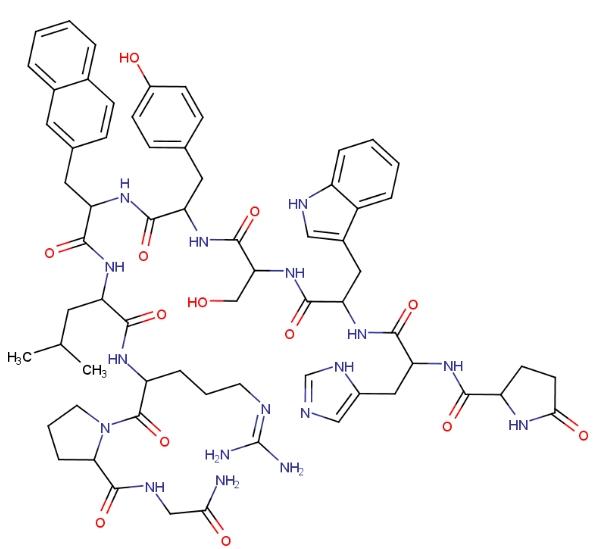
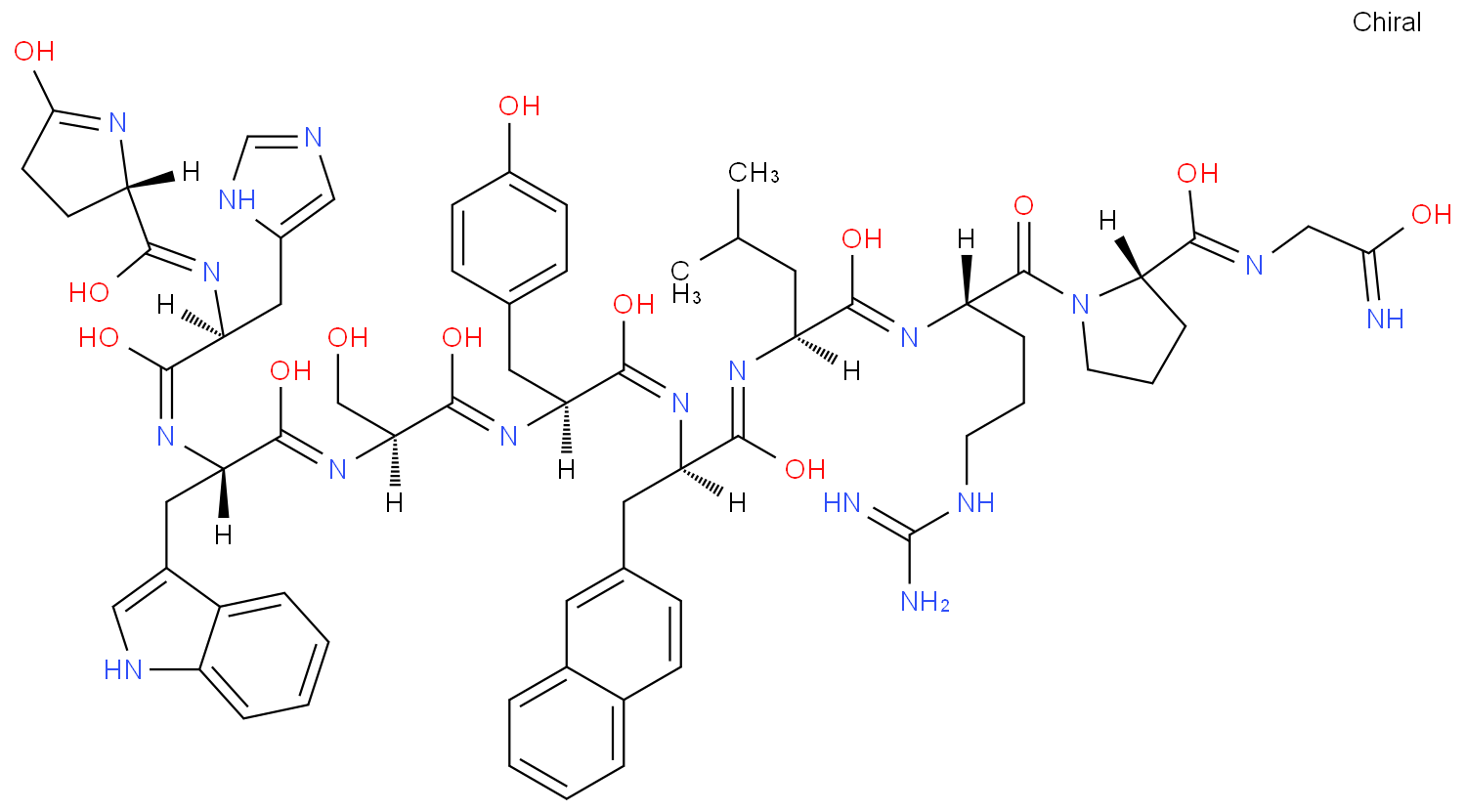
Nafarelin has been approved for the treatment of endometriosis and precocious puberty. It is also used to manage uterine fibroids and control ovarian stimulation in vitro fertilization (IVF). Nafarelin serves as a puberty blocker for transgender youths and is used to suppress testosterone levels in transgender women. Moreover, nafarelin can lower gonadotropin and androgen levels, helping to treat hirsutism and polycystic ovary syndrome. It is effective in treating benign prostatic hyperplasia. Nafarelin therapeutic effects are as follows:
Endometriosis is an estrogen-dependent disease where ovarian hormones are necessary for the growth of ectopic endometrial tissue. The aim of medication for this condition is to suppress ovarian function, causing the ectopic endometrial tissue to atrophy or even disappear. Common gonadotropin-releasing hormone agonists used to treat endometriosis-related pain include:

How does nafarelin treat endometriosis? Regular administration of nafarelin can lower estrogen levels, aiding in the treatment of endometriosis. During treatment and up to six months after stopping, it can prevent tissue growth caused by endometriosis.
In small open-label trials, administering 20 to 1000 μg/day of nafarelin subcutaneously or intranasally over three months alleviated symptoms and signs of endometriosis. Two well-designed comparative studies (each involving about 200 patients) showed that in women receiving 200 or 400 μg of nafarelin intranasally twice daily or 400 mg of danazol orally twice daily, or 200 mg of danazol orally three times daily for six months, the severity score decreased by 43% to 49%, with similar improvements in symptom relief and ectopic tissue eradication. One study showed that over 70% of women had no symptoms or only mild symptoms six months after stopping either medication.
In a study involving ten women with uterine fibroids, intranasal administration of 800 μg/day of nafarelin led to a 57% reduction in uterine volume after six months, corresponding to decreased estradiol levels. The extent of fibroid shrinkage varied, but was still beneficial for surgical removal.
Administration of 500 μg of nafarelin intranasally twice daily for six months suppressed ovarian testosterone production, improving clinical symptoms in six women with hirsutism, four of whom had polycystic ovary syndrome. In another group of eleven women with polycystic ovary syndrome, a lower dose of 200 μg twice daily had inconsistent effects on ovarian volume and follicle count, with only slight improvement in hirsutism in seven women. Intranasal administration of 400 μg/day of nafarelin successfully suppressed ovarian function in fifty-three women undergoing IVF. Subsequent stimulation with human menopausal gonadotropin (HMG) led to adequate follicle development, and thirty-three patients proceeded to embryo transfer, with ten pregnancies achieved.
In nine men with benign prostatic hyperplasia, daily subcutaneous injections of 400 μg of nafarelin suppressed circulating testosterone levels to castrate levels (approximately 1 nmol/L) and reduced the average prostate size by 25% after four months. Obstructive and irritative symptoms were alleviated, but only three men had clinically significant improvement in urine flow rate. After stopping nafarelin, most hypertrophied tissue regrew.
The most common side effect of nafarelin is reduced estrogen levels. Between 38% and 65% of women receiving 250 μg/day of nafarelin via intranasal administration experience hot flashes, which are generally mild and tolerable. Over 90% of women receiving higher doses report hot flashes. Women may also experience reduced libido and vaginal dryness. Among ten men with benign prostatic hyperplasia receiving 400 μg/day of nafarelin subcutaneously, hot flashes and erectile dysfunction were common.
In women treated for endometriosis, nafarelin causes these troublesome but non-dangerous side effects more frequently than danazol. However, nafarelin is less likely to cause weight gain, edema, myalgia, and elevated serum liver enzymes compared to danazol, and it does not cause adverse changes in serum lipids.
During six months of treatment with nafarelin at 400 or 600 μg/day, trabecular bone mineral density decreased by 6% to 11%, due to increased bone resorption from reduced estrogen levels. Most bone loss recovers after stopping nafarelin, and hormone replacement therapy seems to minimize bone loss.
Occasionally, intranasal nafarelin administration can cause nasal irritation, headaches, and mood instability. "Flare-ups" associated with the initial stimulation of gonadotropins and sex hormones appear to be uncommon.
Before using nafarelin, inform your doctor and pharmacist if you are allergic to nafarelin, goserelin (Zoladex), leuprolide (Camcevi, Eligard, Fensolvi, Lupron, Lutrate), triptorelin (Triptodur, Trelstar), or any other medications or ingredients in the nafarelin nasal spray. Request a list of ingredients from your pharmacist. Also, inform your healthcare provider about any prescription, over-the-counter medications, vitamins, nutritional supplements, and herbal products you are using or planning to use. Your doctor may need to adjust your medication doses or closely monitor for side effects.
If you are using nasal decongestants such as oxymetazoline (Afrin), wait at least two hours after using nafarelin nasal spray before using these decongestants.
Report any unusual vaginal bleeding to your doctor, who may advise discontinuing nafarelin nasal spray.
If you have a history of heavy drinking, tobacco use, or conditions such as osteoporosis, ovarian cysts, epilepsy, brain tumors, cerebrovascular disease, chronic rhinitis, or psychological issues like depression, inform your doctor.
Inform your doctor if you are pregnant or planning to become pregnant. If you are pregnant or suspect you might be, stop using nafarelin nasal spray and use reliable non-hormonal contraception (such as condoms or a diaphragm). Contact your doctor immediately if you become pregnant while using nafarelin, as it may harm the fetus.
If you are breastfeeding, inform your doctor. Do not breastfeed while using nafarelin nasal spray.
Nafarelin plays an important role in modern medicine, being widely used to treat various conditions including endometriosis and prostate cancer, with its efficacy confirmed by clinical evidence. However, understanding potential side effects and safety measures is equally important. We strongly recommend consulting with a healthcare provider for personalized advice and professional guidance to ensure the safety and effectiveness of this medication. Additionally, you may seek further information on nafarelin uses or consider its use under medical supervision to make informed treatment decisions.
[1]Chrisp P, Goa K L. Nafarelin: a review of its pharmacodynamic and pharmacokinetic properties, and clinical potential in sex hormone-related conditions[J]. Drugs, 1990, 39(4): 523-551.
[2]https://en.wikipedia.org/wiki/Nafarelin
[3]https://go.drugbank.com/drugs/DB00666
[4]https://medlineplus.gov/druginfo/meds/a601082.html
[5]Hunan Santai Pharmaceutical Co., Ltd. A method for solid-liquid synthesis of nafarelin: CN202111668917.5[P]. 2022-03-15.
[6]Beijing Tianheng Pharmaceutical Research Institute. Nafarelin acetate nasal spray: CN201210039955.9[P]. 2013-09-11.
[7]Han Guizhen, Zhao Zhifang, Xu Xinhong, et al. Inhibitory effect of domestic nafarelin on ectopic endometrium in rats and rabbits[J]. Chinese Journal of Pharmaceutical Industry, 2002, (07): 23-25.
[8]Bedaiwy M A, Allaire C, Alfaraj S. Long-term medical management of endometriosis with dienogest and with a gonadotropin-releasing hormone agonist and add-back hormone therapy[J]. Fertility and sterility, 2017, 107(3): 537-548.
[9]https://link.springer.com/article/10.2165/00003495-199039040-00005
|
 |


 6YRS
6YRS