-
We detected your language preference as English. Would you like to switch to the English version for a better experience?
Switch to English
Stay here


Color phenol AS (Naphthol AS) is an organic pigment based on color phenol AS and its derivatives as coupling components, with a color spectrum ranging from yellowish-red to bluish-red, magenta, or fuchsia. Depending on the different substituents on the arylamine, there are many types of color phenols. The pigment molecule contains a formamide group, which has good solvent resistance and is suitable for coloring plastics, coatings, banknote inks, viscose fibers, and fabrics.
Naphthol AS-OL, also known as 3-Hydroxy-N-(2-methoxyphenyl)-2-naphthamide, serves as an intermediate in organic pigments and can be used to produce Pigment Red 9, 15, 119, 243, 261, 266; Pigment Orange 4; and it can also be used for dyeing cotton yarns, cotton fabrics, cotton knitwear, towels, bath towels, Vinylon, viscose, silk, Nylon, and diacetate fiber. Additionally, it is used in direct printing on cotton fabrics, anti-dyeing printing, discharge printing, and in the production of organic pigments. It has low affinity for cotton and moderate coupling ability.
Naphthol AS is an organic compound with the molecular formula C10H6(OH)C(O)NHC6H5. It is the aniline of 3-hydroxy-2-carboxynaphthalene. Several similar compounds are known, differing only in their suffixes. For instance, in Naphthol AS-OL, the aryl substituent on the nitrogen is C6H4-2-OCH3.
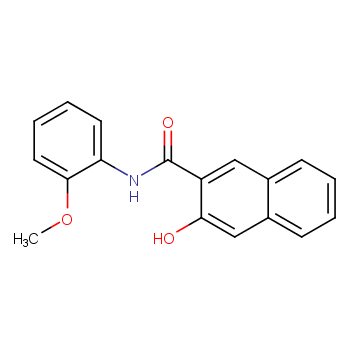
Naphthol AS-OL, with the chemical name 3-Hydroxy-N-(2-methoxyphenyl)-2-naphthamide, has the CAS number 135-62-6 and Naphthol as ol chemical formula is C18H15NO3. Other names include Ice Dye Azo Component 20, 3-Hydroxy-2'-Methoxy-2-Naphthylaniline, and Color Phenol AS-OL. The structure of Naphthol AS-OL is as follows:
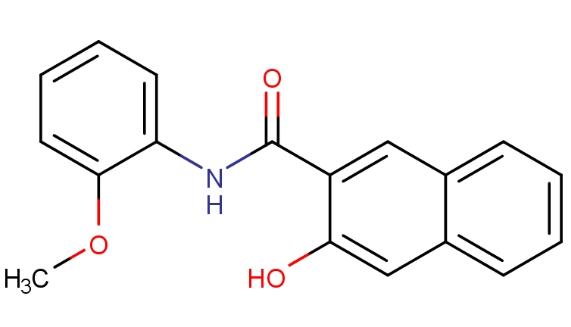
Due to the useful properties and good stability of various composite materials, research interest in developing efficient multifunctional material systems (MFMS) using these materials has increased. Ilona Radkowska systematically studied 1-Naphthol and its derivatives, including Naphthol AS-OL, particularly focusing on how the type and position of substituents affect reactivity and properties. During the calculations, important preparation guidelines for 1-Naphthol thiol derivatives were obtained. Changes from electron-withdrawing groups (EWG) to electron-donating groups (EDG) increased the NLO effect. Due to the high stability of the aromatic structure and the polarity given by the substituents, Ilona Radkowska provided new scopes for the applicability of 1-Naphthol and its derivatives, including Naphthol AS-OL, as excellent materials for anti-corrosion and NLO devices.
Naphthol AS-OL is mainly used for dyeing cotton fabrics, exhibiting similar properties to Naphthol AS, and can be used in combination with Naphthol AS to enhance dye fastness. Additionally, it is also suitable for dyeing Vinylon, viscose fibers, silk, Nylon, and diacetate fibers. During cotton fabric printing, Naphthol AS-OL can be used as a base color, combined with different color bases to display a variety of colors such as orange, red, brown, and blue. It is also used to manufacture pigments with high lightfastness, fast acid, fast sulfonate, and lake pigments.
In scientific research and laboratory environments, Naphthol AS-OL is widely used as a chromogenic enzyme substrate, generating colored products upon reaction with specific enzymes. This makes it particularly important in histochemistry and cytochemistry staining techniques, enabling the observation of enzyme activity in cells and tissues. Naphthol AS-OL is especially suitable for detecting enzymes such as alkaline phosphatase, acid phosphatase, and esterase. By observing these colored products under a microscope, researchers can accurately analyze the distribution and localization of enzymes in various biological samples.
Z. Lojda et al. used Naphthol AS series phosphates as substrates with various diazonium salts as coupling agents to demonstrate the histochemical medium for alkaline and acid phosphatases, testing the ability to reflect different levels of enzyme activity. The study found that increasing the substrate concentration (1/8 mg/ml in the "standard" histochemical medium) produced more azo dyes in the reactions of both phosphatases. If the substrate concentration exceeded 1/2 mg/ml, the "standard" concentration of diazonium salt (1 mg/ml) was insufficient to effectively capture the released Naphthol AS in the alkaline phosphatase reaction. Due to the very high inhibitory effect in most commercially available diazonium salts, increasing their concentration would cancel the beneficial effect of increasing the substrate concentration on azo dye production.
Glucocorticoids are an important part of the endocrine system, responsible for various functions such as regulating immune activity, proper brain function, and fetal development. Disruption of glucocorticoid signaling can lead to various cardiovascular, inflammatory, and autoimmune diseases, making it crucial to identify chemicals that can regulate glucocorticoid receptor (GR) activity. In a study by Katra Kol?ek et al., molecular docking was used to search for new GR agonists and antagonists. The best hits were further tested in an in vitro model of GR-dependent luciferase expression in MDA-kb2 cells. Nine new potential modulators of the receptor were identified, belonging to six structurally distinct classes. Of these, six (chlorpyrifos and cypermethrin, di(2-ethylhexyl) phthalate and dibutyl phthalate, Naphthol AS-OL, and dicumyl peroxide) induced luciferase activity; while the other three (bisphenol P, bisphenol M, and antioxidant 425) inhibited luciferase activity. However, among the nine potential GR modulators, only bisphenol M showed significant binding affinity to the receptor.
Naphthol AS-OL can cause skin irritation and serious eye damage. It may also cause respiratory irritation. It is advised to avoid inhaling its dust, mist, gas, or vapor, and to avoid contact with skin and eyes.
Consult a physician. Show this safety data sheet to the doctor in attendance.
If inhaled, move the person to fresh air. If not breathing, give artificial respiration. Consult a physician.
Wash off with soap and plenty of water. Consult a physician.
Rinse thoroughly with plenty of water for at least 15 minutes and consult a physician.
Never give anything by mouth to an unconscious person. Rinse mouth with water. Consult a physician.
Avoid contact with skin and eyes. Avoid formation of dust and aerosols. Provide appropriate exhaust ventilation at places where dust is formed.
Store in a cool place. Keep the container tightly closed in a dry and well-ventilated place.
[1]https://en.wikipedia.org/wiki/Naphthol_AS
[2]https://www.sciencedirect.com/topics/chemistry/naphthol
[3]https://link.springer.com/article/10.1007/BF00326609
[4]https://link.springer.com/article/10.1007/s11224-020-01674-x
[5]https://linkinghub.elsevier.com/retrieve/pii/S0378427414000678
[6]https://www.wikidoc.org/index.php/Valrubicin
[7]Feicheng Yuehai Chemical Co., Ltd. A method for preparing naphthophenol AS-OL by microchannel continuous method: CN202010030345.7[P]. 2020-04-21.
[8]https://www.guidechem.com/msds/135-62-6.html
|
 |
 |
|
 EN
EN
 Agricultural News
 Food News
 Industrial News
 Cosmetic News
 Pharmaceutical News
 Science News

 15YRS
15YRS

