-
We detected your language preference as English. Would you like to switch to the English version for a better experience?
Switch to English
Stay here


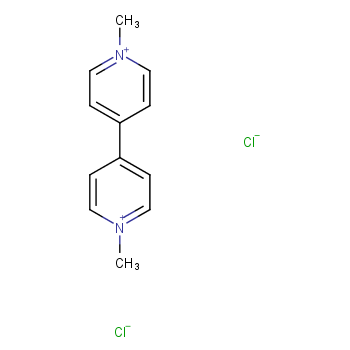
Paraquat dichloride, also known as Gramoxone or methyl viologen, is a highly efficient and toxic herbicide with the chemical formula C12H14Cl2N2. It is a fast-acting non-selective herbicide that kills plants containing chlorophyll, effective against various annual and perennial weeds. It is extensively used to control weeds in orchards, mulberry plantations, rubber plantations, and forest belts. It can also be used to clear weeds from field ridges and embankments, and for pre-emergence weed control in no-till crops. Paraquat dichloride's broad weed control spectrum, strong permeability, rapid action, and cost-effectiveness contribute to its widespread use, although its strong toxicity to humans and animals and lack of effective antidote have led to significant concerns.
In recent years, as the use of paraquat dichloride has increased sharply, there have been numerous cases of accidental poisoning in China, raising social awareness. Mainland China has banned the production, sale, and use of paraquat dichloride. On April 5, 2012, the Ministry of Agriculture of the People's Republic of China announced that paraquat dichloride would no longer be produced starting July 1, 2014, and banned its sale and use from July 1, 2016.
Paraquat dichloride was first produced in 1962 by a British chemical company as a non-selective fast-acting herbicide. It is quickly absorbed by plants and deactivates upon contact with soil clay, leaving minimal residue. Initially used in the United States and Mexico to kill marijuana weeds, it soon became a popular and inexpensive herbicide worldwide. Although classified as a restricted-use herbicide due to its high toxicity, its low cost led to widespread, unregulated use in developing countries such as India. Paraquat dichloride ingestion is highly toxic, causing complications such as acute respiratory distress syndrome, kidney failure, liver toxicity, and pulmonary fibrosis, with a mortality rate as high as 70% and no known antidote.
Paraquat dichloride was first produced and sold under the trade name Gramoxone in 1962 by ICI and is now one of the most commonly used herbicides. Since 2007, its use has been banned in the European Union. China banned its use domestically in 2017, followed by bans in Thailand in 2019 and in Brazil, Chile, Malaysia, Peru, and Taiwan between 2020 and 2022.
In the United States, paraquat dichloride is available in various solution strengths and is classified as a restricted-use pesticide, meaning it can only be applied by licensed applicators. As of October 2021, estimates from the U.S. Geological Survey show that paraquat dichloride use in U.S. agriculture doubled from 2013 to 2018, reaching 10,000,000 pounds (4,500,000 kilograms) annually. Over 120 countries use it, with more than 20 nations either banning or strictly regulating its use. It is the second most widely used herbicide globally, after glyphosate, primarily for agricultural and horticultural weed control, and for desiccation of crops like cotton and soybeans.
Paraquat dichloride is one of the most widely used herbicides in the U.S. It is commonly known as Gramoxone (a popular end-use product). It serves as a crucial tool for weed control in many agricultural and non-agricultural settings. It is also used for drying crops like cotton before harvest. There are no homeowner uses, or residential applications registered for this product. All paraquat dichloride products registered for use in the U.S. are restricted-use pesticides (RUPs) and can only be used by certified applicators.
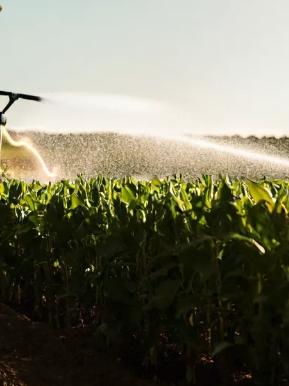
Paraquat dichloride effectively controls a wide range of weeds in high-stem crops, orchards, and non-cultivated land, with characteristics such as rapid action, low cost, high efficiency, and effectiveness. In tea gardens, orchards, rubber plantations, mulberry fields, and forest belts, paraquat dichloride is used when weeds are at their active growth stage. Apply 100–200 milliliters of a 20% solution per acre mixed with 25 kilograms of water for even spraying. When weeds are over 30 cm, increase the dosage to ensure effective control.
Paraquat dichloride also finds extensive application in pasture renovation, non-tillage corn and sugarcane fields, vegetable fields, and cotton defoliation. It can be used before planting or after emergence, with pre-plant or pre-emergence treatments, or during mid-to-late crop growth stages with protective directed spraying. For pre-plant or pre-emergence treatments, use 75–200 milliliters of a 20% solution per acre mixed with 25 kilograms of water to control emerged weeds. During crop growth, use 100–200 milliliters of a 20% solution per acre mixed with 25 kilograms of water for directed spraying between rows.
Additionally, pre-treatment with ascorbic acid can enhance vegetable crops' resistance to paraquat dichloride, suggesting that using salicylic acid and ascorbic acid may promote its application in high-value vegetables and other crops. This represents a trend in herbicide application development and a straightforward approach.
Farmers use paraquat dichloride primarily for the following reasons:
Although paraquat dichloride demonstrates significant herbicidal effects in agriculture, its use must strictly adhere to relevant laws and regulations to ensure safety and environmental protection. Due to its potential hazards, it should only be used in legally permitted areas by certified professionals following safety standards. Legal and compliant use of paraquat dichloride not only maximizes its herbicidal effectiveness but also ensures the safety of users and the environment.
[1]Shandong Pesticide Science Research Institute, Shandong Kexin Biochemical Co., Ltd. Tablets containing paraquat dichloride and preparation method thereof: CN201310738912.4[P]. 2014-04-16.
[2]Han Yulu. Paraquat production process improvement and wastewater resource utilization[D]. Shandong: Shandong University, 2014. DOI:10.7666/d. Y2732554.
[3]Sukumar C A, Shanbhag V, Shastry A B. Paraquat: The poison potion[J]. Indian journal of critical care medicine: peer-reviewed, official publication of Indian Society of Critical Care Medicine, 2019, 23(Suppl 4): S263.
[4]https://www.epa.gov/ingredients-used-pesticide-products/paraquat-dichloride
[5]https://en.wikipedia.org/wiki/Paraquat
[6]https://zh.wikipedia.org/wiki/%E7%99%BE%E8%8D%89%E6%9E%AF
[7]https://baike.baidu.com/item/%E7%99%BE%E8%8D%89%E6%9E%AF
 |
|
 |
 |
|
|
 EN
EN
 Agricultural News
 Food News
 Industrial News
 Cosmetic News
 Pharmaceutical News
 Science News

 1YR
1YR


