-
We detected your language preference as English. Would you like to switch to the English version for a better experience?
Switch to English
Stay here


Molecular Geometry & Lewis Structures
Electron-domain analysis, geometry, bond angle and step-by-step construction for SO3 (CAS 7446-11-9) — with the practical supply context B2B and laboratory buyers need.

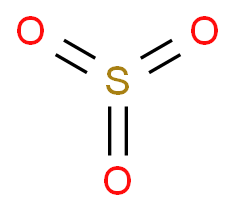
SO3 has a Trigonal planar molecular geometry (AX3, trigonal planar) with a bond angle of 120°. The central sulfur carries 3 bonding domain(s) and 0 lone pair(s) — 3 electron domains in total. Remove so2's lone pair and the three bonding domains spread out to perfect planar symmetry.
Hybridisation is conventionally described as sp2. Polarity: Nonpolar (symmetric cancellation of the three S–O dipoles).
| Parameter | Sulfur Trioxide (SO3) |
|---|---|
| CAS Registry Number | 7446-11-9 |
| Molecular formula | SO3 |
| Molar mass | 80.07 g/mol |
| Total valence electrons | 24 |
| Central atom | Sulfur |
| Bonding domains (σ) | 3 |
| Lone pairs on central atom | 0 |
| Electron domains (steric number) | 3 |
| Electron-pair geometry | Trigonal planar |
| Molecular geometry (shape) | Trigonal planar |
| VSEPR notation | AX3 |
| Bond angle | 120° |
| Hybridisation (conventional) | sp2 |
| Polarity | Nonpolar (symmetric cancellation of the three S–O dipoles). |
| Lewis structure guide | SO3 Lewis structure |
Molar mass is the average value rounded for procurement use. Hybridisation labels are the conventional VSEPR-level description; orbital treatment becomes more nuanced at higher levels of theory.
A worked diagram of this molecule is kept in the companion guide: SO3 Lewis structure.
VSEPR theory counts electron domains — every σ bond counts once regardless of bond order, and every lone pair counts once. SO3 has 3 such domains around the sulfur: 3 bonding and 0 lone. 3 domains correspond to a trigonal planar electron-domain arrangement; with no lone pair to hide the observed molecular shape is trigonal planar (AX3).
Bond angle: 120° because remove SO2's lone pair and the three bonding domains spread out to perfect planar symmetry.
Polarity: Nonpolar (symmetric cancellation of the three S–O dipoles).
Bond-order note: Three equivalent S–O bonds (delocalised π system).
Geometry shortcut for recall
Steric number 3 → parent arrangement trigonal planar; subtract 0 lone positions and the visible shape is trigonal planar. Same electron count, different lone-pair bookkeeping, different geometry — always count the domains before naming the shape.
Carrying SO2's bent shape over — the loss of the lone pair restores planarity and kills the dipole.
Sulfur is hypervalent in the double-bonded description.
Sulfonation of detergents, dyes and pharmaceutical intermediates; shipped as aged oleum or controlled SO3 generators because the monomer polymerises readily.
Structure-level identity is exactly what a purchase order has to fix: the same molecular formula can hide isomers, hydrates or salt forms with different handling profiles. Before ordering, match CAS (7446-11-9), assay, water content and container rating against the datasheet, and request the COA batch that will ship.
Trigonal planar. The 3 electron domains around the central sulfur adopt a trigonal planar arrangement, and with no lone pairs on the central atom the visible shape is trigonal planar.
120°, because remove SO2's lone pair and the three bonding domains spread out to perfect planar symmetry.
Nonpolar (symmetric cancellation of the three S–O dipoles).
SO3 has no lone pair on the central atom — every domain is a bond.
Editorial note
This page explains molecular geometry and Lewis-structure construction for education and procurement due-diligence. It is not a safety datasheet; for handling, exposure and transport limits consult the current SDS and local regulations.
 |
|
|
 EN
 Agricultural News
 Food News
 Industrial News
 Cosmetic News
 Pharmaceutical News
 Science News


 4YRS

