-
We detected your language preference as English. Would you like to switch to the English version for a better experience?
Switch to English
Stay here


This article provides a comprehensive guide to sodium dodecyl sulfate solution, addressing its composition, applications, and practical considerations. Each section aims to offer valuable insights for readers, catering to both beginners and experienced users.
Introduction:
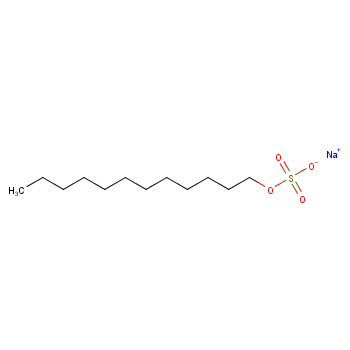
Sodium dodecyl sulfate (SDS), also known as SDS, is an anionic surfactant with functions such as dispersing, solubilizing, emulsifying, defoaming, lubricating, washing, inhibiting corrosion, and sterilizing. In industry and daily life, SDS accounts for approximately 25% to 30% of the total synthetic surfactants worldwide due to its excellent foaming ability. It is soluble in water, nearly insoluble in ether and chloroform; pH range is 7.0 to 9.5 (10 g·L-1 aqueous solution); melting point is 204 to 207 ℃; density is 1.07 g·cm-3 (20 ℃); HLB value (hydrophilic-lipophilic balance) is approximately 40; surface tension is 25.2 mN·m-1 (0.5 g·L-1, 30 ℃ aqueous solution); critical micelle concentration is 8.2 mmol·L-1 (2.365 g·L-1, 20 ℃).
A 20% SDS solution consists of sodium dodecyl sulfate dissolved in water, with SDS concentration occupying 20% of the total solution volume. SDS, also known as sodium dodecyl sulfate, is a potent anionic surfactant used primarily in biochemical and molecular biology applications due to its ability to denature proteins and disrupt non-covalent bonds. In a 20% solution, SDS acts as an effective detergent, promoting solubilization of proteins and lipids by enveloping their hydrophobic tails while exposing their hydrophilic heads to the surrounding aqueous environment. This characteristic enables SDS to effectively lyse cells and dissolve biological materials, making it an integral component of various laboratory protocols such as protein extraction, electrophoresis, and Western blotting.
How do you make a 20% SDS solution? Preparing a 20% SDS solution requires precise measurement and proper handling techniques. To prepare this solution, a precise amount of solid SDS powder must be accurately weighed using a laboratory balance and then dissolved in the desired volume of distilled water. Care should be taken to ensure thorough mixing and dissolution of the SDS powder to achieve a homogeneous solution. Handling SDS requires caution as it can cause skin and mucous membrane irritation upon contact. Additionally, proper ventilation should be maintained to prevent inhalation of SDS dust particles. Depending on specific experimental requirements, a 20% SDS solution can be used immediately or appropriately stored for future use.

Sodium dodecyl sulfate (SDS) solution serves as a cornerstone in research and industrial applications due to its multifaceted advantages across various fields. In scientific experiments, SDS solution plays a pivotal role, particularly in molecular biology, where it serves as a fundamental reagent for protein analysis and nucleic acid manipulations. Its ability to denature proteins by disrupting non-covalent bonds makes it indispensable in techniques such as polyacrylamide gel electrophoresis (PAGE) and Western blotting, enabling researchers to accurately separate and analyze proteins. Moreover, the amphiphilic nature of SDS allows it to act as a surfactant, facilitating solubilization of hydrophobic molecules and enabling the preparation of homogeneous samples for downstream analysis.
Beyond the realm of scientific research, SDS solution finds widespread use in the cleaning and detergent industries. As a potent anionic surfactant, SDS effectively emulsifies and dissolves oils, making it a key ingredient in household cleaners, laundry detergents, and personal care products. Its ability to reduce water surface tension enhances the cleaning efficacy of these products, enabling the removal of stubborn stains and residues. Furthermore, SDS's compatibility with various water conditions and its biodegradability make it a safe and effective cleaning agent. Overall, the multifunctionality and efficacy of SDS solution make it a valuable tool in both laboratory settings and everyday household applications.
Sodium dodecyl sulfate (SDS) solution is a widely used surfactant in various industries, including cosmetics, industrial cleaners, and food processing. The advantages and limitations of this chemical are as follows:
(1) Significant cleaning efficacy: SDS possesses emulsifying, foaming, penetrating, and cleaning properties, effectively removing various stains and impurities.
(2) Wide applicability: SDS can be used not only for cleaning liquids but also for cleaning solid surfaces and, in some cases, treating insoluble stains.
(3) Ease of operation: SDS can be conveniently mixed with other cleaning agents and can be operated at room temperature, saving time and effort.
(1) Irritation to skin and eyes: SDS can be irritating to the skin and eyes, so care should be taken to avoid contact with the skin and eyes to prevent irritation and injury.
(2) Sensitivity to certain materials: SDS may cause damage to certain materials, such as some metals and glass, so care should be taken when using them.
(3) Potential environmental impact: SDS has some toxicity, so safety precautions should be taken during use to prevent environmental pollution.
SDS solution should generally be stored at 15-25°C to prevent deterioration of the solution in environments with large temperature changes. It is composed of sodium dodecyl sulfate and can be used as a reagent for electrophoresis experiments. However, when conducting these experiments, we need to be aware of the neurotoxicity of acrylamide and N,N’-methylenebisacrylamide, as well as the timing of TEMED use. Additionally, SDS solution should be stored in a dry environment to prevent moisture ingress and deterioration.
(1) Avoid inhalation or contact: SDS is toxic and irritating, so inhalation or contact should be avoided, and gloves and masks should be worn during operation.
(2) Dilution and disposal: SDS needs to be diluted before use and should not be disposed of casually; it should be disposed of in accordance with local environmental requirements.
(3) Avoid overheating: SDS may produce harmful gases when heated, so overheating should be avoided during use to prevent accidents.
When comparing sodium dodecyl sulfate (SDS) solution with other surfactants and detergents, several factors need to be considered, including performance, cost, and efficiency. As a widely used anionic surfactant, SDS exhibits superior solubilization and emulsification properties for various substances, making it the preferred choice in many application areas. Its amphiphilic nature allows SDS to interact effectively with both hydrophobic and hydrophilic molecules, thoroughly cleaning and dispersing contaminants. In contrast, while other surfactants and detergents may offer similar cleaning capabilities, they may not match the versatility and efficacy of SDS, especially in complex mixtures or challenging environments.
In cost and efficiency analysis, SDS is typically proven to be a cost-effective choice due to its relatively low production costs and high efficiency in cleaning applications. Although the initial cost of alternative surfactants may be lower, they may require higher concentrations or more frequent applications to achieve comparable results to SDS. The widespread availability of SDS and its compatibility with various formulations contribute to its cost-effectiveness, as it can be easily integrated into existing cleaning solutions without significant investment or modification. Overall, considering performance, cost, and efficiency, sodium dodecyl sulfate (SDS) solution emerges as a favorable choice for many industries.
Sodium dodecyl sulfate (SDS) solution is a key tool in research and industrial fields, demonstrating unparalleled efficacy across various applications. From its crucial role in molecular biology experiments to its indispensable functions in the cleaning and detergent industries, SDS solutions prove their versatility and efficiency. Here, researchers, scientists, and industry professionals are encouraged to delve deeper into sodium dodecyl sulfate solutions, harnessing their full potential to drive progress in fields such as science and technology.
[1] Zhu, L., & He, X. (2020). Application of Sodium Dodecyl Sulfate in Pharmaceutical Research. Chinese Journal of Pharmaceutical Sciences, 18(06), 288-295. DOI:10.14146/j.cnki.cjp.2020.06.003.
[2] Zhang, R., Li, Z., Chen, Y., et al. (2016). Research Progress on Microbial Degradation of Sodium Dodecyl Sulfate. Resources and Recycling Economy, 9(01), 34-40.
[3] Zhang, Q., Pei, M., Zhang, J., et al. (2006). Surface Properties of Sodium Dodecyl Sulfate and Zwitterionic Surfactant Mixed System and Its Influence Factors. Daily Chemical Industry, (02), 69-72. DOI:10.13218/j.cnki.csdc.2006.02.001.
 |
 |
 |
 |
 |
 |
 EN
EN
 Agricultural News
 Food News
 Industrial News
 Cosmetic News
 Pharmaceutical News
 Science News

 1YR
1YR

