-
We detected your language preference as English. Would you like to switch to the English version for a better experience?
Switch to English
Stay here


Paraffin wax was first invented in 1830 by Carl Reichenbach of Germany, marking a major advancement in candle-making technology, as it burns cleaner and more reliably than tallow candles and is cheaper to produce. Undyed, unscented paraffin wax candles are odorless and have a bluish-white appearance. Soy candles are made from soy wax, a processed form of soybean oil. They are usually container candles because soy wax generally has a lower melting point than traditional wax, but pillar candles can also be made if certain additives are mixed into the soy wax. Below is a soy wax candle:
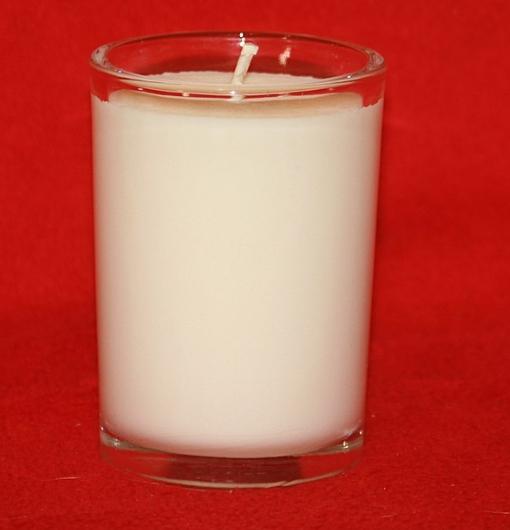
In most combinations, soy wax is generally softer and melts at a lower temperature than paraffin wax. However, additives can raise this melting point to typical paraffin-based candle temperatures. The melting point ranges from 49 to 82 degrees Celsius (130 to 150 Fahrenheit), depending on the mixture. Soy wax candles emit slightly less scent and aroma than paraffin candles. Often, paraffin is added to create a "soy blend" that can release better fragrance and work better in warmer weather conditions. Compared to paraffin wax, soy wax is often regarded as a superior wax, but in reality, the two waxes have little difference in soot production and the release of carcinogenic compounds. The lower melting point means that in temperate regions, soy wax candles burn at a lower temperature and last longer.
This plant-based wax comes from soybean oil, a renewable resource. Soy wax burns cleanly, producing no smoke or toxins and offering longer burn times. Its natural nature makes it a preferred eco-friendly candle material for many consumers. Since soy wax typically doesn’t contain additives or dyes, it produces less smell when burning, making it suitable for people sensitive to air quality.
Paraffin wax is non-toxic, does not harm health, and shows little reaction to irritants under certain experimental conditions. Paraffin has excellent waterproofing properties and can effectively resist moisture and other liquids. As a fuel, paraffin meets federal clean-burning standards and is usually translucent.
In terms of fragrance release, paraffin wax usually emits scent more strongly, as paraffin is lighter and burns more easily, allowing the scent to disperse into the air more quickly. In contrast, soy wax, due to its higher density, requires more heat to burn, so the scent release is slower.
Regarding burn time, soy wax generally lasts longer than paraffin wax due to its higher density, providing a more extended experience.
Paraffin wax candles, when burning, release small amounts of hydrocarbons and alkenes, which can have a slight impact on indoor air quality. Although these emissions are typically low, prolonged exposure should be monitored. In contrast, soy wax, being a natural plant-based wax, produces fewer harmful substances during combustion and is considered more environmentally friendly. However, the production of soy wax also involves some environmental concerns. Most soybeans in the U.S. are genetically modified and involve widespread pesticide use during cultivation. Although some soy wax manufacturers extensively process soybean oil to remove GMO components and pesticide residues, not all products meet this standard.
Hydrogenated soybean oil, called soy wax by candle makers, is a renewable and biodegradable alternative to paraffin in candle making. Research by Karamatollah Rezaei et al. investigated the tendency of soy wax to produce soot and potentially harmful organic volatiles (acrolein, formaldehyde, and acetaldehyde) during combustion. Beeswax and paraffin candles were used as references. Paraffin wax candles generate significant amounts of soot, but little or none was observed from soy wax candles. The soot comparison is shown below:
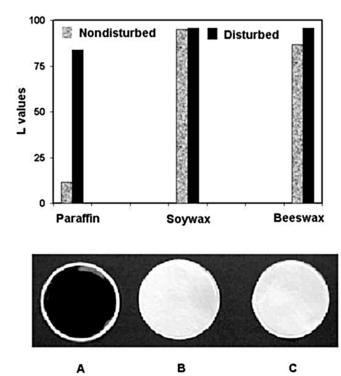
Top: Colorimetric data are indicators of soot produced by different types of candles under different airflow conditions. The paraffin results are for 2 minutes, while the soy wax and beeswax results are for 10 minutes. Bottom: Typical images of soot collected during disturbed burning of wax: (A) paraffin (2 minutes), (B) soy wax (10 minutes), and (C) beeswax (10 minutes). Soy wax and beeswax had longer collection times because no soot was collected after 2 minutes.
For years, petroleum-based paraffin wax has been the main component of candles. Volatile organic compounds and fine particles, often called soot, are either emitted directly from the source material during combustion or result from incomplete burning of paraffin. Paraffin and beeswax are the most commonly used materials for making candles, but some people prefer alternative candles made from palm wax, soy wax, bayberry wax, and various wax blends. Soy wax, coconut wax, and beeswax candles are all non-toxic premium choices.
Both types of wax have unique advantages, and the choice depends on personal needs and preferences. Paraffin wax and soy wax are both considered safe, but from a sustainability and natural standpoint, plant-based soy wax undoubtedly has an advantage. If you want a candle that burns more completely and emits a stronger fragrance, paraffin wax may better meet your needs. On the other hand, if you prefer a candle that burns cleaner, comes from a renewable resource, and has long-lasting fragrance and burn time, soy wax is a more ideal choice.
 |
 |
 |
 EN
EN
 Agricultural News
 Food News
 Industrial News
 Cosmetic News
 Pharmaceutical News
 Science News


 1YR
1YR


