-
We detected your language preference as English. Would you like to switch to the English version for a better experience?
Switch to English
Stay here


Tetramethylammonium chloride (TMAC) is an important quaternary ammonium salt compound with wide-ranging applications and significant functional properties. What is Tetramethylammonium chloride used for? As a type of quaternary ammonium compound, TMAC possesses unique chemical properties and diverse uses, making it widely applied in various industries. By understanding the importance of TMAC across different sectors, we can better appreciate its multifunctionality and potential application value. This article aims to further explore the structural characteristics, specific uses, and safety considerations of TMAC, providing comprehensive information and guidance for research and production in related industries.
Tetramethylammonium chloride is one of the simplest quaternary ammonium salts, consisting of four methyl groups tetrahedrally bonded to a central nitrogen atom. Its chemical formula (CH₃)₄N⁺Cl⁻ is commonly abbreviated as Me₄N⁺Cl⁻. It is a hygroscopic, colorless solid that is soluble in water and polar organic solvents. TMAC serves various industrial purposes, primarily as a chemical reagent and a low-residue biocide in processes such as hydraulic fracturing. While its synthetic chemical applications are less compared to quaternary ammonium salts with longer N-alkyl substituents, quaternary ammonium salts are widely used as phase transfer catalysts in laboratory settings.
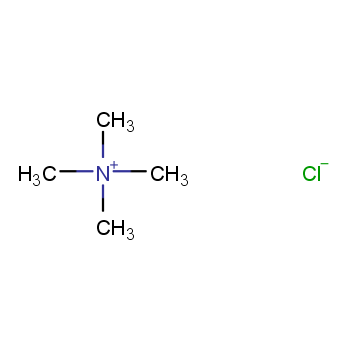
The chemical formula of tetramethylammonium chloride is (CH₃)₄N⁺Cl⁻. This formula illustrates the central nitrogen atom bonded to four methyl (CH₃) groups. The nitrogen atom carries a positive charge (+) due to having four bonding electrons and a lone pair, making it a quaternary ammonium cation. The chloride ion (Cl⁻) balances the positive charge on the nitrogen atom. The tetramethylammonium chloride structure is as follows:

The tetramethylammonium chloride lewis structure shows the valence electrons around each atom: nitrogen has 5 valence electrons, 4 of which bond with the 4 methyl groups to form single bonds, and the remaining electron forms a lone pair. Each hydrogen atom contributes one valence electron, forming a covalent bond with a carbon atom. Chlorine has 7 valence electrons and forms a single bond with nitrogen. In summary, the Lewis structure illustrates the distribution of electrons around the atoms in tetramethylammonium chloride, following the octet rule for most atoms.
In applications like phase transfer catalysis, the positively charged nitrogen interacts with negatively charged substances in water, while the methyl groups dissolve in organic solvents. The solubility of tetramethylammonium chloride varies: it is sparingly soluble in ethanol, insoluble in ether, benzene, and chloroform, highly soluble in water, and very soluble in methanol. Understanding the molecular configuration of TMAC is crucial for understanding its different functions and performances in various applications.
TMAC's industrial applications primarily revolve around its ability to act as a catalyst in chemical synthesis and manufacturing processes. As a phase transfer catalyst, TMAC bridges water-soluble and oil-soluble reactants, allowing them to interact in a single reaction mixture. This unique property has proven invaluable in the production of many chemicals, including plastics, pharmaceuticals, and dyes. TMAC aids in the manufacturing of materials sensitive to humidity, such as polymers and electronic devices. Its hygroscopic nature helps these materials remain stable, robust, and effective over time. TMAC plays a crucial role in key components of synthetic epoxides, coatings, adhesives, and other industrial applications.
TMAC holds promise in biological research and pharmaceuticals. Due to its cationic nature, TMAC can interact with cell membranes, making it a valuable tool for studying cellular processes. Researchers have explored its potential in blocking potassium channels, which are essential for the function of nerve cells. Understanding these channels aids in understanding neurological diseases and developing new drugs. Additionally, TMAC's phase transfer ability can be utilized in biological research to facilitate reactions between bio-molecules that are typically challenging to mix.
While TMAC's role in batteries and energy storage systems is still being explored, its unique properties offer possibilities. Its high conductivity and good electrochemical characteristics make it a potential candidate for battery electrolyte solutions. Researchers are investigating whether TMAC-based electrolytes can improve battery performance by enhancing ion migration and overall efficiency.
TMAC plays a crucial role in analytical chemistry. It dissolves easily and leaves virtually no residue, making it ideal for cleaning or testing in various ways. From chromatography to spectrophotometry, TMAC facilitates accurate and reliable analysis, providing valuable insights and data for researchers. TMAC is an essential reference material in various laboratory settings. Its consistency and predictability ensure the accuracy and repeatability of scientific data, playing a vital role in advancing academic research and experiments across disciplines.
Improper handling of tetramethylammonium chloride can pose health risks. TMAC is classified as acutely toxic if ingested, inhaled, or comes into contact with the skin. Contact can cause irritation to the skin, eyes, and respiratory system. Severe exposure may affect the central nervous system, leading to dizziness, nausea, and even seizures.
Handling TMAC requires strict adherence to safety protocols. Regulatory agencies like OSHA set exposure limits for workplace environments. When handling TMAC, it is essential to refer to these guidelines and wear appropriate personal protective equipment. This includes gloves, goggles, and respirators if there is dust in the air. Working in well-ventilated areas is crucial for preventing inhalation risks.
In case of accidental spills or exposure, action must be taken immediately. Evacuate the area and ensure proper ventilation. If there is skin or eye contact, thoroughly flush with water for at least 15 minutes. If inhaled, move the affected person to fresh air and seek medical attention if necessary. If ingested, do not induce vomiting and call emergency services immediately. Have contact information available for poison control centers and emergency response personnel at all times.
In conclusion, this article has discussed and summarized the structure, uses, and safety considerations of tetramethylammonium chloride (TMAC). By delving into the chemical structure characteristics, wide range of applications, and necessary safety considerations of TMAC, we can better understand and appreciate the importance and value of this compound. Understanding the significance of TMAC across various industries not only promotes research and production in related fields but also provides more insights and guidance for its broader applications, driving further development and utilization of TMAC.
[1] https://www.sacheminc.com/chemicals-by-category/tetramethylammonium-chloride-TMAC
[2] https://en.wikipedia.org/wiki/Tetramethylammonium_chloride
[3] https://pubchem.ncbi.nlm.nih.gov/compound/Tetramethylammonium-chloride
[4] https://www.osha.gov/chemical-management
 |
 |
|
 |
 |
 |
 EN
EN
 Agricultural News
 Food News
 Industrial News
 Cosmetic News
 Pharmaceutical News
 Science News

 3YRS
3YRS

