-
We detected your language preference as English. Would you like to switch to the English version for a better experience?
Switch to English
Stay here


Triphenyl phosphate (TPP) stands at the forefront of industrial and consumer product manufacturing, offering diverse applications across various sectors. But understanding its multifaceted utility requires delving into its functions, potential side effects, purposes, and common sources. What roles does triphenyl phosphate play? As a multifunctional compound, TPP finds extensive utility in realms like fireproofing, plasticization, and catalysis. Yet, as its applications proliferate, scrutiny of potential side effects concerning environmental and health impacts becomes imperative. This discourse navigates through TPP's functional characteristics, common sources, and applications to provide readers with a comprehensive understanding of its attributes and usage domains while reminding them to remain vigilant regarding potential risks and side effects.
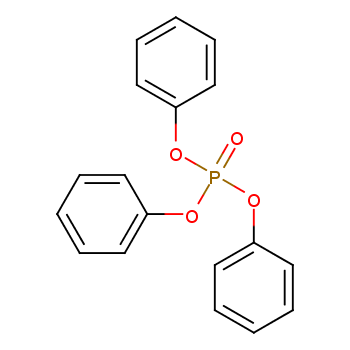
Where is triphenyl phosphate found? Triphenyl phosphate (TPP) is a chemical widely used in both industrial and consumer product manufacturing, finding its presence in numerous scenarios. It is commonly utilized as a flame retardant, plasticizer, and lubricant. You can find triphenyl phosphate in various products including building materials, electronics, furniture, plastic goods, coatings, and lubricants. Additionally, it is often present in some cosmetics and personal care products, serving as a flame retardant or plasticizer. It is a typical type of OPEs, with its molecular structure as shown in the diagram below.

TPP is a white, odorless crystalline powder, with a molecular formula of C18H15O4P and a molecular weight of 326.29. It is insoluble in water but soluble in acetone, benzene, and chloroform. At 25°C, its vapor pressure and Henry's law constant are 1.2×10⁻⁶ mmHg and 3.3×10⁻⁶ atm?m -3?mol -1, respectively. The octanol/water partition coefficient (logKow) is 4.59, the soil adsorption coefficient (logKoc) is 3.72, and the bioconcentration factor is 113.
The structural characteristic of triphenyl phosphate involves a central phosphorus atom bonded to three phenyl groups (derived from benzene) and one phosphate group. The aromatic nature of the phenyl rings imparts flame retardancy to TPP, while the phosphate group provides stability and allows TPP to interact with other materials. This combination makes TPP a ubiquitous additive enhancing fire safety across various products. It integrates easily into materials without compromising their physical properties, making it a popular choice across applications from electronics to furniture.
Triphenyl phosphate (TPP) finds widespread application as a flame retardant across various industrial realms, where its flame-retardant properties play a pivotal role. In the domains of plastics, resins, and coatings, TPP functions as an invisible fire barrier. Recent years have witnessed a burgeoning emphasis on environmentally friendly flame retardants due to escalating environmental concerns. Triphenyl phosphate falls under the category of organic phosphorus-based flame retardants, with its mechanism involving decomposition into phosphoric acid upon heating, inducing polymer dehydration charring. Under intense heat, phosphoric acid polymerizes into polyphosphoric acid, forming a more robust dehydration catalyst. The resulting char layer exhibits graphite-like properties, insulating the interior polymer from oxygen contact, diminishing thermal decomposition, thus exerting its flame-retardant effect.
TPP's industrial utility transcends fire safety considerations; it also serves as a plasticizer, enhancing the flexibility and durability of various materials. The working principle of plasticizers entails augmenting the space between polymer chains within materials, rendering them more pliable and less prone to cracking or fracturing. TPP's substantial structure enables effective separation of these polymer chains, engendering more flexible and manageable materials. This characteristic positions TPP as a valuable additive in products like PVC (polyvinyl chloride) used in pipes, hoses, films, coatings, and even certain types of nail polish. In these applications, TPP aids in creating products not only fire-resistant but also more durable and user-friendly.
Noteworthy research endeavors underscore TPP's efficacy and potential in diverse applications. Wang et al. prepared phenolic resin fibers modified with triphenyl phosphate, witnessing enhanced toughness and significantly improved flame resistance and thermal stability. Similarly, Mo et al. investigated the influence of triphenyl phosphate on the melt graft polymerization of acrylic acid, observing increased grafting efficiency and effective reduction in side reactions, accompanied by enhanced thermal stability of the grafts.
While triphenyl phosphate (TPP) assumes a crucial role in industrial applications, it also permeates many consumer goods encountered in our daily lives. A key benefit of TPP is its ability to enhance fire resistance, rendering it a valuable additive in electronic products like televisions and computers, where it aids in preventing fire hazards during electrical malfunctions. TPP also finds its way into furniture and textiles, serving as flame-retardant interior decorative fabrics, offering additional protection against accidental fires. Apart from fireproofing, TPP's plasticizing properties enhance the performance of certain consumer goods. For instance, in certain types of nail polish, TPP contributes to a smoother finish and increased durability.
Triphenyl phosphate (TPP) exhibits remarkable versatility across various functional roles in the chemical industry. TPP itself can act as a catalyst in specific reactions, accelerating the rate of change without being consumed in the process. Furthermore, it can influence reaction rates in complex chemical transformations by interacting with other catalysts or reactants, serving auxiliary roles. TPP's role as a solvent in some applications lies in its ability to facilitate the dissolution of substances that may not readily dissolve in water or conventional organic solvents. This allows for more efficient mixing and handling of reaction components in specific chemical syntheses. In pharmaceutical synthesis, TPP can serve as a precursor molecule for developing specific drugs or drug precursors.
Towards the end of the 20th century, Jia et al. discovered that triphenyl phosphate could effectively defoam starch glue, and due to its non-volatility and odorlessness, it was more hygienic than other defoamers. Zhang et al. utilized triphenyl phosphate as an internal electron donor to prepare Ziegler-Natta highly efficient supported catalysts. Triphenyl phosphate complexed with the active center in the catalyst, resulting in catalysts prepared by this method exhibiting high polymerization activity, providing new technical support for the preparation of polypropylene and its copolymers with good processing and mechanical properties.
Exposure to triphenyl phosphate (TPP) can lead to a range of health issues. Inhalation or ingestion of TPP can cause irritation to the respiratory system, eyes, and skin. More severe impacts include neurological damage, manifesting as weakness, numbness, and tremors. Research also indicates a potential link between long-term TPP exposure and effects on the liver and kidneys. TPP can induce apoptosis in human normal liver cells (L02), damage cell ultrastructure, elevate reactive oxygen species (ROS) levels, activate oncogenes, damage DNA, disrupt redox balance and metabolism (e.g., glycolysis, citric acid cycle, oxidative phosphorylation, lipid and protein metabolism), thus inducing hepatotoxicity in human normal liver cells (L02) (Wang et al., 2020). Ramesh et al. (2020) also found that zebrafish exposed to TPP experienced antioxidant imbalance, enzyme and biochemical characteristic alterations in their liver tissue, and prolonged exposure to TPP resulted in a series of morphological abnormalities in zebrafish liver tissue.
Due to these potential health risks, regulatory bodies like the National Institute for Occupational Safety and Health (NIOSH) have established workplace exposure limits for TPP. However, ongoing research endeavors aim to fully comprehend the long-term implications of TPP exposure, particularly at low doses.
Triphenyl phosphate (TPP) has garnered attention due to its potential ecological ramifications. While TPP lacks persistence and high bioaccumulative potential, it can enter water bodies through waste discharge or runoff. Aquatic organisms exposed to TPP may experience developmental issues and interruptions in their nervous systems. Serving as a representative of aromatic OPFRs, TPP can accumulate within organisms via water, air, and soil, leading to environmental pollution and jeopardizing biological health. A recent study indicated that TPP's lethal concentration (LC50) for amphibians (specifically tadpoles) is 2.893 mg/L, with a 10% effect concentration (EC10) of 289μg/L. This heightened bio-toxicity could be attributed to TPP's reduction of superoxide dismutase and peroxidase activity in tadpole livers, as illustrated in the diagram below.
Regulatory bodies are taking measures to address these issues. In the United States, the Environmental Protection Agency (EPA) is currently conducting risk assessments to evaluate TPP's potential environmental hazards. Similarly, the European Union has enacted regulations restricting TPP usage in certain applications. These ongoing efforts aim to minimize environmental exposure to TPP and mitigate potential ecological hazards.

This discussion on triphenyl phosphate (TPP) underscores several key aspects. We've explored myriad triphenyl phosphate uses, from flame retardants to plasticizers, emphasizing its ubiquitous presence across various industries. Safety considerations have been highlighted, acknowledging the potential health risks associated with TPP exposure, particularly in manufacturing and consumer goods. While the effectiveness of TPP as a flame retardant has been emphasized, its efficacy is cautiously noted due to its environmental persistence. We've underscored the importance of regulatory compliance and responsible usage to mitigate adverse impacts. Looking ahead, further research is vital to enhance our understanding of TPP's environmental implications and identify safer alternatives.
[1] Zhang Mengdi. Study on the toxicity of triphenyl phosphate and cadmium compound to earthworms [D]. Shandong Agricultural University, 2022. DOI: 10.27277/d.cnki.gsdnu.2022.000642.
[2] Shen Liping. Research on chemiluminescence detection method of triphenyl phosphate based on UV-assisted oxidation[D]. Southwest Jiaotong University, 2022. DOI:10.27414/d.cnki.gxnju.2022.002037.
[3] Li Xiuping, Jia Xiaochuan, Li Jing. Research progress on application and synthesis methods of triphenyl phosphate [J]. Fine Petrochemicals, 2013, 30 (04): 83-86.
[4] https://www.tutorchase.com/answers/ib/chemistry/what-does-the-chemical-shift-in-an-nmr-spectrum-indicate
|
 |
 |
 |
 EN
EN
 Agricultural News
 Food News
 Industrial News
 Cosmetic News
 Pharmaceutical News
 Science News

 3YRS
3YRS

