What is the drug flavopiridol used for? Flavopiridol is a drug extensively studied and applied in cancer treatment, possessing various pharmacological effects such as anti-tumor and anti-inflammatory properties. Its unique chemical structure and mechanism of action have made it an important drug candidate, drawing attention from scientists and pharmaceutical researchers. This article aims to introduce the uses and efficacy of Flavopiridol, exploring its significance and practical applications in the medical field to better understand its mechanism of action and clinical value in cancer treatment. By delving into the uses of Flavopiridol, we can recognize its potential advantages and future directions in cancer therapy.
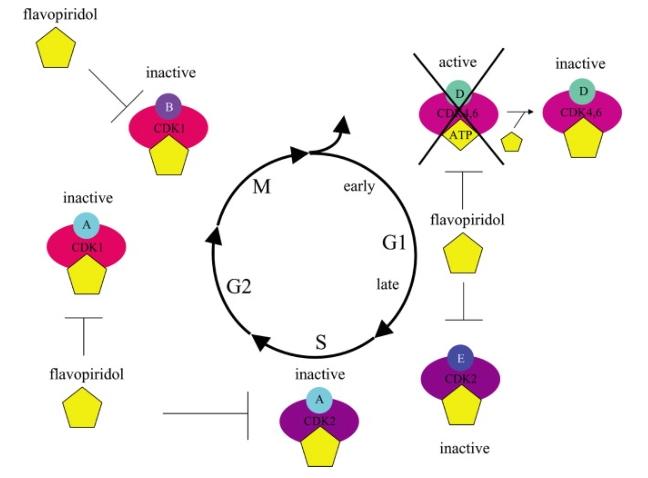
Flavopiridol is a synthetic flavone, extracted from the leaves and stems of Indian native plants Amoora rohituka and Dysoxylum binectariferum. It acts as a CDK inhibitor in preclinical and clinical studies. Flavopiridol induces cell cycle arrest by inhibiting cyclin-dependent kinases 2 (CDK2) and CDK1, explaining the G1 and G2 arrests. Studies indicate Flavopiridol as a broad-spectrum CDK inhibitor. In preclinical studies, it effectively targets most cancer cell lines and inhibits tumor growth in animals, showing synergistic effects with many anticancer drugs. In Phase I clinical trials, concentrations required for cyclin-dependent kinase inhibition in preclinical models (200 to 400 nM) were deemed safe.
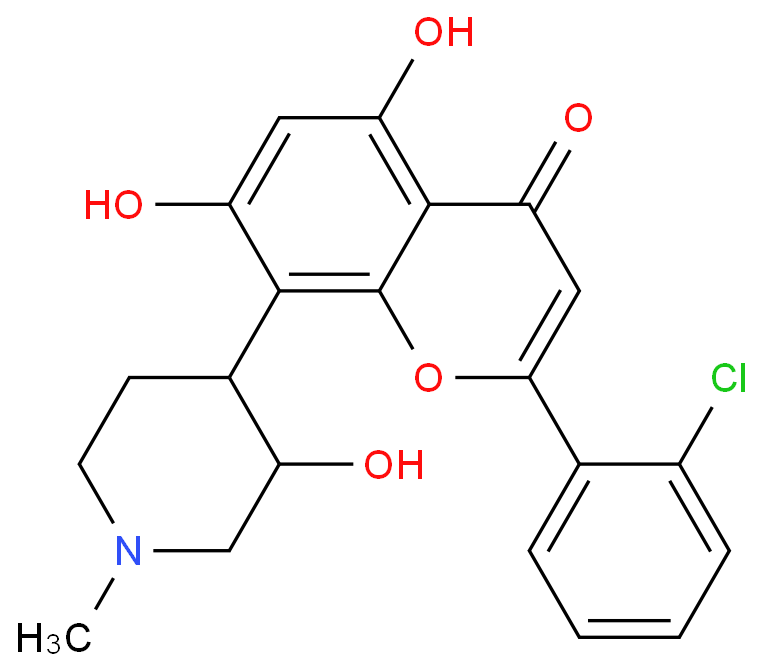
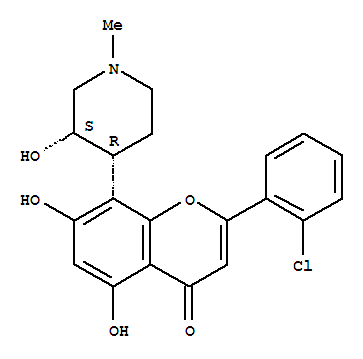
Mariko Mihara's research revealed Flavopiridol's ability not only to directly inhibit CDKs but also to suppress CDKs activation pathways, activating the Bcl-x apoptosis pathway. Below is the structure of Flavopiridol:
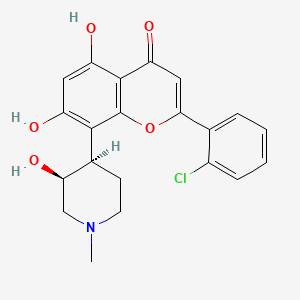
Flavopiridol, a semi-synthetic flavone compound, selectively inhibits CDKs, causing cell cycle arrest. It may also downregulate the expression of various proteins involved in cell cycle regulation.
Flavopiridol is predominantly protein-bound and metabolized by UDP glucuronosyltransferase isoenzymes. Its half-life varies with infusion duration.
Flavopiridol is supplied as a 10 mg/mL solution and can be diluted for administration. Concentrations below 0.5 mg/mL are preferred for peripheral vein administration to reduce thrombotic complications.
Flavopiridol exhibits hematologic toxicities, including neutropenia and lymphopenia, with common side effects such as secretory diarrhea and orthostatic hypotension. Management strategies are needed to address these toxicities.
Combination with paclitaxel has been associated with severe neutropenia.
Flavopiridol's therapeutic status is being evaluated, showing activity in hematologic malignancies and potential applications in solid tumors when combined with other drugs.
Cyclin-dependent kinases (CDKs) play a pivotal role in cell cycle progression, leading researchers to design novel modulators of CDK activity upon their discovery and cloning. Flavopiridol (HMR 1275, L86-8275), a flavone compound derived from indigenous Indian plants, exhibits potent and selective inhibitory effects on all CDKs (CDKs 1, 2, 4, and 7) in vitro, significantly halting cell cycle progression at the G1/S and G2/M boundaries. Furthermore, preclinical studies have indicated that flavopiridol possesses the ability to induce programmed cell death, promote differentiation, inhibit angiogenesis, and regulate transcriptional events. The latter's relationship with CDK inhibition remains unclear. Initial clinical trials administering flavopiridol showed activity in some patients with non-Hodgkin's lymphoma, renal cell carcinoma, prostate cancer, colorectal cancer, and gastric cancer. Major side effects include secretory diarrhea and an inflammatory syndrome associated with hypotension. Achieving biologically active plasma concentrations of flavopiridol (approximately 300 to 500 nM) is readily achievable in patients receiving flavopiridol infusion. Phase II trials evaluating intravenous flavopiridol infusion for various tumors, alternative treatment regimens, and combination with standard chemotherapy are currently underway. Overall, flavopiridol represents the first CDK inhibitor to enter clinical trials. While significant questions remain unanswered, this positive experience will drive the development of novel CDK modulators for cancer therapy.
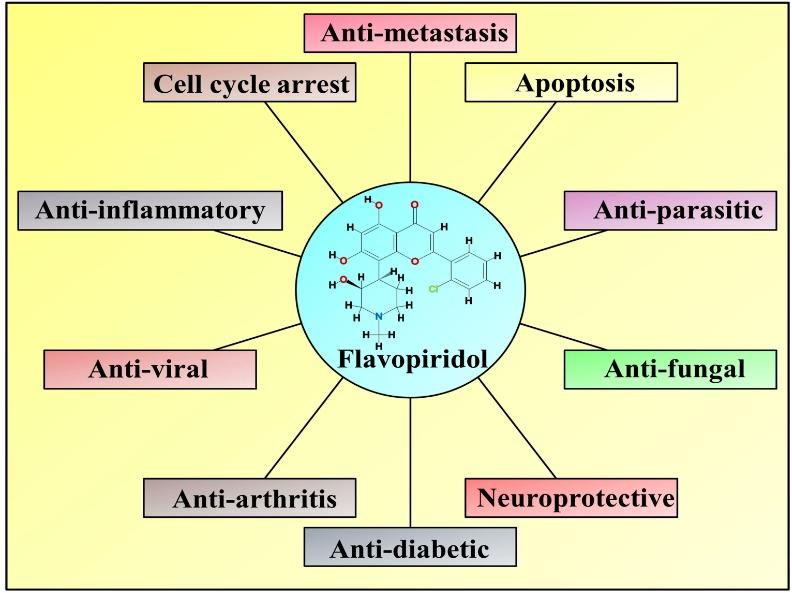
While most research on flavopiridol focuses on cancer, preliminary investigations have explored its potential utility in other diseases:
Anti-inflammatory effects: Flavopiridol may possess anti-inflammatory properties, although further research is needed.
Antiviral, antifungal, and antiparasitic properties: Some studies suggest these possibilities, albeit in very early stages.
It's worth noting that flavopiridol is still under investigation and has not been approved for the treatment of any disease. Clinical trials have shown significant side effects, including diarrhea and fatigue, necessitating further development to manage these impacts.
Early studies suggest that flavopiridol may be particularly effective against certain cancers, especially those reliant on short-lived anti-apoptotic proteins. These proteins help cancer cells evade cell death. Since flavopiridol interferes with their production, it may be a promising approach for treating these cancers.
Flavopiridol possesses transcriptional inhibition capabilities, making it a promising drug. This inhibition is achieved by targeting the key enzyme positive transcription elongation factor b (P-TEFb), responsible for enabling RNA polymerase II to complete the transcription process. By inhibiting P-TEFb, flavopiridol effectively halts the generation of new RNA transcripts, impacting various cellular functions.
As a potential anticancer drug, flavopiridol holds significant promise for a wide range of cancer types, warranting extensive research and clinical exploration. For inquiries or further consultation regarding the specific uses of flavopiridol or related therapeutic aspects, consult a professional healthcare provider or pharmacist to obtain personalized advice and guidance. It is our hope that through this introduction, readers can gain valuable insights into flavopiridol's importance in cancer therapy and its potential applications and significance in the field of cancer treatment.
[1] https://www.tandfonline.com/doi/abs/10.1517/13543784.9.12.2903
[2] https://www.tandfonline.com/doi/pdf/10.4161/cc.3.12.1278
[3] https://www.sciencedirect.com/science/article/abs/pii/B9780323357623000573
[4] https://pubmed.ncbi.nlm.nih.gov/10665481/
 |
 |
 |


 15YRS
15YRS

