This article aims to explore the methods, effects, and potential side effects of using kojic acid for skin whitening, helping you to use kojic acid more safely and effectively.
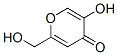
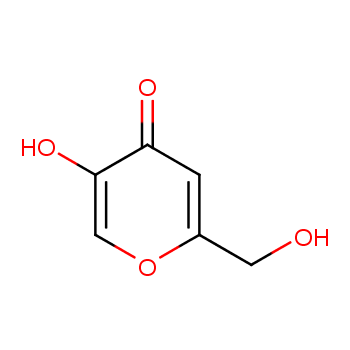
Kojic acid, 5-hydroxy-2-hydroxymethyl-1,4-pyrone (chemical structure shown below), is a secondary metabolite synthesized by microorganisms through fermentation, naturally present in soy sauce, bean paste, and alcoholic beverages. It possesses antimicrobial, antioxidant, and whitening properties, listed in the Chinese Catalogue of Cosmetic Ingredients. Kojic acid is also permitted for use in cosmetics in the EU, Japan, and the US. Some individuals who may benefit from kojic acid products include those with excessive pigmentation such as freckles, age spots, and sunburns.

It's important to note that kojic acid can be irritating and may cause allergies and irritant contact dermatitis. When using kojic acid products, it's essential to follow proper usage methods and frequency while avoiding combining it with acidic ingredients like salicylic acid or fruit acids. Let's delve into the scientific principles and benefits of kojic acid, and choose suitable kojic acid products based on our skin needs and medical advice.
What is Kojic acid? Kojic acid is typically classified as a compound produced by fungi belonging to the Aspergillus and Penicillium genera during fermentation processes. How is Kojic acid extracted? Kojic acid is a microbial metabolite obtained through the growth of fungi on suitable culture media such as mushrooms and in the process of brewing alcoholic beverages. However, scientists have yet to fully determine the natural origin of Kojic acid. Some studies suggest that Kojic acid may derive from fungal metabolites such as derivatives of pyrocatechol. Additionally, genes responsible for Kojic acid production have been found in various fungi and yeasts, indicating that Kojic acid may be produced through fermentation by a variety of different fungi and yeasts.
Meanwhile, researchers have also discovered many compounds similar to Kojic acid in nature, such as citric acid found in citrus fruits. These findings suggest that the chemical properties of Kojic acid may be related to certain naturally occurring compounds.
The chemical structure of Kojic acid is primarily composed of three parts: a carboxylic acid functional group, a hydroxyl group, and a double bond. These functional groups enable Kojic acid to effectively inhibit melanin production in cosmetics, thereby achieving a whitening effect. In the skin, Kojic acid works by reacting with tyrosinase, inhibiting the formation of melanin. Tyrosinase is a biological enzyme crucial in the process of melanin synthesis. When Kojic acid reacts with tyrosinase, it can interfere with the enzyme's activity, thus hindering melanin synthesis.
Furthermore, Kojic acid also possesses various functions such as antibacterial, moisturizing, sun protection, and exfoliation. This makes Kojic acid widely used in cosmetics and skincare products. Studies have found that Kojic acid in cosmetics at concentrations below 2% can effectively address issues of pigmentation, significantly whitening without inhibiting other enzymes. Therefore, it has been widely used in whitening sunscreen cosmetics, toothpaste, and other daily chemical industries. Unlike other whitening ingredients, Kojic acid's whitening mechanism is unique and does not strip away corneocytes or thin the stratum corneum.
The key to treating hyperpigmentation and dark spots lies in kojic acid's ability to inhibit tyrosinase. Melanin production primarily depends on the catalytic action of tyrosinase. Kojic acid inhibits tyrosinase activity, thereby preventing melanin synthesis and deposition, resulting in the lightening of dark spots and hyperpigmentation.
Kojic acid aids in achieving an even skin tone. Dark spots and hyperpigmentation often lead to uneven skin tone, while kojic acid can reduce pigmentation, making the skin appear more uniform. Additionally, kojic acid improves overall skin radiance, giving the skin a brighter appearance.
Kojic acid may help reduce sun damage. With its antioxidant properties, kojic acid inhibits the generation of free radicals, thereby preventing sun damage to the skin. Research suggests that kojic acid can effectively protect the skin from UV damage, reducing symptoms of sunburn and photoaging. This discovery opens up new possibilities for kojic acid as an antioxidant in skincare products. Kojic acid may also improve the appearance of fine lines. Fine lines are a primary characteristic of skin aging, and studies indicate that kojic acid promotes skin cell regeneration and renewal, improving skin elasticity and tightness, thus reducing the appearance of fine lines.
However, more research is needed to confirm these benefits. Despite the potential benefits mentioned above, more research is needed to determine the specific effects of kojic acid on sun damage and fine line improvement, as well as the best methods and dosages for using kojic acid.
Kojic acid, a common cosmetic ingredient, is widely added to various skincare products. However, understanding its potential side effects is crucial before extensive use.
Before incorporating kojic acid into your skincare routine, it's essential to conduct a patch test. This medical trial helps determine your skin's allergic reaction to a product, ensuring safe usage. Kojic acid may cause irritation or even allergic reactions when applied to the skin. It could also lead to skin dryness, particularly for those with already dry skin types. Therefore, proper hydration is necessary before using kojic acid. Additionally, kojic acid may increase skin sensitivity to sunlight, elevating the risk of skin cancer. Therefore, sun protection is crucial post-kojic acid application to minimize sun exposure.
Kojic acid may not be suitable for all skin types, especially highly sensitive skin, which could experience severe irritation or allergic reactions. Pregnant and breastfeeding women should consult dermatologists before using kojic acid products to avoid adverse effects from improper use.
Incorporating kojic acid into your skincare regimen can be beneficial, aiding in anti-aging and whitening effects. Studies suggest an ideal kojic acid concentration between 1% to 4% for optimal results.
Due to its sensitivity to sunlight, it's advisable to use kojic acid-containing products at night. Kojic acid degrades under UV radiation, necessitating sunscreen application. Therefore, when using kojic acid products, applying sunscreen with SPF 30 or higher is recommended to protect the skin.
Moreover, adding other antioxidants to kojic acid products can enhance their efficacy. For instance, vitamin C can synergize with kojic acid, stimulating collagen regeneration and improving skin elasticity.
Kojic acid, a naturally sourced whitening ingredient, has demonstrated significant whitening effects by inhibiting tyrosinase activity and dopamine oxidation, reducing melanin production. Unlike other whitening agents, kojic acid's unique mechanism does not exfoliate or thin the stratum corneum, ensuring no damage to the skin.
When using kojic acid whitening products, certain precautions are necessary. Firstly, the highest permissible concentration of kojic acid (mass fraction of 10%) is safe, but exceeding this concentration may lead to adverse effects. Therefore, users should follow product instructions and medical advice, avoiding excessive use. Secondly, pregnant and breastfeeding women should use kojic acid whitening products under dermatological guidance to prevent adverse reactions due to improper use. Users should also pay attention to the storage environment of products, avoiding direct sunlight and high temperatures to ensure the effective ingredients' stability.
If any discomfort is experienced during actual use, discontinue immediately and seek professional advice. Choosing scientifically safe whitening ingredients is essential, and responsible use and adherence to safety guidelines are key to achieving the best whitening results.
Kojic acid is a common cosmetic whitening ingredient that effectively inhibits factors that enhance melanin production, providing excellent whitening effects and multiple functions such as antioxidant and anti-wrinkle properties. Using kojic acid whitening products is a good choice. However, it's important to note that kojic acid has a certain level of irritation, so caution is needed when using it. If you're interested in kojic acid or other products containing kojic acid, it's recommended to seek more information or product recommendations on Guidechem.
[1] Liu M., Huang X., Xing S. (2023). Safety evaluation progress of kojic acid in cosmetics. Flavors Fragr Cosmetics, (03), 7-9+35. DOI:10.20099/j.issn.1000-4475.2022.0071.
[2] Li Z., Yang Z., Ye L., et al. (2023). Development of kojic acid hand wash. China Surfactant Detergent & Cosmetics, (01), 21-28. DOI:10.16054/j.cnki.cci.2023.01.001.
[3] He M., Fan M., Yang W., et al. (2022). Research progress on kojic acid as a tyrosinase inhibitor. Chemical Reagents, 44(07), 1001-1011. DOI:10.13822/j.cnki.hxsj.2022008867.
[4] Zeng Z., Ruan H., Xiao S., et al. (2021). Safety evaluation of kojic acid and its current regulatory status in cosmetics. Flavors Fragr Cosmetics, (04), 94-97.
|
 |
 |


 6YRS
6YRS