 EN
EN


L Sorbose is a naturally occurring sweetener found in many foods and is an essential component of artificial sweeteners. Its sweetness is similar to glucose but with lower calorie content, making it widely used in the food industry and health foods.
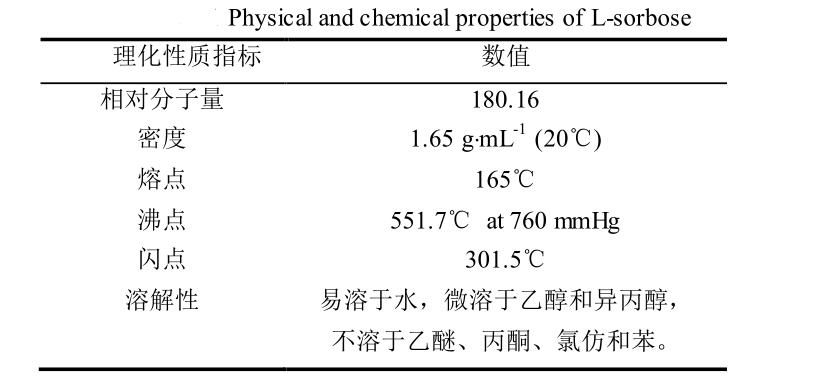
L Sorbose is a ketohexose monosaccharide with a molecular weight of 180.16. It exists in a pyranose ring form in certain plants. It shares general properties with ketohexoses, being reducing and capable of reducing Fehling's solution. L Sorbose is a crucial chemical raw material, typically obtained by oxidative dehydrogenation of D-sorbitol, and is primarily used as a raw material in the production of Vitamin C (ascorbic acid). Vitamin C is an essential vitamin for humans, with significant physiological functions and applications in pharmaceuticals, cosmetics, beverages, food, and feed industries, leading to enormous market demand. Currently, the Vitamin C industry in China uses the two-step fermentation method, with D-sorbitol as the substrate being the earliest and most extensively researched production method. In 1972, Chinese scientist Yin Guanglin invented the two-step fermentation method for Vitamin C and quickly promoted its nationwide use. In this process, Gluconobacter oxydans oxidizes D-sorbitol to L Sorbose, which is then converted to 2-KLG by a mixed fermentation system composed of Bacillus megaterium and ordinary ketogluconic acid bacteria (Ketogulonigenium vulgare).
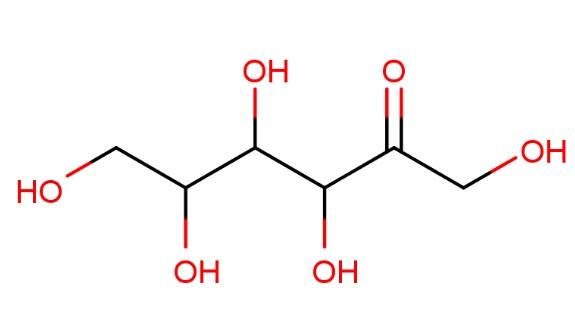
What is the formula for L Sorbose? The molecular formula of L Sorbose is C6H12O6. Its molecular structure consists of a main chain with six carbon atoms, with a ketone group on the second carbon atom and hydroxyl groups on the remaining carbon atoms, except for the structure that contains (3S, 4R, 5S)-1,3,4,5,6-pentahydroxyhexane-2-one. The specific spatial arrangement of hydroxyl groups with (3S, 4R, 5S) configuration determines its L configuration, which is crucial for its biological activity. This L configuration distinguishes L Sorbose from its mirror image D-sorbose, which lacks known biological functions. Its crystals belong to the orthorhombic crystal system, and its sweetness is similar to sucrose, as depicted in the chemical structure in the figure.
L Sorbose is a rare sugar with sweetness similar to sucrose, commonly used in the pharmaceutical industry. It serves as a critical starting material for the commercial production of Vitamin C (ascorbic acid), an essential nutrient for human health. This application underscores L Sorbose's ability to be converted into valuable health-promoting compounds.
Recently, natural rare sugars have emerged as alternative sweeteners. These monosaccharides and their derivatives are scarce in nature. Potential advantages of such sweeteners include palatability, no unpleasant aftertaste, and low calorie content, either not metabolized by the body or metabolized to a lesser extent than natural sugars. Among the 50-plus rare sugars in nature, sugars such as D-arabinoketose (D-arabinoketose), D-tagatose, D-sorbose, and D-allose have been studied as sugar substitutes. While L Sorbose is not commonly found in food and beverages, research suggests its potential application value. Studies have explored its use as a sugar substitute due to its sweetness and potential dietary benefits. However, further exploration is needed to determine its applicability and its impact on the taste and texture of food.
While not yet a widely used ingredient, research is exploring its potential applications in cosmetics and personal care products. Its unique properties may offer benefits in this field, but more research is needed to understand its effectiveness and safety in topical applications.
The production of sorbose starts with D-glucose, which is then converted to D-sorbitol by microbial fermentation and dehydration, yielding L Sorbose. Currently, some chemical synthetic methods for L Sorbose have been reported. Casiraghi and colleagues reported the conversion of 2,3,4,6-tetra-O-benzyl-D-glucose to 1,3,4,5-tetra-O-benzyl-L Sorbose using a catalytic amount of tert-butoxymagnesium bromide far exceeding the stoichiometric ratio (J.Chem.Soc.1989,17,1242-1243). This method requires a significant amount of a challenging-to-synthesize catalyst. Iadonisi and colleagues proposed a method for converting allose to ketohexoses by oxidation of air-iodine through the use of dry air, resulting in a mixture of α and β isomers. Gounder and colleagues have developed a multiphase catalytic reaction using titanium molecular sieves to prepare L Sorbose (Angew.Chem.Int. Ed.2020,59,19102-19107). These reports inspire us to develop methods for obtaining high stereoselectivity and high yield L Sorbose through homogeneous sub-stoichiometric catalysis.
Rare sugars are monosaccharides with low natural abundance. They are structural isomers of dietary sugars but are difficult to metabolize. L Sorbose, a rare sugar, induces apoptosis in various cancer cells. As a C-3 epimer of D-fructose, L Sorbose is internalized by the transport protein GLUT5 and phosphorylated by ketohexose kinase (KHK) to produce L Sorbose-1-phosphate (S-1-P). Cellular S-1-P deactivates hexokinase, weakening glycolysis. Therefore, mitochondrial function is impaired, leading to reactive oxygen species. Additionally, L Sorbose downregulates the transcription of KHK-A (a splice variant of KHK). Since KHK-A is a positive inducer of antioxidant genes, antioxidant defense mechanisms in cancer cells can be weakened by L Sorbose treatment. Therefore, L Sorbose possesses various anti-cancer activities, inducing apoptosis in cells. In mouse xenograft models, L Sorbose combined with other anticancer drugs enhances the efficacy of tumor chemotherapy. These results suggest L Sorbose as an attractive cancer therapeutic agent.
L Sorbose may aid in controlling diarrhea. While inconclusive, some studies suggest L Sorbose may play a role in alleviating constipation.
(1) L Sorbose is a sugar alcohol and not a significant source of dietary energy: Unlike regular sugars, your body absorbs L Sorbose slowly, providing minimal energy.
(2) Naturally found in fruits: L Sorbose naturally occurs in fruits such as apples, grapes, and dried plums, but in small amounts.
(3) Moderately consumed is generally safe: Moderate consumption of L Sorbose is generally considered safe.
(4) May cause digestive discomfort: Excessive intake of L Sorbose may cause bloating or flatulence in some individuals.
While L Sorbose appears generally well-tolerated, consult Safety Data Sheets (SDS) before handling, as proper handling procedures should always be followed to avoid inhalation or ingestion in laboratory environments. Regulatory approval for L Sorbose for use as a food additive or animal feed is currently lacking in most regions. However, it may be used for specific research or laboratory purposes.
L Sorbose is a sorbose molecule with a specific spatial arrangement crucial for its biological activity. Through research and understanding of the characteristics and applications of L Sorbose, we can better apply and utilize this molecule in the biotechnological field. Research on L Sorbose not only deepens our understanding of biochemistry but also helps discover new biologically active compounds and drugs.
[1] https://www.nature.com/articles/s42003-023-04638-z
[2] https://www.sciencedirect.com/topics/nursing-and-health-professions/sorbose
[3] Wang Xiaobei. Study on immobilized oxidation of Gluconobacter for L Sorbose production [D]. Jiangnan University, 2013.
[4] Dalian University of Technology. A method of preparing L Sorbose from D-glucose. 2021-04-23.
[5] https://pubchem.ncbi.nlm.nih.gov/compound/L-_-_-Sorbose
[6] https://www.sigmaaldrich.com/US/en/product/sigma/85541
[7] https://en.wikipedia.org/wiki/Sorbose
|
 |
 |
 |
 Agricultural News
 Food News
 Industrial News
 Cosmetic News
 Pharmaceutical News
 Science News

 15YRS
15YRS

