-
We detected your language preference as English. Would you like to switch to the English version for a better experience?
Switch to English
Stay here


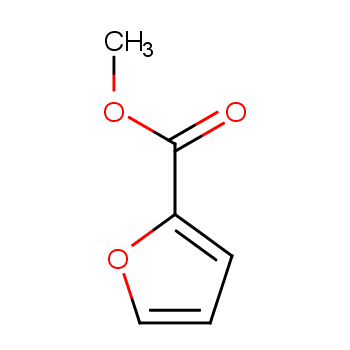
Methyl 2-furoate is an important fragrance with a wide range of applications. Its synthesis methods and uses are of great significance in the chemical field. This article will explore the synthesis methods of methyl 2-furoate and its potential uses in different fields.
Furoates are a class of furan ring fragrances derived from the deep processing of furfural, widely used in the food, beverage, and cosmetics industries. Over 100 types have been approved for use by the Flavor and Extract Manufacturers Association (FEMA) and the Council of Europe (COE). Methyl 2-furoate is one such furoate, possessing a unique aroma that can be used in food flavorings, tobacco flavorings, and cosmetic fragrances. Methyl 2-furoate has a highly valuable and unique aroma. Naturally occurring in peanuts, cocoa, coffee, and other plants, it exhibits a roasted smoky aroma at high concentrations and a sweet fruity scent at low concentrations, making it a versatile flavor enhancer in various food, tobacco, and cosmetic fragrances.
Methyl 2-furoate is also known by several other names, including: furoate; methyl 2-furancarboxylate; methyl 2-furanoate; methyl furoate; and 2-furanmethanoate.
Methyl 2-furoate is synthesized from furfural, which is first converted to furoic acid, and then reacted with methanol in the presence of sodium bisulfate catalyst.
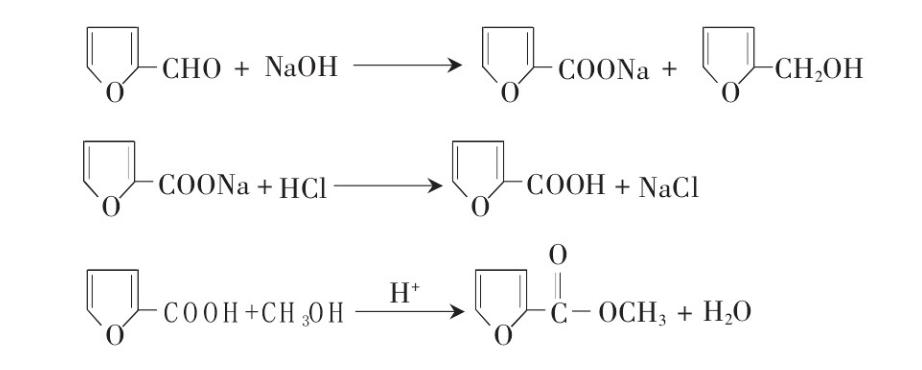
Place 40 mL of freshly distilled furfural in a 250 mL three-neck flask equipped with a stirrer, thermometer, and dropping funnel. Cool in an ice-water bath and stir while controlling the temperature. Gradually add 14 mL of 50% NaOH solution to the furfural. After the addition, continue stirring at room temperature for 1 hour. Add an appropriate amount of water until the sodium furoate completely dissolves. Transfer the reaction mixture to a separatory funnel and extract three times with 25 mL of benzene each time to extract furfuryl alcohol from the reaction system. Acidify the aqueous solution to a pH of 2-3 by adding dilute hydrochloric acid. After cooling, filter and wash the filter residue several times with a small amount of water to obtain crude furoic acid. Recrystallize from water to obtain colorless needle-like crystals of furoic acid, yielding 20.7 grams with a melting point of 131-133°C and an 80% yield.
In a three-neck flask, add 15g of furoic acid, the corresponding molar ratio of methanol, a certain amount of monohydrate sodium bisulfate, and a small amount of zeolite. Heat under reflux while stirring for a set period. After cooling and standing for a while, take a sample. Measure the acid value changes before and after the reaction using the GB1668-1981 method and calculate the esterification rate as follows: Esterification rate = (initial acid value - final acid value) / initial acid value.
After the reaction, transfer the mixture to 40 mL of water and stir. Separate the water layer (which can be further processed to obtain furfuryl alcohol). Neutralize the oil layer to weakly alkaline using saturated sodium bicarbonate and wash to neutral with a small amount of saturated saline solution. Perform vacuum distillation, collecting fractions at 150-155°C (0.08 MPa) to obtain the target product.
The optimal conditions from experiments are: 5g furoic acid, 24 mL methanol, 0.1g NaHSO4·H2O, reaction time of 150 minutes, and an esterification rate of 82.5%.
Naturally present in various fruits, vegetables, nuts, and roasted foods, contributing to their flavor. Methyl 2-furoate enhances the overall flavor of fruits like kiwi, papaya, and mango. In the food industry, it is used as a flavor additive, especially to impart fruity, sweet, caramel, or nutty flavors.
Methyl 2-furoate is used in perfumes and other fragrance applications, adding complex aromas of fruit, earth, tobacco, or mint.
Methyl 2-furoate is a component in the synthesis of various heterocyclic compounds, including cis-fused 5-oxofuro[2,3-b]furan and sesquiterpene lactones. These complex molecules exhibit diverse biological properties with potential applications in drug discovery.
As an ester derivative of furoic acid, methyl 2-furoate has a sweet, fruity, and fungal aroma. It has been detected in several foods, including fruits, coffee, nuts, green vegetables, cocoa, and cocoa products. This may make methyl 2-furoate a potential biomarker for the consumption of these foods, helping to identify specific metabolic processes and potential disease states.
Some studies suggest that methyl 2-furoate may possess antibacterial and antifungal properties, meriting further research for potential applications in food preservation and disease control.
Methyl 2-furoate, as an important compound, has extensive application prospects in fragrance and research fields. Optimizing and improving its synthesis methods will provide technical support for the development of related industries, promoting continuous innovation in the production and application of chemicals. Therefore, the research and application of methyl 2-furoate synthesis methods have significant practical significance.
[1] Meng Xiangfu, Liu Xiaodong, Xia Wandong. Research on the synthesis process of methyl furoate [J]. Food Technology, 2009, 34(07): 207-209.
[2] Shi Weiyun, Niu Yongsheng, Qiu Mingyan, et al. Green synthesis of fragrance methyl furoate [J]. Food Research and Development, 2009, 30(03): 178-180.
[3] Zhou Qingye, Wang Shihong, Shi Weiyun. Catalytic synthesis of methyl furoate by sodium dihydrogen phosphate [J]. Chemical Engineer, 2008, (08): 57-59. DOI:10.16247/j.cnki.23-1171/tq.2008.08.014.
[4] https://hmdb.ca/metabolites/HMDB0029750
[5] https://www.thegoodscentscompany.com/data/rw1029071.html
[6] https://pubchem.ncbi.nlm.nih.gov/compound/Methyl-2-furoate
|
 |
 |
 |
 EN
EN
 Agricultural News
 Food News
 Industrial News
 Cosmetic News
 Pharmaceutical News
 Science News

 1YR
1YR

