-
We detected your language preference as English. Would you like to switch to the English version for a better experience?
Switch to English
Stay here


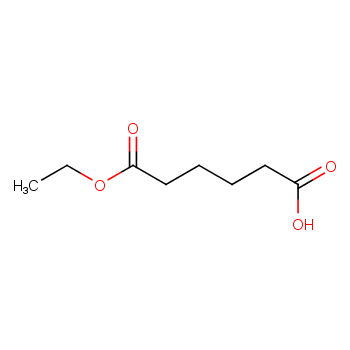
Monomethyl adipate, with the molecular formula C8H14O4 and a molecular weight of 174.2, is a white or pink crystalline solid at room temperature. It has a melting point of 28–29°C, a boiling point of 285°C (760mmHg), a refractive index of n20D1.4390, and a relative density of 0.986. It is insoluble in water but easily soluble in organic solvents like alcohols and ethers. Its primary use is as an intermediate in pharmaceutical products.
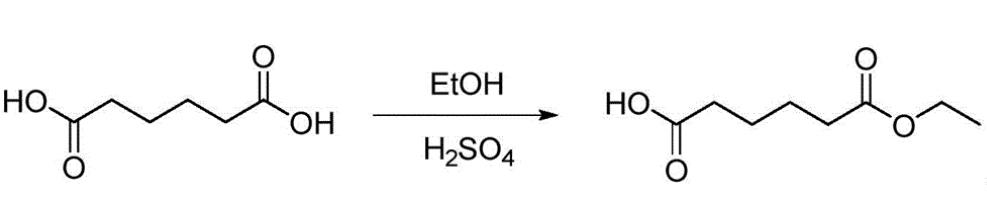
Monomethyl adipate is synthesized by heating adipic acid and sulfuric acid in an organic solvent, refluxing at temperatures between 145°C and 170°C for 4 to 6 hours until the water is completely evaporated. After cooling the reaction mixture to 15°C–35°C, sulfuric acid is removed, yielding adipic anhydride. Anhydrous ethanol is then added dropwise to the adipic anhydride. After the addition is complete, the mixture is maintained at 45°C–65°C for 1–4 hours, and the organic solvent is recovered under reduced pressure. Distillation yields monomethyl adipate. The synthesis flowchart is as follows:

What is monomethyl adipate used for?
Monomethyl adipate is an important intermediate in organic synthesis. Its ester group has high reactivity, participating in various reactions such as nucleophilic substitution and condensation. These characteristics make it an ideal raw material for constructing complex molecular structures. Monomethyl adipate has wide applications in:
Drug synthesis: Used as a raw material for synthesizing drug molecules and intermediates.
Material science: Used to prepare polymers with special properties.
Fine chemical synthesis: Utilized in the production of fragrances, flavorings, and more.
Monomethyl adipate has been explored in the formulation of fully synthetic lubricants. These esters, synthesized through ester exchange reactions, exhibit excellent characteristics suitable for modern synthetic lubricants, providing an effective alternative to traditional lubricants.
Monomethyl adipate (MEA) is a valuable monoester used to activate resistance mechanisms and enhance the protection of plants against pathogen attacks.
FGA (furanamine; 1,2,3,4-tetra-O-acetyl-β-D-glucose; monomethyl adipate) is a chemical mixture of three analogs of plant growth regulators that increases tomato plants' protection against pathogens. It shows direct antimicrobial activity, reducing the growth of fungi and oomycetes in vitro. Monomethyl adipate has a broad spectrum of activity, inhibiting spore germination and mycelial growth, and delaying tomato leaf infection by pathogens.
B. Vicedo et al. studied monomethyl adipate's antifungal activity against necrotrophic pathogen Botrytis cinerea. This chemical effectively controls this important plant pathogen, inhibiting spore germination and mycelial growth at non-phytotoxic concentrations. Monomethyl adipate also affects fungal membrane integrity, impacting permeability without exhibiting lytic activity, similar to other antifungal compounds. It suppresses Botrytis cinerea spore attachment and penetration on tomato leaves and completely inhibits gray mold on tomato fruits under controlled conditions, demonstrating its potential as a fungicide alternative.
Monomethyl adipate (MEA), a monoester of symmetrical dicarboxylic acids like diethyl adipate (DEA), can be used as a spacer group in functional polymers for medical and dental applications. The demand for such materials is increasing.
Functional polymers with spacer groups are gaining attention in fields such as sensors, energy storage, food, biomedical, and environmental applications. Spacer groups are crucial components in these polymers, maintaining distance between polymer materials and functional groups to ensure accessibility and enhance binding ability. The length and type of spacer arms determine chemical, physical, biological properties, as well as flexibility and formability.
Monomethyl adipate offers significant advantages in industrial applications by improving process efficiency and effectiveness. As a versatile ester, it acts as an effective solvent and plasticizer, helping to reduce the viscosity of various formulations. This results in smoother manufacturing processes, more consistent product quality, and faster production times. Its low volatility and stability further enhance process control, making it an important component in coatings, adhesives, and sealant formulations. By optimizing these industrial processes, monomethyl adipate not only boosts productivity but also supports the production of high-quality products with enhanced performance characteristics.
In consumer products, monomethyl adipate significantly improves product quality as a key ingredient in cosmetics, personal care products, and household products. It functions as a conditioning agent and emollient, enhancing the texture and spreadability of lotions, creams, and other products. Its presence contributes to achieving desirable skin feel and improves the overall sensory experience for users. Additionally, its role as a solvent ensures uniform distribution of active ingredients, helping to increase the effectiveness and stability of the final products. Specific applications are currently under research.
|
 |
 |
 |
 |
 EN
EN
 Agricultural News
 Food News
 Industrial News
 Cosmetic News
 Pharmaceutical News
 Science News

 13YRS
13YRS

