-
We detected your language preference as English. Would you like to switch to the English version for a better experience?
Switch to English
Stay here


As a chemical compound garnering significant attention, pullulan plays a crucial role in the fields of medicine and healthcare. Its unique chemical composition and potential health benefits have sparked widespread interest among researchers and consumers alike. In this article, we will delve into the nature and origin of pullulan, revealing its potential benefits and applications. Let's embark on a journey to explore what pullulan is!
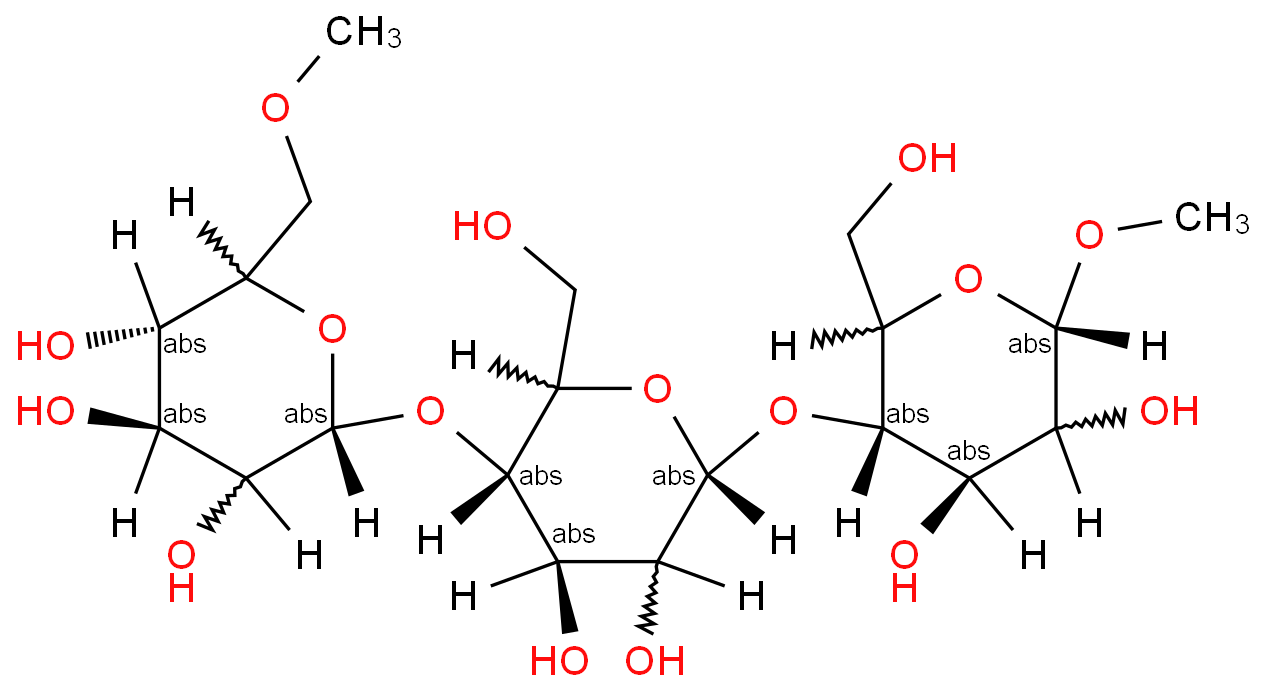
Pullulan is a linear water-soluble polysaccharide primarily composed of maltotriose units linked by α-1,6 glycosidic bonds. Discovered by Bernier in 1958 from Aureobasidium pullulans, its structure was further studied by Bender et al. in 1959, who named it pullulan. In the 1960s, the basic structure of pullulan was elucidated, composed of maltotriose units linked by α(1-4) glycosidic bonds, with consecutive maltotriose units connected by α(1-6) glycosidic bonds. Pullulan enzymes were later found to hydrolyze the α(1-6) bonds in pullulan, converting them into maltotriose. Pullulan is produced through a simple fermentation process using monosaccharides derived from various raw materials. It is rapidly becoming an important source of industrial polymer materials, gradually competing economically with natural gums derived from algae and other plants. Its structure is as follows:

Pullulan, widely used in the food and pharmaceutical industries, is primarily derived from starch, particularly cassava or corn starch. The origin and production process of pullulan involve several steps. Firstly, starch undergoes enzymatic hydrolysis, breaking long-chain glucose molecules into smaller units. These glucose units are then fermented by a specific yeast called Aureobasidium pullulans. During fermentation, the yeast produces pullulan as an extracellular polysaccharide, forming a viscous gel-like substance. This substance is then purified and processed to produce the final pullulan product.
Pullulan's natural source is starch extracted from plants such as cassava and corn, making it a renewable and sustainable resource. Cassava starch extracted from cassava roots and corn starch extracted from corn kernels are the main raw materials for producing pullulan. These starches provide glucose molecules necessary for the fermentation process by Aureobasidium pullulans yeast, ultimately forming pullulan. By utilizing these natural resources, pullulan production aligns with principles of environmental responsibility and resource efficiency, providing biodegradable alternatives for synthetic polymers in various applications.
Pullulan is a natural ingredient derived from starch, primarily sourced from cassava or corn, through the fermentation process by Aureobasidium pullulans yeast. This natural origin distinguishes pullulan from synthetic polymers commonly used in various industries. Synthetic polymers, derived from petrochemical products and extensively chemically processed, differ from pullulan, whose production relies on enzymatic hydrolysis and fermentation, utilizing renewable plant resources. This natural origin positions pullulan as a biodegradable and environmentally friendly alternative to synthetic polymers, aligning with the growing consumer preference for sustainable ingredients. While pullulan shares some characteristics with plastics, such as film-forming ability and oxygen barrier properties, its biodegradability and renewable source make it a natural ingredient.
China, being an agricultural powerhouse, employs various methods for fruit preservation such as controlled atmosphere storage, chemical sterilization, and low-temperature storage. However, these methods often involve significant investment and may result in residues of chemicals in produce and inadequate preservation. Pullulan polysaccharide, with its excellent film-forming properties, non-toxicity, high glossiness, and low permeability, offers advantages in preserving agricultural products such as fruits, vegetables, and eggs.
Preservation of Mangoes: Researchers at Zhongnan Forestry University, led by Zhou Wenhua, experimented with coating mangoes using 1% to 5% pullulan polysaccharide solution. After storing both coated and uncoated mangoes under similar conditions for 18 days (humidity: 85% to 90%, temperature: 28°C), they observed the external characteristics of the mangoes and measured various indicators such as hardness, chlorophyll content, and relative conductivity during storage. The results indicated that a 1% pullulan polysaccharide film showed poor effectiveness, possibly due to low concentration, while a 5% concentration also yielded unsatisfactory results, likely due to excessive density of the film network. However, mangoes treated with a 3% pullulan film exhibited relatively better preservation, delaying changes in various indicators. Hence, a 3% pullulan polysaccharide solution can be effectively used for preserving mangoes.
Further treatment of seafood using pullulan solution as a coating agent showed promising results in preventing moisture loss, inhibiting the generation of salt-based nitrogen, and preserving the inherent flavor of seafood.
Pullulan polysaccharide serves as an improver and plasticizer in the food processing industry, enhancing processing performance and quality. Its water-soluble nature improves texture in food products. For instance, adding 0.01% to 0.3% pullulan polysaccharide in tofu production not only facilitates tofu formation but also enhances its color, texture, and water retention properties. In juice beverages, pullulan polysaccharide addition enhances flavor and stability. Moreover, in the production of high-salt foods like soy sauce and pickles, pullulan polysaccharide contributes to thickening and enhancing glossiness.
Due to its colorless, odorless, biodegradable, and non-toxic nature, pullulan polysaccharide finds applications in urban sewage treatment and industrial wastewater treatment. When combined with inorganic coagulants, pullulan demonstrates improved efficiency in wastewater treatment, achieving significant removal rates of color and turbidity.
In the field of pharmaceuticals, pullulan polysaccharide, as a type of microbial polysaccharide, exhibits excellent solubility, heat-sealing properties, and film-forming abilities. Traditional soft gel capsules face challenges in stability during storage due to their kinetic properties. Moreover, there is a societal demand for a new material for capsule production to cater to specific groups such as vegetarians and Muslims. Liu Mouquan and others have developed soft gel capsule products using pullulan polysaccharide, which compared to traditional gelatin soft capsules, demonstrate significant advantages in terms of disintegration time, adhesion, oxidation of contents, and oil leakage. Liang Zhenggan and colleagues have researched the formulation of pullulan polysaccharide soft capsule shells. They found that when pullulan polysaccharide is combined with xanthan gum at a ratio of 24.03:1, with glycerin at 0.9 times the amount of the combined gum, and water at 7.56 times the amount of the combined gum, the capsule shell exhibits the maximum dissolution rate.
One characteristic of pullulan is its odorless and tasteless white powder form. Pullulan solution remains stable and heat-resistant within a wide pH range. Used in food as a binder, thickener (0.2%-3%), and coating agent, pullulan finds applications in various products such as instant beverages, creams, icing, soy sauce, among others. It serves as a low-calorie food additive and replaces gelatin in coatings. In Japan, pullulan is predominantly utilized in leisure foods made from cod roe and cheese powder, albeit in small doses due to its slow digestion. FDA recognized pullulan as a safe compound in 2002. In the EU, it's accepted as a food additive for capsules, tablets, and films (E1204) under directive 2006/52/EC. Some Asian countries, Russia, and certain South American countries also permit pullulan in the food industry.
Despite concerns about potential hazards associated with pullulan, thorough investigations reveal such apprehensions often lack substantiation. Regulatory approvals and safety standards play crucial roles in ensuring the safety of pullulan and its various applications. Pullulan has been granted Generally Recognized as Safe (GRAS) status by regulatory bodies like the FDA, indicating it poses no significant risk to human health when used as intended. Furthermore, safety assessments by scientific experts consistently confirm the safety of pullulan for pharmaceuticals, dietary supplements, and other products.
Pullulan capsules, commonly used in the pharmaceutical and dietary supplement industries, are generally considered safe. These capsules are made from pullulan, which itself has a long history of safe use in various applications, renowned for its biocompatibility and non-toxicity. Safety precautions and usage guidelines are typically followed during the manufacturing process to ensure the quality and integrity of the capsules. While allergic reactions are rare, individuals known to be allergic to starch or related compounds should use pullulan capsules with caution. Additionally, as with any supplement or medication, it's important to adhere to recommended dosage instructions and consult healthcare professionals if there are concerns about potential interactions or side effects. Overall, pullulan capsules are regarded as safe, offering a convenient and reliable option for most individuals seeking pharmaceuticals or dietary supplements.
Pullulan polysaccharide, a neutral, colorless, tasteless, linear polymer, exhibits excellent water solubility, swelling, and dissolution properties. Its dissolution rate in water is more than twice that of sodium alginate and polyvinyl alcohol. Pullulan solutions do not ionize, gel, or crystallize. At relative humidity below 70%, the equilibrium moisture content of pullulan products ranges from 10% to 15%, preventing both moisture absorption and agglomeration.
Pullulan is generally soluble in water, but its solubility in ethanol and other organic solvents varies depending on factors such as concentration, temperature, and molecular weight. Generally, pullulan solubility in ethanol is limited compared to water, with lower concentrations dissolving more easily than higher concentrations. The pullulan solubility in organic solvents depends on the solvent used and the specific properties of the polysaccharide. Some organic solvents, such as dimethyl sulfoxide (DMSO) or dimethylformamide (DMF), may exhibit high solubility for pullulan polysaccharide, while others may have limited or no solubility.
Pullulan polysaccharide exhibits thermal stability in alkaline solutions, remaining stable without melting when heated. It loses equilibrium moisture content at 100°C before starting to char at 250°C, gradually changing color from white to yellow, brown, and finally black. Throughout the heating process, no toxic substances are produced.
Acute, subacute, chronic toxicity tests, and teratogenicity tests have shown that pullulan polysaccharide does not induce any biological toxicity or abnormal states. In nature, pullulan polysaccharide can be further degraded by microorganisms, posing no environmental pollution issues.
Compared to other polysaccharides, pullulan polysaccharide solutions have relatively low viscosity. With increasing molecular weight and concentration, the viscosity of pullulan polysaccharide solutions increases, albeit to a lesser extent than other high molecular weight substances. Pullulan polysaccharide with lower molecular weight exhibits minimal viscosity changes during heating.
Pullulan polysaccharide solutions demonstrate strong adhesion and coating properties to materials with certain hydrophilic properties such as wood, paper, fibers, dried foods, glass, metals, and cement. Pullulan polysaccharide exhibits high tensile strength but poor water resistance. Treatment with glutaraldehyde can enhance its water resistance while also increasing its tensile strength.
Pullulan polysaccharide can be directly formulated into thin films with a certain concentration of water solution. These films possess advantages such as oil resistance, good oxygen barrier properties, high hardness, strong elasticity, transparency, and edibility. They remain stable against temperature changes and remain soft even below 0°C, albeit with low elongation.
The hydroxyl group structure of pullulan polysaccharide determines its excellent water solubility, but this advantage poses a challenge in water resistance applications. Chemical modifications of hydroxyl groups in pullulan polysaccharide, such as esterification, graft copolymerization, and alkylation, can alter some of its properties.
Pullulan, a natural polysaccharide extracted from starch, holds tremendous potential across various industries due to its biocompatibility, multifunctionality, and safety. Serving as a key ingredient in pharmaceuticals, dietary supplements, food, and other applications, pullulan exhibits unique functional properties including film-forming ability, viscosity control, and oxygen barrier characteristics. Its natural sourcing from renewable plants like cassava and corn further enhances its appeal as a sustainable alternative to synthetic polymers. With stringent regulatory approvals and adherence to safety standards, pullulan has become a safe and reliable ingredient, receiving GRAS certification from regulatory agencies. By harnessing the potential of pullulan, manufacturers can innovate and develop a wide range of products to meet consumer demands for efficacy and safety, paving the way for continued growth across various industries.>
[1]https://en.wikipedia.org/wiki/Pullulan
[2]https://www.sciencedirect.com/topics/chemistry/pullulan
[3]https://www.linkedin.com/pulse/what-pullulan-morris-lester
[4]Sun Fangyan. Research on extraction process optimization and application of pullulan polysaccharide[D]. Tianjin University of Science and Technology, 2016. DOI:10.27359/d.cnki.gtqgu.2016.000109.
|
 |
|
 |
 EN
EN
 Agricultural News
 Food News
 Industrial News
 Cosmetic News
 Pharmaceutical News
 Science News

 2YRS
2YRS

