-
We detected your language preference as English. Would you like to switch to the English version for a better experience?
Switch to English
Stay here


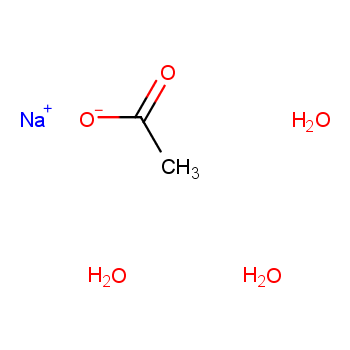
Sodium acetate trihydrate, also known as trihydrate sodium acetate, is a crystalline compound with the chemical formula CH3COONa·3H2O. What is sodium acetate trihydrate used for? Sodium acetate trihydrate is commonly used as a buffering agent, food additive, and finds applications in the medical and pharmaceutical fields. Its crystalline structure and ability to release heat upon crystallization make it valuable in heating pads and hand warmers. Additionally, sodium acetate is used as a food preservative and flavor enhancer, extending the shelf life and improving the taste of various food products. In the pharmaceutical industry, it serves as a component of drug formulations and as a pH regulator for certain pharmaceutical preparations. This article explores the diverse applications and uses of sodium acetate trihydrate in different industries, revealing its significance and potential in various industrial and commercial processes.
Sodium acetate trihydrate, represented chemically as NaCH3COO·3H2O, is a crystalline compound known for its wide-ranging applications. Comprising sodium ions (Na+), acetate ions (CH3COO-), and water molecules, its molecular structure allows it to crystallize from supersaturated solutions under specific conditions.
What is sodium acetate trihydrate used for? With its pH-regulating ability, sodium acetate trihydrate serves as a buffering agent in various industrial and laboratory processes. In laboratories, it is applied in organic compound synthesis and as an essential component of pH-controlled chemical reactions. Its availability in both anhydrous and hydrated forms allows for customized use according to specific requirements. Sodium acetate trihydrate is a versatile compound with multiple functions, making significant contributions to many industrial and scientific endeavors.
What does sodium acetate trihydrate do? Sodium acetate trihydrate is a versatile compound known for its affordability and non-toxic properties, making it widely used across different industries. In the food industry, it serves as a crucial flavor enhancer, preservative, and buffering agent in numerous products, ranging from snacks to sauces. Notably, sodium acetate is an integral part of instant heat packs, where its exothermic crystallization provides warmth, making it indispensable in medical settings and outdoor activities. Additionally, in the pharmaceutical sector, it plays a critical role as an ingredient in intravenous and dialysis solutions, ensuring the stability and efficacy of these vital medical formulations. In the textile industry, sodium acetate serves as a key fixative and stabilizer for dyes and pigments, enhancing the colorfastness and vibrancy of various fabrics. For example, it aids in uniform dye penetration, resulting in vivid and long-lasting colors on textiles. Furthermore, as a precursor in chemical synthesis, sodium acetate facilitates the production of various organic compounds and pharmaceutical intermediates. Its widespread application underscores its importance as a multifaceted compound, contributing significantly to many industrial processes and products.

Sodium acetate trihydrate, derived from acetic acid, is used as a food additive and preservative in the food industry.
What is sodium acetate trihydrate used for? In food processing, its primary role is as a souring agent, with its antibacterial properties effectively extending the shelf life of food products by inhibiting the growth of bacteria, molds, and yeast. Its sour taste can effectively mask undesirable flavors in food, improving taste, and enhancing the color, flavor, and aroma of food products. Additionally, sodium acetate trihydrate can help regulate the pH of food, preserving the nutritional content.
In food preservation, sodium acetate trihydrate primarily functions as a bacteriostatic agent. It not only inhibits the growth and reproduction of bacteria but also reduces the oxygen content in food, thereby extending its shelf life and making it more elastic and fluffy without affecting its original flavor. Therefore, sodium acetate trihydrate is widely used in the preservation of vegetables, fruits, meats, fish, and dairy products.
Sodium acetate trihydrate can be used in the production of anticoagulants and serves as a pharmaceutical intermediate to improve drug quality. For example, it is used as a drug to delay gastric emptying, thereby affecting the absorption rate and speed of orally administered drugs.
In pharmaceutical formulations, sodium acetate trihydrate is often used as a buffering agent to regulate the pH of solutions, ensuring the stability and effectiveness of drugs. For example, it is used in the synthesis of antibiotics, antihypertensive drugs, and analgesics.
Sodium acetate trihydrate can also be used in drug delivery systems, particularly in injectable solutions and eye drops, where it can increase the solubility of drugs, thereby enhancing their absorption. For example, acetaminophen injection is a drug containing sodium acetate trihydrate, which primarily controls blood sugar levels by increasing insulin secretion, inhibiting glucagon secretion, and other effects.
In the textile industry, sodium acetate trihydrate is commonly used as a fixative and stabilizer for dyes and pigments, widely applied in various types of clothing, especially in the leather industry, for acid washing and neutralization. Sodium acetate trihydrate can stabilize the color of dyes and pigments in textiles while also improving the luster and softness of fabrics, making them more durable.
In the cosmetics industry, sodium acetate trihydrate can serve as an effective antibacterial and preservative, protecting beneficial ingredients in cosmetics from bacteria and fungi, keeping cosmetics fresh and safe, and exhibiting properties such as antibacterial, preservative, buffering, and catalytic activity. Additionally, sodium acetate trihydrate is commonly used as a pH regulator in cosmetics to help maintain the acid-base balance of cosmetics.
In the agricultural industry, sodium acetate trihydrate can be used as a slow-release fertilizer, with properties such as antibacterial, preservative, buffering, and catalytic activity, widely applied in different soils and crops. It can effectively improve fertilizer utilization and crop yield, prevent fertilizer loss, and have certain effects such as drought resistance, cold resistance, and barrenness tolerance.
When sodium acetate trihydrate comes into contact with water, it undergoes a dissolution process, in which the compound dissociates into sodium (Na+) and acetate (CH3COO-) ions in the aqueous medium. The hydration of ions with water molecules facilitates this dissociation. The presence of water molecules effectively breaks the bonds between sodium cations and acetate anions, dispersing them in the solution. Eventually, the original solid compound dissolves, forming a transparent, colorless solution.
This reaction is crucial in various applications, particularly in chemical laboratories and industries. In chemical synthesis, sodium acetate solution serves as a versatile reagent in numerous reactions, such as esterification and acetylation. In heat packs commonly used for therapeutic purposes, this reaction plays a vital role. By dissolving sodium acetate trihydrate in water and subsequently crystallizing it, the solution can store a considerable amount of latent heat. Upon triggering the crystallization process, such as through mechanical agitation, the stored heat is released, producing comforting warmth. Therefore, the reaction of sodium acetate trihydrate with water not only demonstrates fundamental chemical principles but also has practical applications across different fields.
Sodium acetate trihydrate is a widely used compound with applications across multiple industries. From its role as a food preservative to its applications in pharmaceuticals, textiles, and cosmetics, sodium acetate trihydrate demonstrates its adaptability and importance. Its solubility in water and exothermic crystallization make it highly valuable in therapeutic heat packs. Sodium acetate trihydrate also finds extensive use in chemical synthesis, serving as a key reagent in various reactions. While the number of companies in China is numerous, their scale is generally small, with low technical barriers, leading to fierce competition in the sodium acetate market. Continuous adjustments and optimizations are needed to adapt to market changes in the future. Given the importance and market prospects of sodium acetate trihydrate, this article encourages readers to further explore its applications in their respective fields and optimize the sodium acetate industry for the future, ensuring it better serves various industries and environmental policies.
[1] Chen Qiyang, Sheng Xinxin, Xu Zhengkai, et al. Study on Energy Storage Characteristics and Thermoelectric Generation of Modified Sodium Acetate Trihydrate [J]. Functional Materials, 2023, 54(06): 6134-6140.
[2] Zhang Xuan. Study on Crystal Nucleation Inhibition of Sodium Acetate Trihydrate Supercooled Solution [D]. Guangxi University, 2022. DOI:10.27034/d.cnki.ggxiu.2022.002175.
[3] Song Xiaoqian, Liu Cun, Cheng Xinghao, et al. Design of Phase Change Heat Storage Hand Warmer [J]. Chemical Engineering and Equipment, 2022, (01): 179-180. DOI:10.19566/j.cnki.cn35-1285/tq.2022.01.104.
 |
|
 |
 |
 |
 |
 EN
EN
 Agricultural News
 Food News
 Industrial News
 Cosmetic News
 Pharmaceutical News
 Science News

 2YRS
2YRS

