-
We detected your language preference as English. Would you like to switch to the English version for a better experience?
Switch to English
Stay here


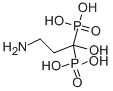
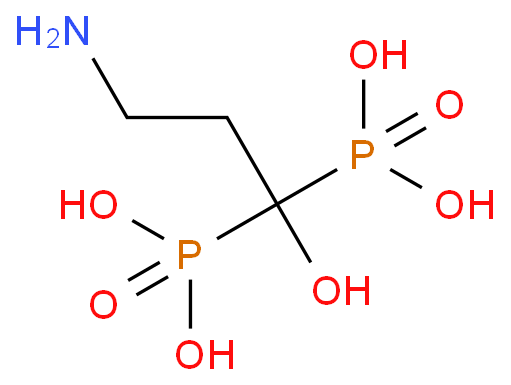
Pamidronic acid belongs to a class of bisphosphonates, which are synthetic analogs of pyrophosphate, connected by two phosphorus atoms and a carbon atom, forming a "P-C-P" structure. Currently, bisphosphonates are categorized into three generations: the first generation includes Clodronate (CLD) and Etidronate (ETD); the second generation includes nitrogen-containing bisphosphonates like Alendronate (ALD) and Pamidronic acid (PAD); and the third generation includes Zoledronate (ZOL). All generations share the common "P-C-P" structure and have different side chains. The first generation features an alkyl chain, the second contains nitrogen, and the third has heterocyclic elements. Pamidronic acid's structure is as follows:

Pamidronic acid, known under brand names like Aredia, is an anti-tumor drug. It effectively inhibits osteoclast activity and reduces the maturation of osteoclast precursors. Its use can also reduce the need for pain medications.
Pamidronic acid is primarily used to prevent bone loss and treat osteoporosis. Additionally, it is used to strengthen bones in patients with Paget's disease, prevent steroid-induced bone loss, and manage certain cancers affecting the bones, such as multiple myeloma. Since Pamidronic acid can chelate calcium in bones, it is also used in treating hypercalcemia. Furthermore, it has been explored for treating conditions like osteogenesis imperfecta and in experimental treatments for complex regional pain syndrome.
Bisphosphonates like Pamidronic acid disodium inhibit osteoclast-induced bone resorption associated with cancer metastasis to bones. In women with stage IV breast cancer with at least one osteolytic lesion undergoing cytotoxic chemotherapy, a 12-cycle monthly intravenous infusion of either a placebo or Pamidronic acid (90 mg) was administered. Bone complications such as pathological fractures, the need for bone radiation or surgery, spinal cord compression, and hypercalcemia were monitored. Pain, analgesic use, physical function, and quality of life were evaluated throughout the trial. Pamidronic acid was found to prevent bone complications in women with osteolytic metastases from stage IV breast cancer.
Hypercalcemia is a common complication of malignant tumors with poor prognosis. It can cause symptoms ranging from confusion and polyuria to coma and death. The four major mechanisms of malignant hypercalcemia are: local bone lysis due to metastatic cancer or multiple myeloma, parathyroid hormone-related overproduction, excess production of 1,25-dihydroxy vitamin D, and ectopic parathyroid hormone production. Initial treatment with saline and intravenous bisphosphonates, such as Pamidronic acid, reduces osteoclast-mediated bone destruction. Calcitonin, gallium nitrate, and corticosteroids can be used as adjunct therapies.
Paget’s disease is a common skeletal disorder characterized by abnormal bone remodeling. The most likely cause is a slow viral infection in genetically predisposed individuals. Common symptoms include bone pain, bone deformities, skull enlargement, and hearing loss. Elevated serum alkaline phosphatase levels correlate with disease activity. Diagnosis is confirmed by characteristic radiologic findings and bone scintigraphy. Bisphosphonates such as Zoledronic acid, Pamidronic acid, Alendronic acid, and Risedronic acid are the primary drugs for treatment. Calcitonin may be used in patients intolerant to bisphosphonates.
Intravenous injections are typically given at 90 mg per month. Vials come in 30 mg, 60 mg, 90 mg, and 120 mg dosages mixed with mannitol.
The drug should be diluted in 0.9% saline or 5% glucose without calcium before use. It is slowly infused intravenously over more than 4 hours, with a concentration no higher than 15 mg/125 ml. The drip rate should not exceed 15-30 mg/2 hours. A single dose ranges from 30-60 mg.
Doses should be tailored based on calcium levels, under a physician’s guidance.
Common side effects include bone pain, low calcium levels, nausea, and dizziness. Pamidronic acid may cause several adverse reactions, including hypocalcemia leading to secondary hyperparathyroidism, acute-phase reactions, musculoskeletal pain, various eye disorders, and osteonecrosis of the jaw (ONJ).
Intravenous bisphosphonates like Pamidronic acid are more likely to cause symptomatic hypocalcemia than oral drugs, usually appearing days after infusion. Adequate calcium and vitamin D supplementation before bisphosphonate infusion can prevent this complication.
After the first Pamidronic acid infusion, patients may experience acute-phase reactions, peaking at 28–36 hours and resolving within 2–3 days. These reactions include fever, malaise, fatigue, and generalized pain. Pamidronic acid may also cause delayed pain syndromes characterized by severe and disabling symptoms lasting years post-infusion.
The most common eye complication is nonspecific and self-limiting conjunctivitis. More severe cases include scleritis and uveitis, which require immediate discontinuation of the drug.
ONJ is a rare but serious side effect of bisphosphonate use. Patients with ONJ may experience jaw pain, swelling, redness in the surrounding tissues, and tooth loosening at the site. ONJ is more common in cancer patients receiving bisphosphonates for bone metastases than in those treated for osteoporosis.
Intravenous bisphosphonates such as Pamidronic acid and Zoledronic acid are associated with significant nephrotoxicity, a risk rarely seen with oral bisphosphonates. Higher doses, shorter infusion times, and more frequent dosing increase the risk of kidney toxicity.
There have been reports of Pamidronic acid causing hives and atypical femoral fractures, though these cases are rare.
Pamidronic acid plays an important role in treating osteoporosis and other bone-related diseases, but its use involves complex medical conditions and individual differences. Specific usage and dosage should be determined according to a doctor's advice. Consulting a healthcare professional before starting any Pamidronic acid treatment can ensure that the drug is appropriate for your health condition and maximizes its effectiveness while avoiding potential side effects and adverse reactions.
[1]https://pubmed.ncbi.nlm.nih.gov/29752905/
[2]https://pubmed.ncbi.nlm.nih.gov/24021907/
[3]https://pubmed.ncbi.nlm.nih.gov/8965890/
[4]Wang Wei. Study on the adjuvant effect of new vaccine adjuvants, low molecular weight heparin sodium and pamidronate[D]. Peking Union Medical College, 2016.
[5]https://go.drugbank.com/drugs/DB00282
[6]https://en.wikipedia.org/wiki/Pamidronic_acid
[7]https://baike.baidu.com/item/%E5%B8%95%E7%B1%B3%E8%86%A6%E9%85%B8
[8]Ballard T, Chargui S. Pamidronate[J]. 2019.
[9]https://www.ncbi.nlm.nih.gov/books/NBK551673/
|
 |
 |
|
 EN
EN
 Agricultural News
 Food News
 Industrial News
 Cosmetic News
 Pharmaceutical News
 Science News

 13YRS
13YRS

